
Computing Sciences
Where Computational Revolutions Happen
The unit of Computing Sciences (CS), under the Faculty of Information Technology and Communication Sciences (ITC), is a multidisciplinary hub for research and education across a wide range of topics in computing and information technology.
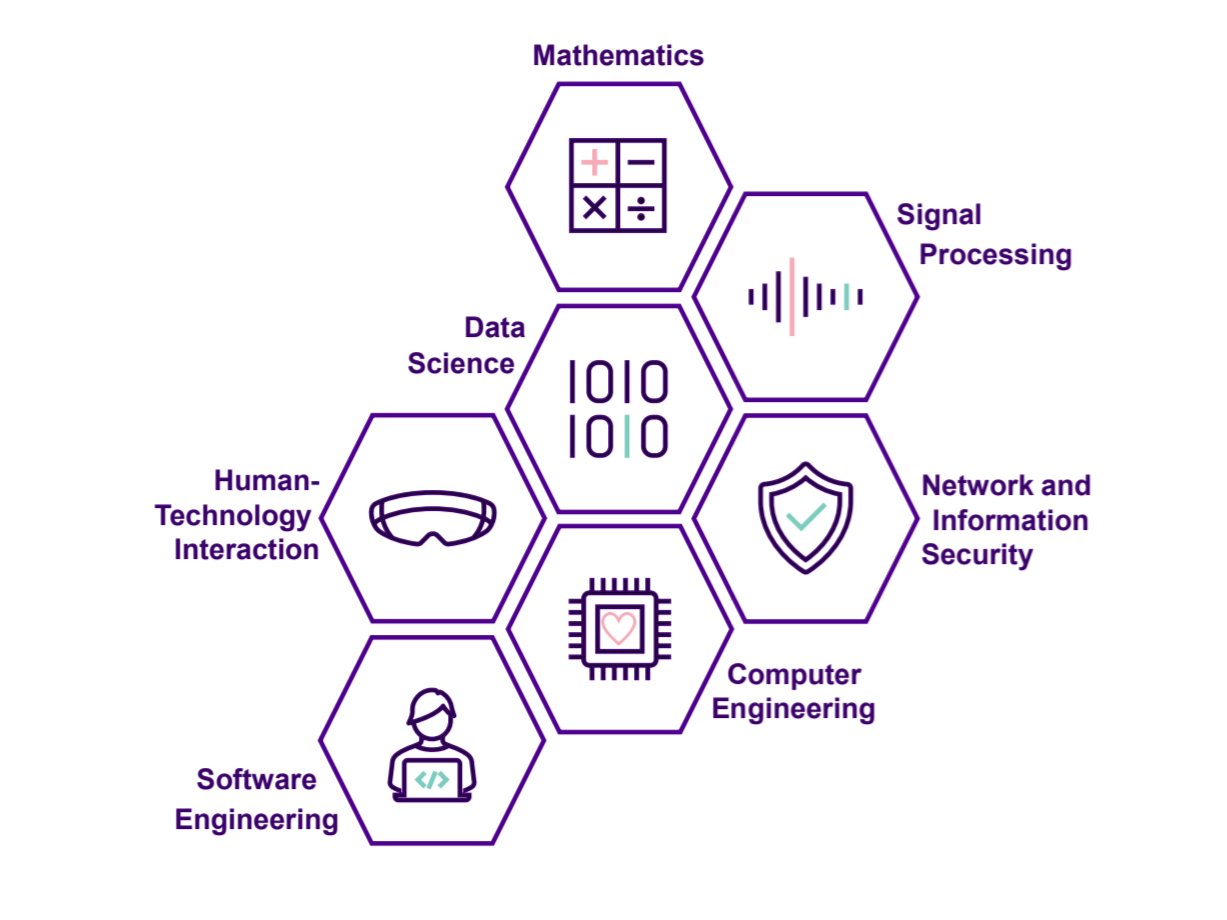
Our research is organized around seven key themes, illustrated below.
We contribute to advancements in the science, engineering and design of digital systems and services, seeking to enable meaningful computational solutions for a sustainable future.
We are over 450 staff members, including almost 50 professors, 50 full-time teachers and 50 post-docs along with more than 2,000 students across our study programs. We work together with world-leading universities and research institutions, industry, and the public sector, engaging in cutting-edge scientific research and education in all our fields.
Our highlights

Get to know us
Discover study opportunities and learn about research within the Computing Sciences unit.
Meet us on other channels
Follow our activities and news through the Computing Sciences blog, and get to know the people behind our unit’s and faculty’s research via our YouTube playlist.
News


A bit more about us
The journey to today
The roots of the current Computing Sciences Unit trace back to two universities that operated in Tampere: Tampere University of Technology, founded in 1965 as a branch of Helsinki University of Technology, and the University of Tampere, originally established in 1925 as Civic College and renamed in 1966.
In 2019, these two institutions merged to form the present-day Tampere University—and with it, the current Unit of Computing Sciences, which now includes seven diverse research themes. Some of these, like Signal Processing, originate from Tampere University of Technology, while others, such as Mathematics and Human-Technology Interaction, have roots in both former universities.
The first .fi domains
Tampere University’s predecessor, Tampere University of Technology (TUT), registered Finland’s oldest internet domains: tut.fi and hut.fi.
Our unit extends across three cities
Our unit operates across Tampere, Pori, and Seinäjoki, with facilities and research activities in each city.
Hervanta campus in Tampere serves as the central hub, hosting most of our personnel and research. Based in the Tietotalo building, it is a key space for collaboration between academics, students, and industry in technology research and development. Tietotalo hosts research in Data Science, Signal Processing, Software Engineering, and many more areas of computer science.
At the City Centre campus in Tampere, part of the research in Human-Technology Interaction and Gamification takes place in the Pinni B and Tietopinni buildings, home to many of our laboratories and research facilities.
Tampere University in Pori specializes in software engineering, data analytics, and information management while offering study opportunities.
The University Consortium of Seinäjoki (UCS) connects experts from Tampere University and partner institutions, fostering a multidisciplinary network that supports research, education, and open university teaching.
Advancing IT for Tomorrow
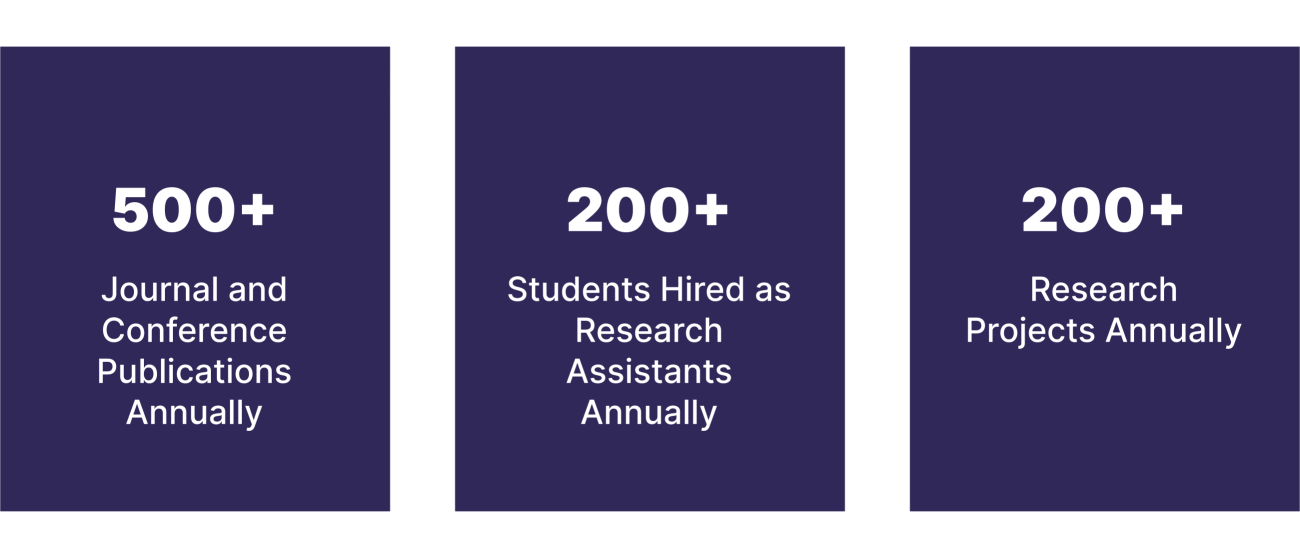
The unit of Computing Sciences has strong expertise in Computing and Information Technology, spanning diverse research disciplines, topics and approaches. Our portfolio includes an average of 160 externally funded research projects, with over 500 conference and journal publications contributed annually. The biggest funding sources are Research Council of Finland, Business Finland, EU, and private companies. We collaborate with world-leading universities, research institutions, industry, and the public sector, conducting cutting-edge research across all seven of our research themes.
To learn more about the people behind our research, check out our faculty's YouTube playlist.

Our research infrastructure
Our research facilities drive innovation in computing sciences and support a wide range of research areas, including immersive technologies, imaging, human-computer interaction, and more.
Please visit the link below for a comprehensive list of research infrastructures in the Faculty of Information Technology and Communication Sciences (ITC), including those used by our unit.

Research themes
Our unit addresses all essential facets of IT, from physical networks to human communications. Currently, we focus on seven main themes.
- Computer Engineering
- Data Science
- Human-Technology Interaction
- Mathematics
- Network and Information Security
- Signal Processing
- Software Engineering
Our expertise is built on strong mathematical, algorithmic, and computational foundations, complemented by solution-oriented methodologies. Machine learning, artificial intelligence, and data are integral to all our research disciplines. Through our work, we drive innovation across these interconnected fields, shaping the future of technology and its societal impact.

Computer Engineering
Computer Engineering focuses on efficient hardware and software implementations for embedded and parallel computing, mostly for signal processing algorithms like state-of-the-art video encoding. The research platforms include off-the self FPGAs, GPUs, cloud servers, IoT devices, and custom in-house designed System-on-Chips at modern ASIC technologies. Computer Engineering develops tools to reduce the engineering effort in design and programming of heterogeneous platforms.

Data Science
Data Science conducts research in data science and statistics, focusing on diverse applications. We develop innovative machine learning models for image processing, medicine, and financial forecasting. We explore rule-based and machine learning approaches for NLP. Our recent focus is on fair and transparent machine learning and automated decision systems, with a special focus on recommender systems. We also study complex systems using network science in social, biological, and financial networks. In statistics, we concentrate on probabilistic machine learning, finite mixtures, survival analysis, and time-series analysis. Our developments apply across fields like image processing and social network analysis.

Human-Technology Interaction
Research on Human-Technology Interaction (HTI) investigates the design and uses of information technological applications, ranging from emerging UI technologies like XR and multimodal systems to the study of gamification and social user experiences. Following interdisciplinary approaches, we construct novel interactive technologies and user interfaces, conduct rigorous experimental research and user studies, and shed light on the needs, requirements and experiences of diverse user groups through qualitative and design-oriented approaches, always mindful of the sustainability and accessibility of digital solutions.

Mathematics
The research of mathematics focuses on several topics. These include ill-posed mathematical problems, partial differential equations (PDEs), mathematical control theory, functional analysis, computer science logic, applied algebraic topology, discrete geometry, and number theory. The application areas of the research include forestry, biomedical engineering and health care, astrophysics, flexible robotic manipulators, explainability of artificial intelligence, and industrial heat transfer processes. The wide curriculum of basic and advanced courses in mathematics is supported by educational research.

Network and Information Security
We conduct research in areas spanning from the theoretical foundations of cryptography to the design and implementation of leading-edge efficient and secure communication protocols. The core competencies currently traverse four areas: Applied Cryptography; Hardware-Assisted Security; Privacy; and Usable Security. The results can be used for developing standards for secure communication and cryptographic storage, solving real-world crypto and privacy problems and proving data sets and open-source software.

Signal Processing
Signal processing deals with theory, models, and algorithms for analyzing, interpreting, capturing, and reproducing complex natural signals. We study images, video, speech, and audio, including their emerging modalities such as depth, thermal, and multispectral images, point clouds and light fields, and spatial audio. The aim is to support a wide range of applications with high social relevance such as tomography and live-cell microscopy, safety-critical applications in machine and robot industries, new consumer, professional, and scientific cameras and audio and vision systems, signal analysis in medicine, as well as VR/AR/XR applications.

Software Engineering
Software Engineering focuses on studying approaches to develop modern high-quality software more efficiently. Current examples of research include increasing the productivity of software engineering with AI, the distribution of intelligence on the Cloud-Edge Continuum and Data Management Systems. Software Engineering is also active in cross-disciplinary research initiatives such as intelligent software and data solutions to enable sustainable energy systems as well as industrial systems and robotics. Our research has contributed to the modernization of industrial systems and latest work will lead to more sustainable energy systems.
Educating Tomorrow’s Experts
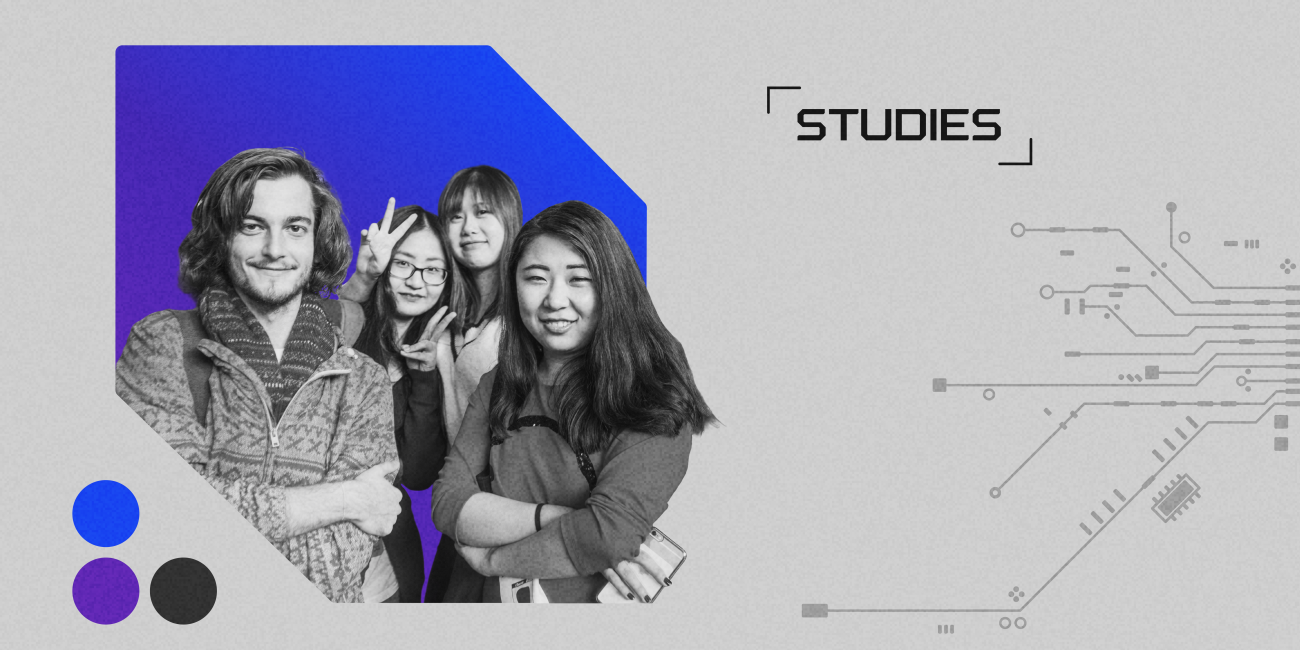
We are living in the Information Age, where the IT sector is a significant employer, shaping every facet of society—from communication and gaming to autonomous machines and e-commerce. Finland, and Tampere in particular, has long been a pioneer in IT education, developing highly skilled professionals ready to excel in industry, the public sector, as well as academia.
Our dynamic learning approach includes flipped learning, hands-on projects, teamwork, lab work, company collaborations, field studies, and solving challenging programming problems, preparing students for the rapidly evolving IT landscape. Join us and be part of the next generation of IT professionals!
Check out some examples of our team spirit, how we learn and what we learn:

Bachelor’s studies in Finnish

Master’s studies in Finnish

Master’s studies in English for international students
Our unit offers the following specialisations under the Master's programme in Computing Sciences and Electrical Engineering (CSEE).


Continuous learning
At the Open University, you can complete course units and study modules included in the degree programmes organised by Tampere University. You can also explore additional learning resources in collaboration with other higher education institutions.
Explore by category
- Unit Leadership and Administration
- Computer Engineering
- Data Science
- Human-Technology Interaction
- Mathematics
- Network and Information Security
- Signal Processing
- Software Engineering
This page lists primary contacts for the unit and its research themes and does not provide a complete list of the unit's staff members.


