The Faculty of Engineering and Natural Sciences maintains research infrastructures that support experimental work and co-development

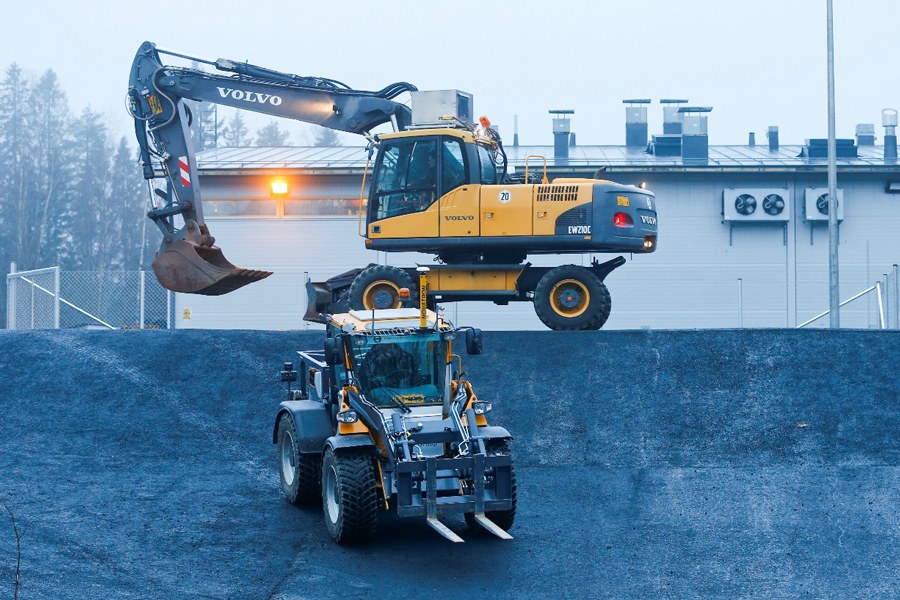
ENS is home to three research units – Automation Technology and Mechanical Engineering, Physics and Materials Science and Environmental Engineering – as well as more than 30 research infrastructures and five teaching infrastructures. These research infrastructures occupy more than 8,000 square metres of floor space, comprising laboratories, cleanrooms, test tracks and component manufacturing facilities. All are located on the Hervanta campus.
In early 2025, ENS established the ENS Research Environment (ENRE) as its fourth unit. ENRE brings together and centrally coordinates all the infrastructure expertise across the faculty. The unit employs more than 50 specialists, including 17 staff and senior scientists who are responsible for ENS’s research facilities. In addition, the unit’s five laboratory teams comprise approximately 30 professionals working in different roles.
“ENRE is tasked with supporting the work of ENS’s research units while continuously maintaining and developing our research infrastructures. We also promote the safety, accessibility and usability of these infrastructures,” says Head of ENRE Pekka Savolainen..
Read more about the research infrastructures within the Faculty of Engineering and Natural Sciences.
Research infrastructures are continuously developed
Minnamari Vippola, Vice Dean for Research at ENS, is delighted that the faculty’s infrastructures provide such exceptional capabilities and expertise to address challenging research projects. In August 2025, this long-standing commitment to the development of research facilities earned Vippola a seat on the Finnish Research Infrastructure Council of the Research Council of Finland.
“Beyond research, we are ready to engage in other collaborative activities. Still, our primary focus will remain firmly on research collaboration, as we have no plans to offer broader research services on a commercial basis,” Vippola notes.
ENS hosts a wide array of research infrastructures, and their upkeep is costly. According to Vippola, approximately €3 million is invested annually in upgrades and maintenance – but this is not enough.
“Cutting-edge research depends on a steady flow of funding. Existing equipment must be replaced and new technologies acquired to stay ahead,” she says.
ENS is actively seeking new funding opportunities. An electron beam lithography (EBL) system – a substantial investment exceeding one million euros and funded through the NextGenerationEU recovery package – is currently being installed in the cleanroom at ENS. EBL is a technique for fabricating nanoscale structures and creating patterns on substrates for sample analysis.
Strong role in Finland’s research infrastructure roadmap
The Research Council of Finland’s Roadmap for Finnish Research Infrastructures 2025–28 identifies the most significant national research infrastructures within Finland’s research ecosystem. ENS plays an active role in three of these key infrastructures.
The mobile aerosol physics laboratory is part of the Finnish Integrated Atmospheric and Earth System Science Research Infrastructure (INAR RI), through which Tampere University participates in the European Aerosol, Clouds and Trace Gases Research Infrastructure (ACTRIS). ACTRIS supports research on atmospheric processes, climate, air quality and weather.
The Finnish Biofoundry for Synthetic Biology and Biomanufacturing (FIN-BioFoundry) provides an advanced platform for developing solutions in industrial biotechnology. It facilitates research that delivers new insights into synthetic biology and biomanufacturing.
The Operando Research Infrastructure for Energy Materials and Systems (OperaRI) accelerates the development of new materials and processes to promote the green transition and the hydrogen economy and to integrate them into a nationally significant digital platform.
In addition, ENS collaborates with the MAX IV Laboratory, Sweden’s national research infrastructure hosted at Lund University. ENS is also part of the Helsinki Institute of Physics (HIP) that coordinates Finland’s research collaboration with CERN, the European Organization for Nuclear Research.
University-level research infrastructure serves researchers across Tampere University
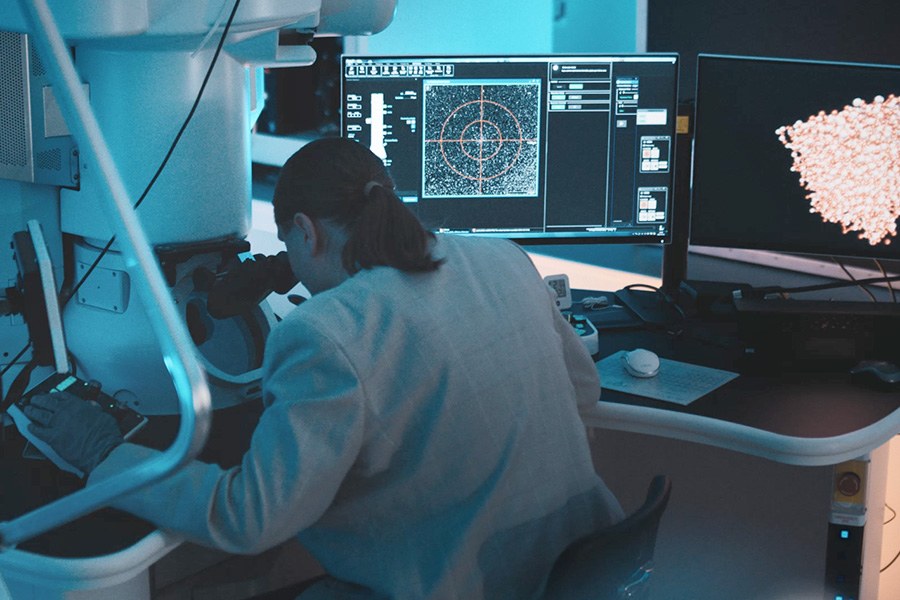
At Tampere University, ENS manages the Tampere Microscopy Center (TMC), which provides specialist expertise, sophisticated equipment, training and services to researchers across the University. TMC’s facilities and expertise are also available to external partners, such as research institutions and companies, through collaborative research arrangements.
TMC provides advanced capabilities for analysing material structures and chemical compositions, even down to the atomic scale. According to Vippola, TMC supports and trains users to work independently while expanding their expertise. A virtual tour of TMC is available online.
“Our facilities are currently used by around 150 researchers and support almost an equal number of research projects,” says Vippola, who leads TMC alongside her role as Vice Dean.
Noodi – a unique hub for experimental research
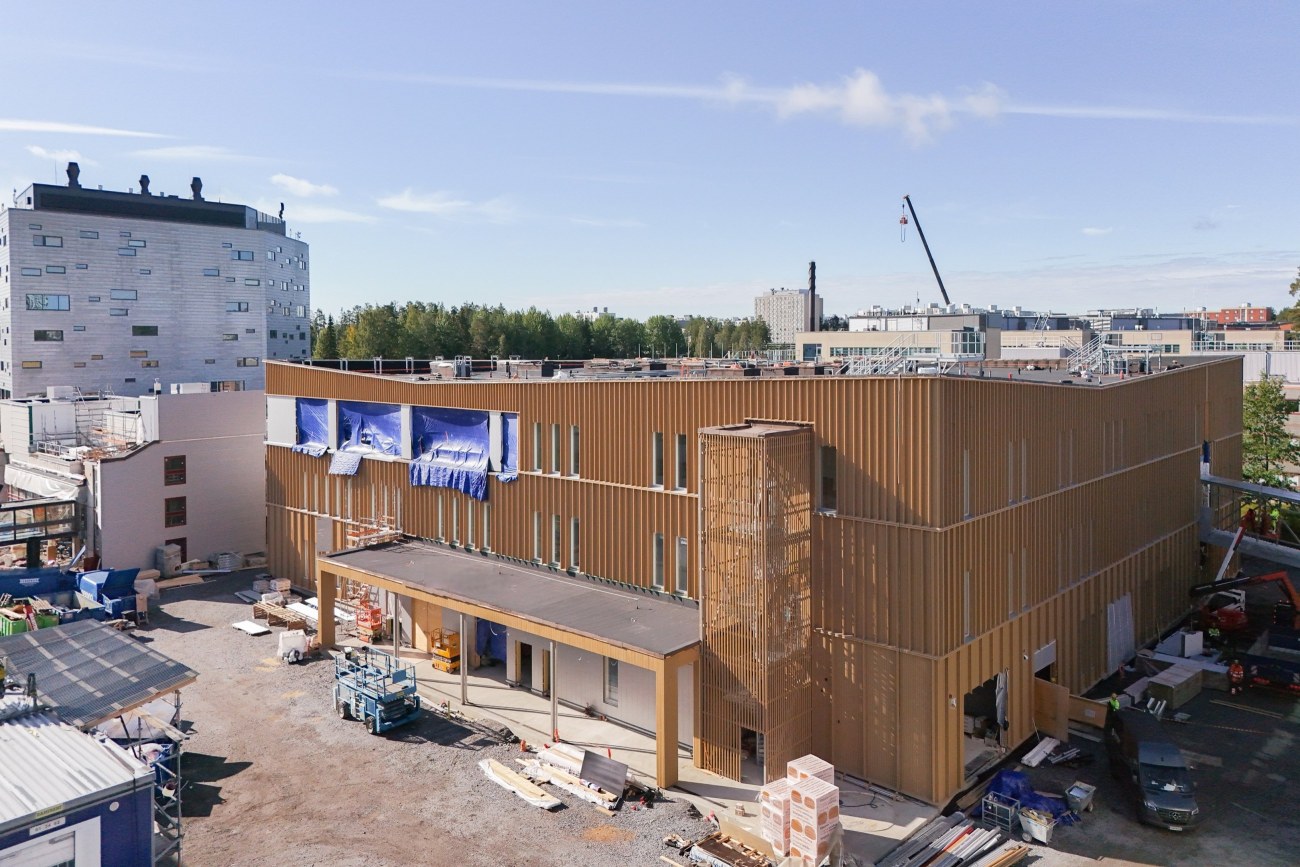
The completion of Noodi in the summer of 2026, replacing a demolished wing of the Sähkötalo building, will bring new state-of-the-art research facilities and equipment for experimental research to the Hervanta campus. A significant number of ENS’s laboratories, which are currently dispersed across the campus, will be relocated to Noodi.
As a one-of-a-kind research environment in Finland, Noodi will bring together world-class expertise, laboratories and equipment in technology, medicine and information technology from across Tampere University. The hub is designed to encourage new collaborations and the sharing of expertise between the faculties and with industry, helping to boost the competitiveness of Finnish companies.
With the total costs exceeding €100 million when factoring in construction and the planned acquisition of new research equipment, Noodi represents a major investment in research and education at Tampere University.
Noodi will cover a gross floor area of approximately 8,800 square metres, with ENS managing nearly 80% of its laboratories. In addition, around 6,900 square metres of the Sähkötalo building will be renovated to accommodate other needs of the faculties.
University Properties of Finland Ltd has commissioned the Noodi project, with SRV responsible for construction.
Your donation matters
Your donation helps create a leading multidisciplinary research and education hub, boosting the competitiveness, expertise, and well-being of Tampere and Finland.
Further information


Author: Anna Aatinen


