New technology captures carbon data directly in the field with laboratory‑level precision

Traditional primary industries are major sources of carbon dioxide emissions, but regenerative agriculture aims to restore soil biodiversity and wider ecosystem health, so that food production reinforces natural processes and improves the overall sustainability of agricultural systems.
Cense Analytics, a spin-off company from Tampere University, has developed a laser-based technology for measuring soil organic carbon (SOC) stocks, building on the long-term research in optical measurement methods conducted by the University’s physicists and photonics specialists. This new method makes it possible to determine the amount of carbon stored in soil directly in the field, thereby reducing the costs associated with transportation, sample processing and storage.
The researchers hope that their easy‑to‑use technology will encourage stakeholders across the agricultural sector to adopt regenerative farming practices.
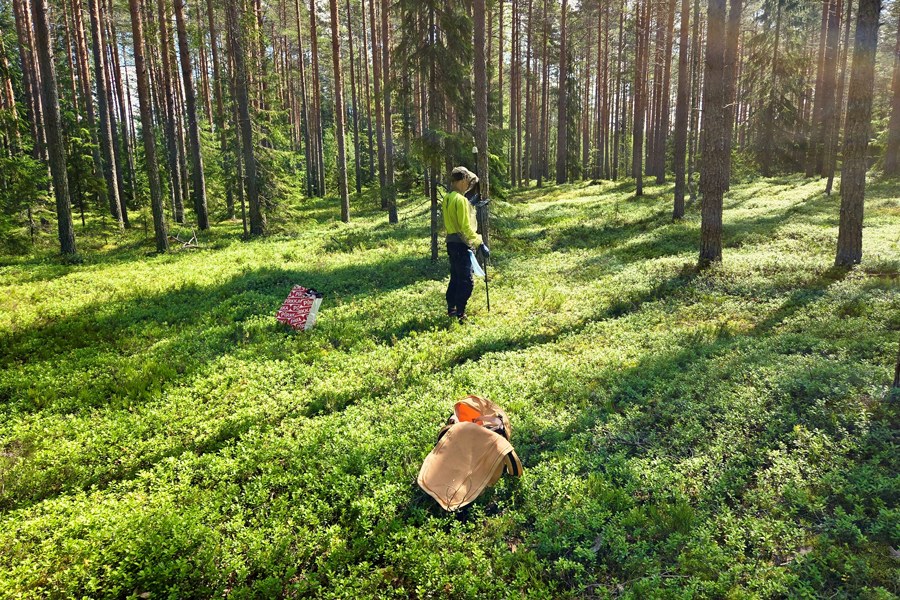
“Our technology enables the accurate measurement of, for example, CO2 emissions from forest soils. The regular monitoring of SOC stocks provides accurate and reliable data on local changes quickly, effectively and affordably. It eliminates guesswork,” says Jan Viljanen, CSO of Cense Analytics. Viljanen completed both his master’s degree and doctoral dissertation at Tampere University and currently also works as a researcher at the Arctic University of Norway in Tromsø.
According to Juha Toivonen, Professor of Photonics at Tampere University and a member of the Board of Cense Analytics, similar measurements were previously possible only under laboratory conditions, which made them costly.
“The technology developed by Cense Analytics delivers laboratory‑grade measurement precision directly in the field,” says Toivonen.
Demand was the key driver behind the development of the innovative technology
The laser‑based measurement technology developed at Tampere University was initially used, for example, to detect the presence of chemical elements in mine waters. Around 2019, the researchers – who were known for their practical and experimental approach – began receiving enquiries from outside the academic community about measuring carbon stored in soil.
The first measurements proved highly promising, prompting further development of the method. Viljanen completed his doctoral dissertation on the same technology before the year was out. Grant funding from several sources propelled the research forward, and it soon became clear that there was a strong demand for this type of innovation.
The researchers began collaborating, for instance, with the Baltic Sea Action Group (BSAG). One of the founding members of BSAG’s Carbon Action Project, launched in 2017, is Ilkka Herlin, who later became Chairman of the Board at Cense Analytics.
“This collaboration enabled us to gain valuable insights into farmers’ perspectives and the needs of the agricultural sector. In another fortunate turn of events, the then cabinet of Prime Minister Sanna Marin allocated funding for the development of the land use sector. We applied for and were awarded this funding,” says Toivonen.
The successful experiments generated growing interest among both the researchers and agricultural stakeholders. Although the researchers had not originally planned to launch a company, that is what they ended up doing. In March 2023, they were invited to present their prototype at Herlin’s farm, and suddenly orders began to pour in.
Cense Analytics took its first steps in April 2024.
The company initially hired research equipment from Tampere University but now operates independently.
Carbon data accelerates the transition to sustainable agriculture
Cense Analytics provides measurement services for customers seeking accurate and reliable data on their carbon footprint. Major food companies, such as Nestlé and Valio, already rely on the company’s data. The technology also provides farmers, the forest industry and the public sector with important information about the carbon sequestration potential of soils.
Viljanen notes that the measurements conducted by Cense Analytics comply with international standards, enabling customers to, for example, back up green claims on their product packaging.
The company has set its sights on the international market and has already carried out measurements and explored potential collaborations in several countries outside Finland. Food production is a vast, high-profile and intensely competitive sector, whereas farming remains a heavily regulated field with a slow pace of change.
Viljanen and Toivonen believe that accurate carbon footprint data holds enormous potential in the future carbon credit market. This data can encourage the adoption of sustainable agricultural practices, if it enables farmers to earn additional income and offset the costs of measures taken to increase carbon storage in soil.
“In my opinion, the most cost-effective option for large-scale carbon sequestration is regenerative agriculture,” says Toivonen.
In the long term, storing carbon in soil helps to restore degraded farmland, increase crop yields and improve the resilience of agricultural systems – while also helping to safeguard national security of supply.
Cense Analytics
- Research that led to the establishment of Cense Analytics, conducted at Tampere University, was funded between 2019 and 2023 by the Tiina and Antti Herlin Foundation, the Research Council of Finland, the Ministry of Agriculture and Forestry’s Catch the Carbon programme, and the Novo Nordisk Foundation.
- The company was founded in 2024 by Tampere University researchers Juha Toivonen and Jan Viljanen as well as Tuomas Siltala.
- The company employs ten staff members, almost all of whom are alumni of Tampere University.
- Annual turnover has not yet been made public.
- The company is located in the Rusko industrial district in Tampere.
Further information
Juha Toivonen
+358 40 849 0490
juha.toivonen [at] tuni.fi
Jan Viljanen
+358 50 468 4016
jan.viljanen [at] cense-analytics.com
Author: Anna Aatinen


