Degree programmes in computer science and information technology prepare professionals for our changing world

The first professor of computer science in both Finland and the Nordic countries was Reino Kurki-Suonio, who joined the former University of Tampere (UTA) 60 years ago. The first degree programme in information technology was launched 40 years ago at the former Tampere University of Technology (TUT) by Professor Yrjö Neuvo.
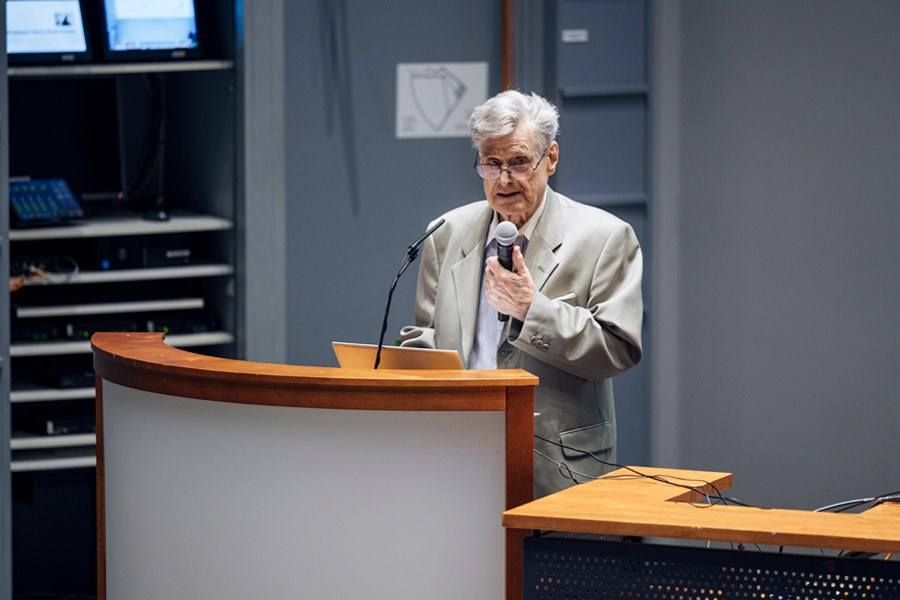
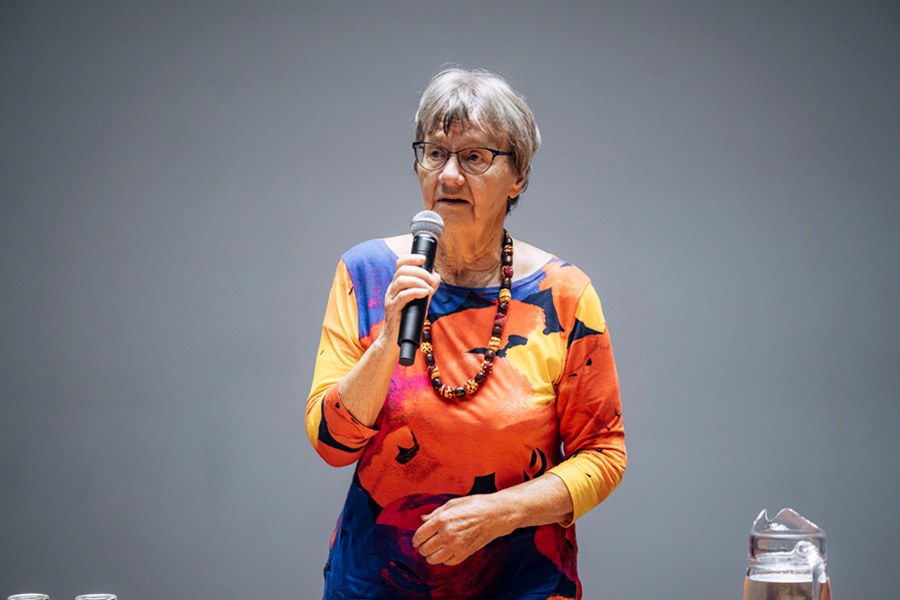
Both emeritus professors gave speeches at the anniversary seminar held at Tampere University in September 2025.
Digitalisation and automation have profoundly reshaped our society, and technological advances have transformed both our everyday lives and professional environments.
Tampere University has long been at the forefront of developing new technologies as well as producing expertise and thousands of highly skilled professionals in the fields of IT and computer science.
Education covers the full spectrum of IT
The first dedicated degree programme in information technology was launched in Tampere 40 years ago. Today, 140 new students are admitted annually to the bachelor’s programme.
BSc-level studies in information technology provide students with a comprehensive understanding of how the field functions as a whole, from software systems to integrated circuits.
“Today’s devices may be smaller and more complex, but the degree programme still retains many of its original elements,” says University Lecturer Terhi Kilamo, Head of the Degree Programme in Information Technology.
Kilamo identifies the programme’s broad coverage of the full spectrum of IT as a particular strength of Tampere University.
“We educate a wide range of professionals, from mathematically advanced engineers to software specialists.”
The breadth and depth of the programme prepare students for careers in a constantly evolving professional landscape.
“We aim to ensure our students are well-equipped to navigate the rapid and unpredictable changes in their field,” Kilamo adds.
Minor subjects foster the development of individualised expertise in computer science
BSc-level studies in computer science delve into programming, databases, human–machine interaction and information security, among other topics. Each year, 125 new students are admitted to the bachelor’s programme.
“One of the recent developments is the integration of data science as a key component of the BSc curriculum,” says Professor Hannu-Matti Järvinen, Head of the Degree Programme in Computer Science.
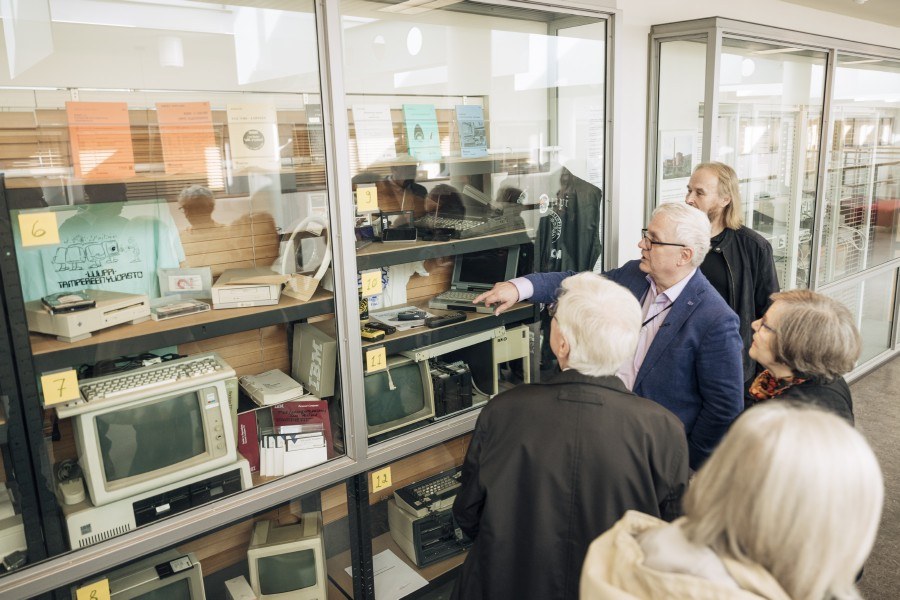
Computer science has applications across virtually all areas of human activity and society. As a result, minor subjects play an important role in the curriculum – students can include as many as three in their bachelor’s degree.
“For example, addressing the ethical challenges of AI requires knowledge of philosophy, while analysing human behaviour calls for an understanding of psychology,” Järvinen says.
At master’s level, students can specialise in data science, human–technology interaction, software or information security.
AI brings both change and uncertainty – education must rise to the challenge
Both information technology and computer science have evolved at a tremendous pace. The anniversary seminar also addressed the transformative and unpredictable nature of AI, with speeches delivered by Professor Jyrki Nummenmaa and Postdoctoral Research Fellow Jussi Rasku.
According to Rasku, the software industry was among the first to feel the disruptive impact of AI.
AI has already surpassed human capabilities in many tasks. Rasku demonstrated that AI can generate hundreds of lines of code in under a second.
“The field is undergoing irreversible change,” he says.
Rasku encourages students to cultivate soft skills in software engineering and information technology.
“How do we truly understand what customers need? How do we navigate the human world?” he asks.
Jyrki Nummenmaa points out that the impact of AI will vary across sectors, but none will remain untouched. AI is already being used in education for teaching, in social sciences for textual analysis, in linguistics for translation, and in journalism for a range of assistive tasks.
But does this mean robots will take our jobs?
Nummenmaa emphasises that education must rise to meet this challenge. AI is likely to take over mundane, repetitive tasks.
“This allows people to focus on other things. The demand for labour is changing – both in terms of quantity and quality – and we need to acquire new skills to keep up. In the future, both the goals of degree programmes and teaching methods will need to evolve in response to advancements in AI,” Nummenmaa says.
Read more about information technology education at Tampere University (only in Finnish).
Read more about computer science education at Tampere University (only in Finnish).


