Young entrepreneurs share insights from Succeed in Business training: “Many paths will open when people are interlinked”

Around 20 participants from each country will be inspired to consider entrepreneurial careers. They meet every 1–2 months in Finland, Estonia, and Latvia. Exposure to different mindsets helps in building a supportive entrepreneurial community and a network of peers.
The training promotes cross-border teamwork, idea generation, and diverse perspectives. Training consists of creative exercises, entrepreneur talks, and visits to organisations. Additionally, it offers tailored support across all stages of business development and covers key topics like finance, marketing, sales, customer service, management, and HR. The training is funded by Interreg Central Baltic (CB) 2021-2027 programme.
Diverse personal journeys and shared ambition for entrepreneurial skills
The participants of 18 to 25 years of age bring varied international and professional experiences into the training environment. The motivations for joining of Mohammad Amin Bayat from Finland, Arianna Osipova from Latvia, and Marc Ander Etti from Estonia, range from a passion for creating products to improving communication and business skills.
Amin, originally from Iran and having lived in Turkey before relocating to Finland in 2024, joined the programme through a business scholarship motivated by a long-standing passion for technology and entrepreneurship. He describes how relocating helped him unleash his potential:
"I became interested in having my own company as I came to the realisation that I have a skill that I can use. Becoming entrepreneur is something I really fell in love with".
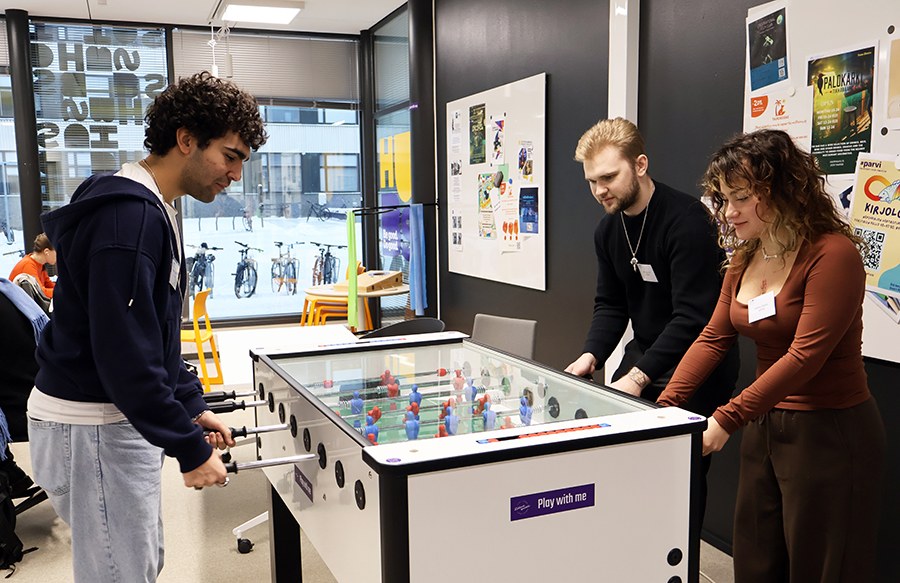
Arianna balances studies in online business administration and marketing at University of the People in California while also working as a marketing manager, artist and English teacher. All these roles fuel her interest in communication and creativity which make life better. She approaches entrepreneurship from a creative standpoint: generating ideas, improving communication, and exploring opportunities rather than pursuing a fixed business goal.
"I don’t have a specific thought about being an entrepreneur or a CEO. If I have an idea of making something come true, I try to catch it and develop it. For now, I’m just being a creative person with ideas”, she explains.
Estonian entrepreneur Marc runs an IT services company for mid-sized businesses and has several years of hands‑on entrepreneurial experience despite never having completed formal business studies. Marc sees entrepreneurship as a natural extension of his lifelong curiosity and willingness to try new ventures. The programme offers him long‑awaited formal guidance and strengthens his professional capabilities. He says:
I have always been very entrepreneurial, trying new things, grabbing onto every chance I get. I have tried many different business forums because I just love doing it. I came here to improve my skills and become better. Until now I have had to learn everything myself, so it’s nice to finally be somewhere where professionals can teach you.
Marc Ander Etti
Communication and collaboration are the core learnings
While participants are still in the early stages of the training programme, communication and collaboration already stand out as central themes. Amin highlights interpersonal skills and idea sharing in building supportive environments for innovation and inspiring learning.
You must have some people that will support you in your journey. Many paths will be open when people are interlinked.
Mohammad Amin Bayat
Arianna echoes the significance of communication and teamwork, appreciating the diversity of backgrounds and roles within the group. According to her, diversity strengthens creativity:
"I really resonate with Amin’s opinion: it’s all about communication. We meet so many different people here with different backgrounds, cultures, goals, and roles. Each person subconsciously develops a specific part of the team. And we never know after like 10 years where all of us will be. Maybe someone will become a CEO and we’re like, oh, do you remember we worked together in Succeed in Business programme. And it’s so beautiful if we can find the common ground working together”, Arianna says.
Marc finds value in the “six thinking hats” method introduced during a workshop in Riga. It reshaped his approach to analysing ideas and problem‑solving.
“This thinking theory opened many new thoughts in me about processing and analysing ideas. I am familiar with problem solving but this kind of analyzation of ideas was very, very valuable to me. We managed to get something out of every team member according to their strengths”, Marc says.
Hands-on workshops foster creativity and ideation
The programme’s workshops, such as thinking outside of the box, have been a highlight. Teams have been challenged to repurpose everyday objects in new contexts, pushing their creative thinking and approaching problems from different angles.
Marc, Arianna and Amin speak enthusiastically about exercises that pushed them out of their comfort zones, such as reimagining everyday objects for entirely new purposes. These workshops encouraged them to explore unconventional solutions, collaborate effectively, and challenge assumption and, at the same time, practice key entrepreneurial skills.
International networking is both an opportunity and a challenge. While Amin and Arianna highlight the benefit of exposure to diverse mindsets and the potential for future partnerships, Marc notes some organisational barriers, including the lack of a unified communication platform and logistical arrangements separating participant groups.
All three acknowledge that shyness and introversion of young adults might hinder networking. Considering new channels such as LinkedIn could be beneficial. Amin adds the value of challenging oneself:
“It’s another point for us to actually go out of our comfort zone and start speaking to people”.
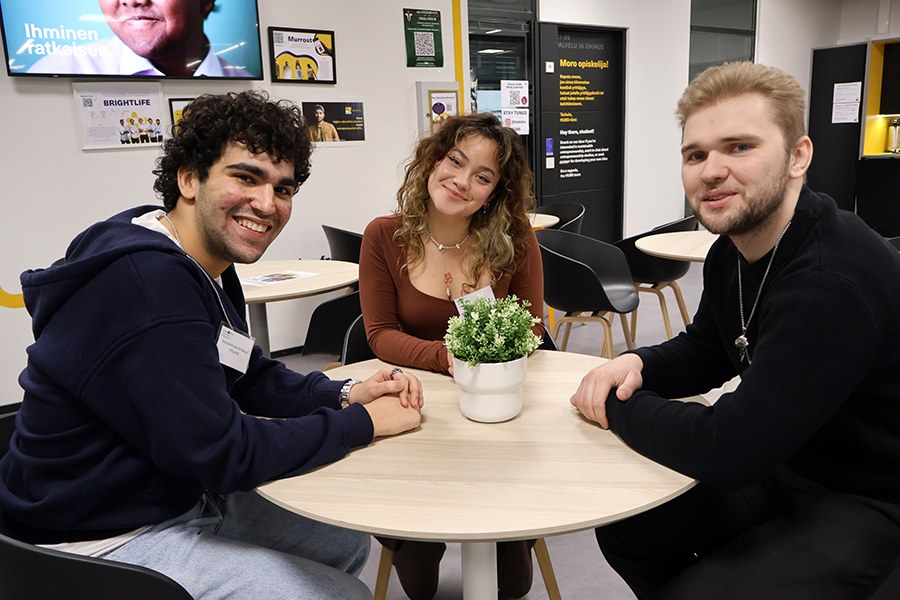
“We’re learning together and that makes it so cool”
Experience with programme facilitators and coaches has been generally positive. Amin says that he has got a lot of help. He describes receiving valuable advice from a mentor in Latvia regarding the competitiveness of the fashion industry, which led to reconsidering his business niche.
Arianna praises the Latvian facilitators for fostering an egalitarian and open working atmosphere that blurs the traditional teacher–student hierarchy, making discussions natural and supportive both inside and outside classroom.
I love that there is no feeling of being teacher and student. We are on the same level and can talk about any topic. Basically, we are learning together and that makes it so cool.
Arianna Osipova
Marc notes that while support so far has been adequate, he expects the training to speed up and to go into deeper, more substantial guidance. He sees the early phase as fun but too preparatory, with major projects and outcome-oriented learning anticipated in the future.
Both Marc and Amin express a desire for the course to become more intensive and focused on practical business outcomes, such as starting companies or forming partnerships, as the year progresses. They emphasise the importance of concrete results, including financial success and measurable achievements. As Amin puts it:
"I’m excited for us to move into practical applications where we can start building real businesses and partnerships”.
Despite differing views on the course content, all three agree that communication is a critical skill for entrepreneurs, and that the programme’s emphasis on teamwork and interaction is a valuable component. It broadens perspectives and fosters adaptability, with the potential for future entrepreneurship, partnerships and collaborations.

Succeed in Business project
The Succeed in Business project is funded by the Interreg Central Baltic (CB) 2021–2027 program. The entrepreneurship training organized by the project supports the entrepreneurial skills of young people in Finland, Latvia, and Estonia. The project is coordinated by the Latvia University of Life Sciences and Technologies, with Tampere University of Applied Sciences and the Association of Municipalities of Tartu County as partners.
The aim is to implement a 207-hour training program that will introduce approximately 80 participants to the business world in the three countries, broaden their understanding of the business environment, support the discovery of market niches, and help build sustainable cooperation networks. The project will run from May 1, 2024, to October 31, 2026.
For more information, visit the project website https://projects.tuni.fi/succeedinbusiness/
Contact person
Yulia Sergeeva
Project Manager Yulia Sergeeva
Author: Hanna Ylli


