Satellite technology is a rapidly expanding field – Tampere University leads the way in education and research

Satellite technology has become one of the fastest-growing fields of technology worldwide, with applications ranging from everyday navigation and mobile network synchronisation to safety, rescue operations and space research. In Finland, this sector is growing quickly, and the demand for skilled professionals has never been greater.
Tampere University plays an active role in these advancements. The University educates specialists in next-generation wireless communications and positioning, and conducts internationally recognised research in satellite navigation, signal processing and space technology.
Hub of expertise in satellite navigation
At Tampere University, research into satellite and navigation technologies is led by Professor Heidi Kuusniemi, one of Finland’s most renowned experts on Global Navigation Satellite Systems (GNSS), including GPS and Galileo. Her research group focuses on developing next-generation satellite navigation, detecting interference, preventing threats, and creating resilient and precise navigation methods for applications such as autonomous vehicles, drones and critical infrastructure.
Under Kuusniemi’s leadership, researchers at Tampere University explore topics such as:
detection of GNSS interference and spoofing, along with situational awareness;
advanced positioning and timing technologies and related applications;
integration of satellite navigation with 5G and 6G networks;
innovative navigation methods using Low Earth Orbit (LEO) satellites.
Receiver technologies are the cornerstone of satellite systems
The reliability of satellite systems depends on sophisticated radio technology. At Tampere University, Professor Jari Nurmi leads research in this field, drawing on his extensive experience in embedded processor systems, GNSS receiver architectures, and digital implementations of communications receivers and networks.
Nurmi’s research has been instrumental in developing energy-efficient, accurate and robust satellite receivers. His research group focuses on developing, for example:
GNSS receiver architectures
optimised hardware for signal processing
prototypes for next-generation positioning devices.
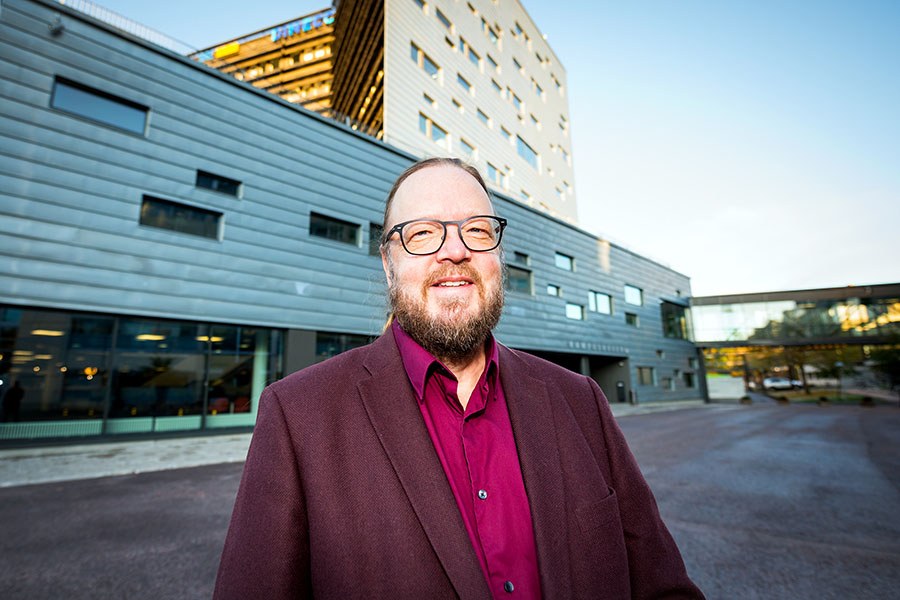 Photo: Sari Laapotti
Signal processing for satellite positioning – the key to accuracy and reliability
Advanced signal processing lies at the heart of satellite positioning, enabling the precise and reliable utilisation of weak and noisy satellite signals. At Tampere University, research in this area is led by Professor Elena-Simona Lohan, an internationally recognised expert in GNSS signal processing. Her research group specialises in:
advanced GNSS signal processing algorithms for handling weak and multipath signals
enhancing resilience to interference at the signal level
combining GNSS signals with those from 5G/6G networks and other radio technologies
energy-efficient signal processing for satellite positioning.
Lohan’s work complements that of Kuusniemi and Nurmi by ensuring robust signal reception even under the most challenging conditions. Tampere University serves as a unique hub of expertise in satellite technology, spanning the entire chain from signal acquisition and tracking to the utilisation of positioning data.
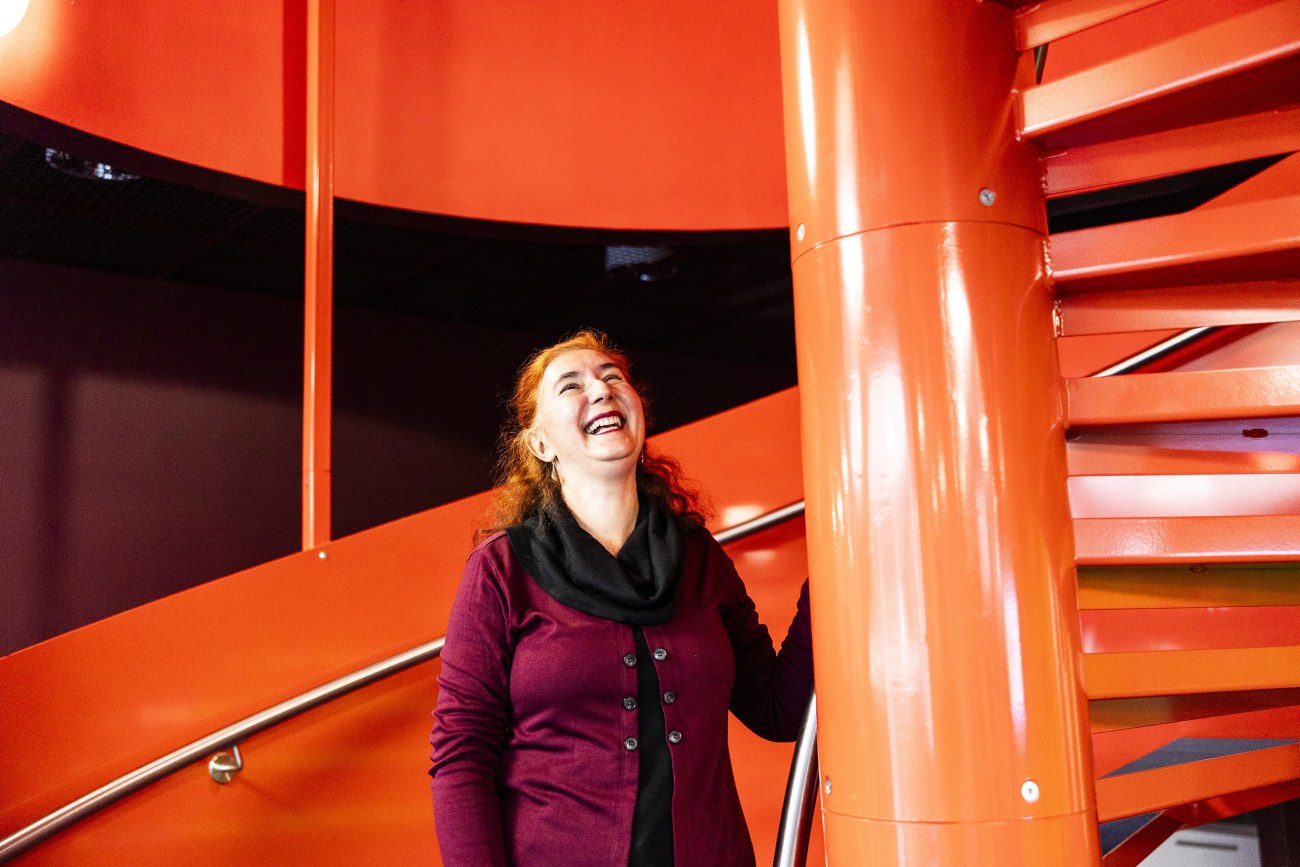 Photo: Jonne Renvall
Clear pathway to building expertise in satellite technology
Tampere University offers bachelor’s and master’s programmes that provide students with in-depth knowledge in the key areas of satellite technologies, including:
wireless communications and RF technology
signal processing
satellite positioning and navigation
embedded systems and hardware technology.
Students have the opportunity to participate in research projects, complete laboratory assignments and secure MSc thesis placements that address real-world challenges, such as interference detection, satellite signal reception and the development of measurement systems for space technology.
Engineering graduates from Tampere University typically find employment, for example, in:
companies developing satellite navigation systems
space and technology companies
telecommunications operators
research institutions and the public sector.
Finland invests in space technology research, with Tampere leading the way
The space industry is thriving in Finland. Driven by emerging start-ups, the development of nanosatellites and numerous international projects, the demand for skilled professionals is increasing year after year. Tampere University is addressing this growing demand through substantial investments in education and research on satellite and positioning technologies, reinforcing Finland’s role as a global leader in space technology.
The research groups led by Professors Heidi Kuusniemi, Jari Nurmi and Elena-Simona Lohan exemplify Tampere University’s pioneering role in this field – and its commitment to educating experts for an industry that is becoming increasingly important globally.
Author: Riitta Yrjönen


