Professor Sanna Kumpulainen investigates how we seek and use information in the changing world

As a professor of information studies, Sanna Kumpulainen is accustomed to changes in her field. When she began her university studies in the 1990s, the internet was making a significant breakthrough. The advent of social media in the 2000s changed our ways of communication. Now, in the 2020s, we are in the middle of a new revolution brought about by artificial intelligence.
“Artificial intelligence will change the entire concept of information as well as information itself”, Kumpulainen says.
Kumpulainen studies information and its dissemination, for example, information retrieval and different information systems and their content. She examines how people search for information and how information systems serve us. In her research, Kumpulainen is especially interested in the working life context and task-based perspectives.
“In contemporary society, the significance of information cannot be denied. Its role will only grow as processing capacity develops and changes”, Kumpulainen thinks.
“Information has traditionally been knowledge recorded in books as human capital. In our new information environment, it is also something entirely different. I study the essence of information, in other words what information is bringing to human activity and society at large”, Kumpulainen explains.
Artificial intelligence steers information studies in a new direction
Kumpulainen leads the InfUSE research group at Tampere University. The group has extensively studied, e.g., the utilisation of image materials. In practice, this means, for example, that the group investigates how a social media researcher uses images in their research – how information is found and whether the search can be supported in some way.
In Kumpulainen’s research, open science, such as the utilisation of open research data, is also a strong element. The InfUSE group studies, among other things, how open research data should be offered and what problems exist in using them.
Artificial intelligence plays a prominent role in Kumpulainen’s projects. Her group studies the use of AI in editorial and journalistic work among other things.
“Big promises have been made about AI, such that it can produce text. The project is investigating how AI can be utilised in real life editorial work. What are the areas where it supports the journalist and what are the areas where it does not”, Kumpulainen says.
AI is not a new phenomenon in the field of information. Kumpulainen says that, for example, language models have already been used in information retrieval for a long time. However, a significant change has occurred in how conversational AI has altered our ways of searching for information.
“Interaction with, for example ChatGPT, is entirely different from the past when we used information retrieval systems. We no longer need to know the right keywords to search for information. Today, we can just ask ChatGPT directly to infer things and explain phenomena to us. It is interesting to see how this change will affect people’s ways of searching for and using information in the future”, Kumpulainen says.
Kumpulainen believes that changes in the field are always a push forward.
“I could study the same research question continuously as the world and the field transform. In that sense, I work in a meta science because information permeates the entire society”, she says.
Research helps to develop information systems
Kumpulainen focuses on basic research. The work is multidisciplinary as information can be studied broadly from different perspectives and scientific fields. Among other things, global megatrends and major crises affect research in the field.
Kumpulainen gives as an example that climate change can be examined through information phenomena.
She hopes that the field can move forward from overly narrow research frameworks.
“The objective of information systems is to serve people’s goals. It would be important not to complicate things unnecessarily with tunnel vision”, Kumpulainen says.

She finds that information studies as a field have the potential to collaborate closely to ensure that information systems develop and serve people well.
“Researchers produce much new information, and it could directly benefit various information services”, she points out.
Kumpulainen and her group have collaborated with organisations such as the National Library and National Archives of Finland to develop better services for researchers.
The InfUSE group is also involved in developing the national infrastructure FIN-CLARIAH - Common Language Resources and Technology Infrastructure for social sciences and humanities research.
Information researchers also have directly influenced internet search engines.
“For example, Google’s search engine uses evaluation metrics developed by professors of information studies”, Kumpulainen says.
The world of libraries brought her to the field
Kumpulainen has been an avid library user from a young age. Playing library was one of her favourite pastimes as a child. The library field eventually led her to study information science.
“At that time, I did not think I would become a researcher. It was only after working in libraries, spending some time as an entrepreneur, and then joining a university research project to work on my dissertation that I realised how fascinating and challenging research was”, Kumpulainen says.
Postdoctoral research took Kumpulainen to the University of Amsterdam in the Netherlands, after which she briefly returned to work at the library of the former Tampere University of Technology. However, she continued research in her spare time.
When the Research Council of Finland granted their group funding for a four-year research project examining task-based information interaction, she decided to pursue a career in research.
“Research drew me in, and problem-solving fascinated me. In research, I can also benefit from my experience from libraries”, Kumpulainen says.
In 2020, she was appointed associate professor, tenure track, at Tampere University. In January 2025, she was promoted to a full professorship.
“My research career has progressed in intermittent steps, but as a professor, I can now focus on my research work in the long term”, Kumpulainen says.
Training skilled individuals to develop our society
Kumpulainen is deeply involved in teaching information studies. She enjoys teaching and describes it as an important means of societal impact for Tampere University.
“We train academically skilled individuals for the job market and the development of society. We also engage in a lot of dialogue with professionals in our field. Even though the world changes, teaching patterns of thinking endures”, Kumpulainen says.
“I naturally also hope that some of our students will pursue a research career”, she continues.
Kumpulainen has many research ideas for the future and hopes to advance fundamental research in her field. Doctoral researchers also provide fresh ideas as they are doing research on their own independent topics.
In academic work, independence is an important value.
“Academic freedom and responsibility make universities exceptional workplaces. At the university, you can fulfil your ideas in a way that is quite different from anywhere else”, Kumpulainen points out.
Sanna Kumpulainen
- Professor of Information Studies at Tampere University’s Faculty of Information Technology and Communication Sciences.
- Leads the InfUSE research group.
- Appointed an Associate Professor, tenure track, at Tampere University in 2020.
- Postdoctoral researcher in a project funded by the Research Council of Finland in 2017-2020.
- Worked in research services at the former Tampere University of Technology Library in 2015-2017.
- Postdoctoral researcher at the University of Amsterdam in the Netherlands in 2015.
- Holds a PhD in information studies from Tampere University.
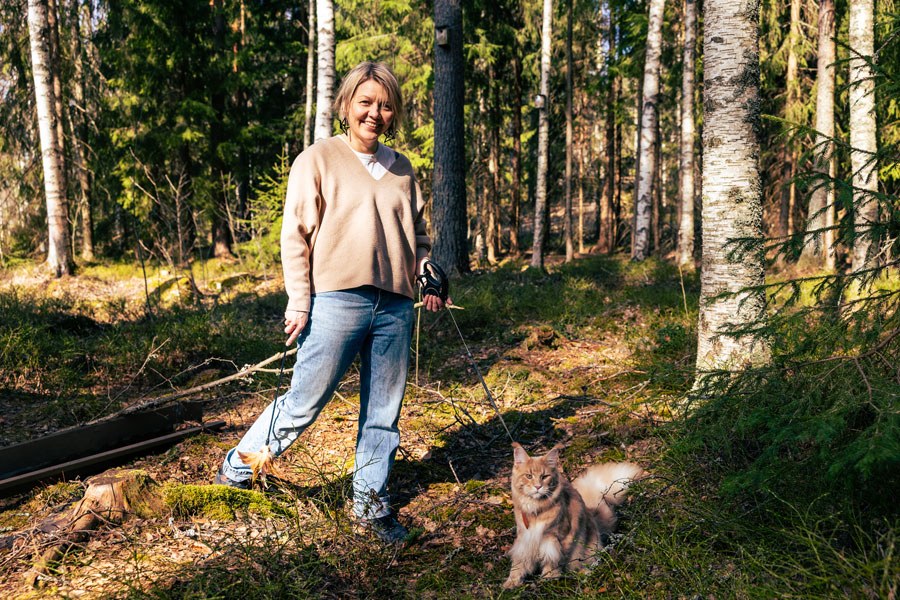
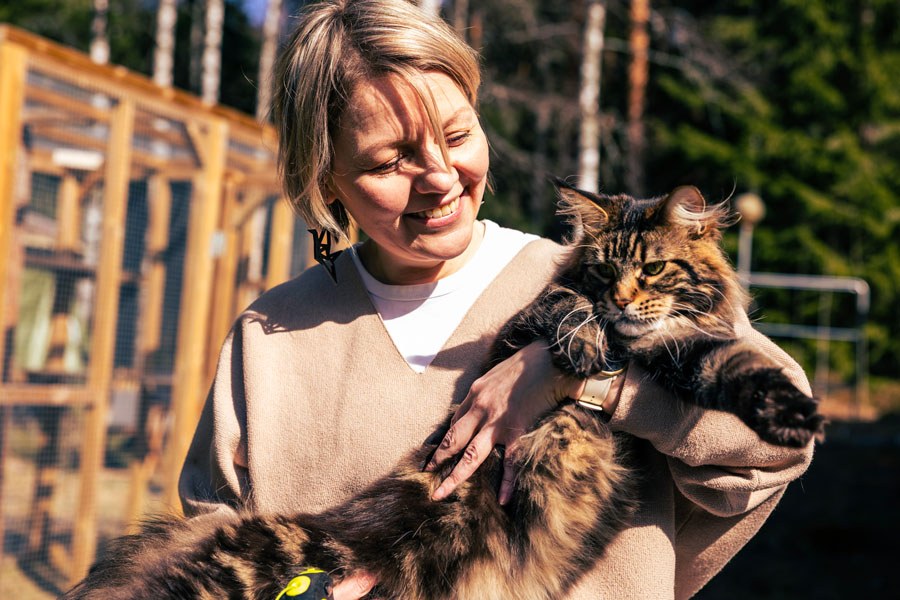
- Spends her free time with family, gardening and her Maine Coon cats.
Author: Elina Kirvesniemi


