The butterfly effect of education export: towards sustainable development through architecture education

China is the world's largest builder, producing more than 15% of all global carbon dioxide emissions. China's total carbon dioxide emissions account for 31.5% of the world's carbon dioxide emissions, and construction accounts for 50% of China's emissions.
– We have issues that affect the entire planet to solve, such as climate change. In China, the emission figures are shocking. We cannot act in such a way that we put blinders to our eyes and think that we are now here in Finland adding insulation to the wall and then things will be fine. We need to be present in this world: to cooperate, influence and be active with different people, cultures and countries, says Kasmir Jolma.
Several teachers from TAMK cooperate with Weihai Vocational College. Kasmir Jolma is the teacher in charge of architecture. He has 140 students in two groups. This year, there have been about 160 hours of on-site teaching, and the same number remotely. In addition to his part-time work as a part-time teacher, Jolma runs his own architectural firm in Tampere.
Jolma has taught the students for the second year. The topic of the latest course at the turn of October and November was artificial intelligence, which was utilised in the brainstorming and visualisation of urban planning and building design.
Sustainability thinking built into education
In the training programme, Chinese students get to know Finnish architecture and design practices as part of their three-year studies, in the form of several different courses in each year. The training is funded by the local university, and the project is coordinated by Tree – Continuing Education, which provides TAMK's continuous learning services and education export. Sustainability thinking is built into all the content of the education.
In accordance with TAMK's strategy, sustainability and responsibility must be taken into account in the planning and implementation of education so that graduating students have the ability to apply their sustainability skills and develop the sustainability and responsible operations of their work community. A great example of this is the intensive workshop in China, where Jolma's architecture students built circular economy pavilions.
– Traditionally, the construction industry is not very innovative or willing to experiment. Traditional methods and design solutions prevail in the industry, and the work is very manual. Small projects can be used to test innovative solutions, and sometimes new insights start to snowball. Eventually, these innovations may become mainstream, meaning that the so-called butterfly effect may also occur in architecture.
While visiting the Weihai educational institution, Jolma had noticed how much useful material was lying unused in the alleys of the city, ending up as waste. This gave rise to the idea that in addition to theoretical studies of the circular economy, it would be useful for students to try out what the circular economy means in practical design and construction. The topic was a good fit for the content of the Innovation in Architecture course, and it will also be continued in future courses.
Before the course workshop, the students had familiarised themselves with the basic concepts of architecture and sustainable development in design in orientation courses and carried out a small design exercise. After this, the workshop could focus on practical work instead of theory. 74 students participated in the workshop, who designed and built seven pavilions made of recycled materials.
Students' experiences of TAMK's architecture education
"What is most refreshing is Finland’s people-centric, low-carbon building philosophy – the concept of sustainability is embedded in every stage of design and construction. It is not merely about using green building materials but about designing structures that harmonise with nature (such as maximising the use of natural light) and prioritising long-term energy efficiency – a depth of understanding I had not previously attained." Cao Rui
"I have perceived the differences between Chinese and foreign educational methods, as well as the ideological disparities in the ways of guiding students to create. I believe I have learned a great deal from teacher Kashmir that will benefit me for a lifetime. His meticulous attitude towards work, unique aesthetic perspective, and step-by-step guidance that encourages us to think independently are all valuable things I have gained." Zhang Yuxuan
"The knowledge and methodologies I have acquired will empower me to promote sustainable architectural practices in China. Integrating these approaches will allow me to contribute to designing buildings that are not only functional and environmentally responsible, but also culturally and aesthetically harmonious – adding meaningful value to China’s architectural landscape." Shao Chenchen
Teacher education supported the development of experimental pedagogy
Architects teach a lot without pedagogical qualifications. In addition to being an architect, Kasmir Jolma has now qualified as a vocational teacher. He managed to combine his teacher education with his business and teaching, and the studies lasted just over a year.
– I have been teaching for a long time, and I will probably continue to teach in the future. Once I've graduated as an architect, I'll be an architect for the rest of my life. No one is going to take that away from me. The same applies to teacher education, now I'm still a teacher at the age of 68.
The teacher training included a course in development work. The teachings for the Chinese autumn and a two-week workshop period for the autumn had already been agreed, and the workshop was an excellent topic for development work.
– In the development work course, I killed two birds with one stone. I had to think about things that I might skip if I prepared the course alongside the normal work as usual.
Katariina Hakala, Senior Lecturer in professional teacher education, has supervised the development work for 54 students over the years. An article about Jolma's work was also published in TAMK Journal in collaboration between Hakala and Jolma. The work has been presented to a large number of students in webinars.
– Kasmir's teaching in China is a great example of how pedagogical solutions can be used to invite participants to explore, develop and innovate – to find new solutions to the challenges that surround us. Anyone can make good innovations if they are given a breeding ground, Hakala says.
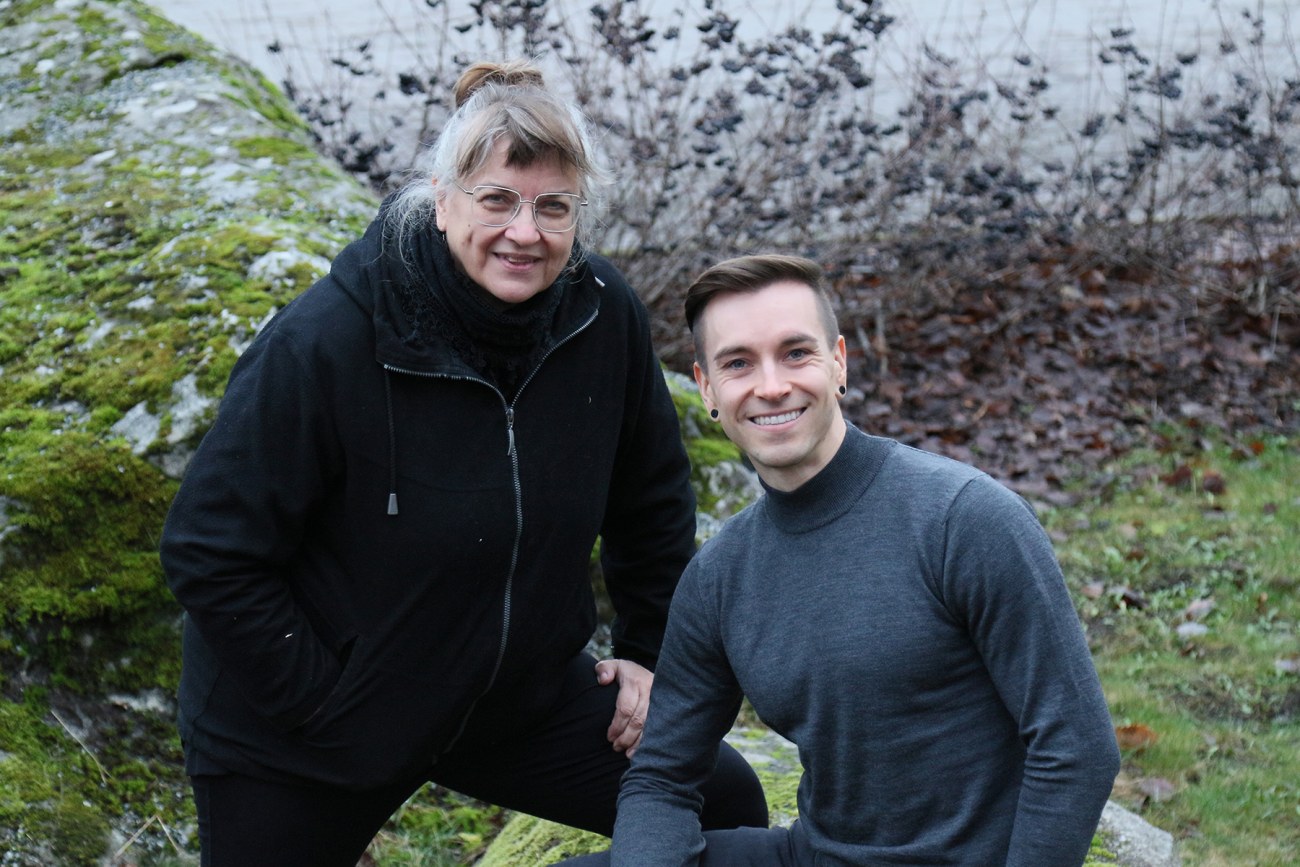
Teacher education has helped Jolma in many ways in planning his teaching methods. For example, he updated lecture slides with various activations and thought about group works.
– Teacher education provides the tools for how to teach and how to get students to learn, Katariina Hakala says.
Kasmir Jolma has attended a Steiner school from the first grade to the end of upper secondary school. It shows in his work.
– I also chose to study Steiner pedagogy in my professional teacher education. Originally Steiner education has made me aware of the fact that there is a different kind of pedagogy. I find myself to be a Steiner pedagogical architecture teacher. I apply a lot of handicrafts, experiential methods and self-expression.
Author: Emmi Rämö


