From demolition to renovation: protecting our cultural and environmental heritage

Architect and Docent of Architectural Heritage Iida Kalakoski and architect and building conservator Riina Sirén are devoted advocates for the preservation of historic buildings. Both their newly published non-fiction book and their latest study, launched in January 2026, examine why older buildings in Finland are so readily demolished and replaced with new ones, even though renovation is the low‑carbon option and supports social and cultural sustainability. What sustains this positive perception of demolition?
The three-year study, titled “The Repair Shift – Towards Resource-wise Construction” (Finnish: Korjaamisen käänne – Rakentamisen resurssiviisautta etsimässä), addresses this question by exposing the negative attitudes that are commonly associated with renovation. Through their research, Kalakoski and Sirén are looking to strengthen the dialogue between research, education and professionals across the construction sector.
The two researchers emphasise that the demolition of existing buildings affects us all: it shapes our everyday environments, erodes our built heritage and wastes limited planetary resources. In many cases, the problem does not even lie in the actual building slated for demolition but in its cultural context.
“Decision‑makers and construction professionals are often aware of the ecological and financial advantages of renovation, and yet they opt to build anew. We want to understand why,” says Iida Kalakoski.
The Kone Foundation awarded a €313,300 grant to the study in December 2025. The study is a collaborative effort between Tampere University and the University of Turku, bringing together researchers specialising in architecture, civil engineering and cultural studies.
Not only walls, but a part of history
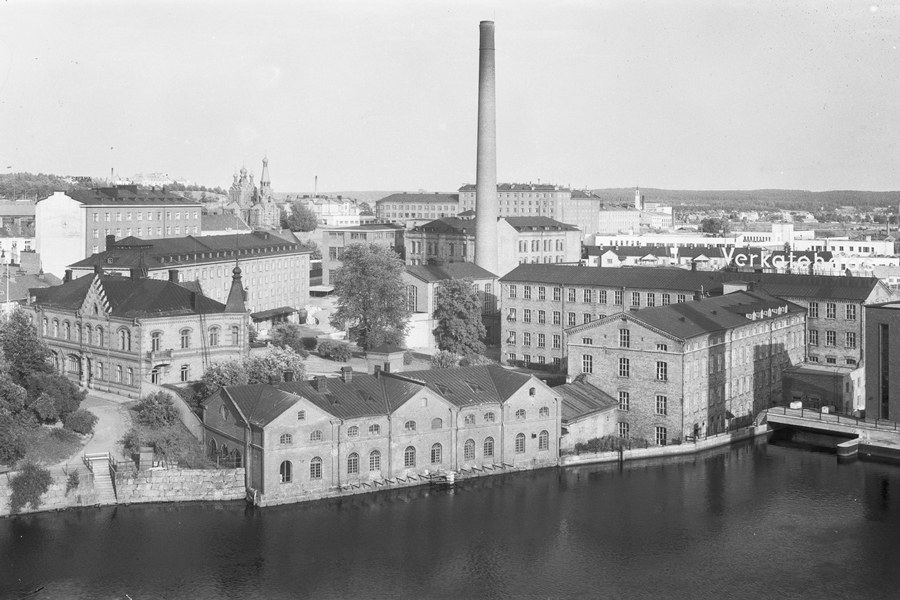
According to Kalakoski and Sirén, the Finnish cityscape is undergoing an exceptionally rapid transformation. In Finland, it is common for buildings to have scarcely reached what might be considered human middle age before ideas begin to surface that they should be demolished and replaced with something more contemporary. These ideas are often reinforced by assessments that label these buildings as ugly, inefficient, worn or outdated.
However, Riina Sirén argues that the notion of demolition as an inevitability should be abandoned. She points out that there is no requirement to replace the building stock every 30–40 years.
Demolition evokes strong emotions. Old houses may be steeped in nostalgia, but they may also carry genuine cultural and historical value. Why, then, is the general attitude in Finland so often opposed to renovation?
”Based on our observations, the demolition frenzy is a real phenomenon in Finland. We believe that this idealisation of ‘newness’ stems primarily from the optimistic view of progress and the strong emphasis on safety that characterise Finnish society,” says Kalakoski.
Finns tend to favour what is measurable, precise and certain. Our inclination towards demolition is further fuelled by negative public discourse and news coverage highlighting indoor air issues, the projected costs of upcoming repairs, and high-risk structures. Decisions to tear down a building are easier to make when renovation plans are presented as being fraught with uncertainty.
Kalakoski estimates that a building deemed beyond repair in Finland would probably not be considered so elsewhere. She has noticed that the demolition of old buildings can leave many people feeling sad afterwards. The destruction of houses that reflect their historical era can even evoke a sense of cultural trauma for the entire nation.
Keeping Earth habitable
There are many perceived barriers to renovation. According to Riina Sirén, public attitudes are influenced, for example, by idealised architectural renderings of unbuilt projects that bear little resemblance to the final result. Buildings may also be deliberately allowed to deteriorate to the point where demolition becomes the only viable option.
How could we bridge the gap between these opposing viewpoints – renovation and demolition?
“We are looking to bring new perspectives to the demolition debate as well as introduce technical and cultural expertise into it. It is important to recognise that the indicators, standards and regulations applied in this field are culturally constructed“, says Kalakoski.
The two researchers are pleased that current architecture students are showing a strong interest in renovation and the management of our built heritage as an area of specialisation. However, this alone is not enough to turn the tide. Sirén emphasises that the construction sector needs professionals with expertise in the design of restored structures and in the development of new renovation methods.
When deciding whether to renovate or demolish, it is also important to reflect on whether one’s own views are based on emotion or fact. Research confirms that renovation is neither costly, complicated nor risky.
“We hope that renovating buildings becomes standard practice in the brave new future. After all, having a habitable Earth is rather nice,” Sirén adds drily.
The three-year study exploring resource-efficient approaches to construction received a €313,300 grant from the Kone Foundation in December 2025.
The Finnish-language non‑fiction book authored by Kalakoski and Sirén for a general audience, Pelastakaa talot! – Purkuvimmaa purkamassa, was officially released during the Finnish Architecture and Design Days on 3 February, 2026.
Further information
Author: Anna Aatinen


