Nose blocked without a reason – Ilkka Kivekäs improves treatment by making airflow visible

Nasal congestion is familiar to all of us at least in connection with a cold. While congestion caused by a cold passes, many of us suffer from chronic nasal congestion, which can significantly impair quality of life. Many things can cause congestion, and finding the correct diagnosis is crucial for successful treatment.
Even if a nose is blocked, a medical check-up may not necessarily find a clear defect. For example, nasal structures can be examined and imaged, but no one can see with the naked eye or from images how air moves through the nasal cavity. Professor Ilkka Kivekäs from Tampere University is seeking a solution to this problem.
“Nasal congestion sounds like a trivial problem, but research shows that patients can compare congestion to the symptoms of coronary artery disease. Although congestion is not a serious illness, it is a major nuisance and can be irritating if the nose is constantly blocked, preventing sleeping or smelling,” Kivekäs says.
For eight years, Kivekäs and his colleagues have been investigating nasal airflow using computational methods. Although air does not travel many centimetres in the nose, studying it is more complex than one might think. It is not yet really known how air should flow through the nose. However, the Goldilocks principle also applies to the nose: for the nose to feel good, its walls must not be too narrow or too wide. The space where air flows must be just the right amount of narrow.
“We are trying to calculate and measure what ‘just the right amount of narrow’ is. The goal is to teach software to calculate directly from computer images how air flows in the nose and where the problem areas are,” Kivekäs says.
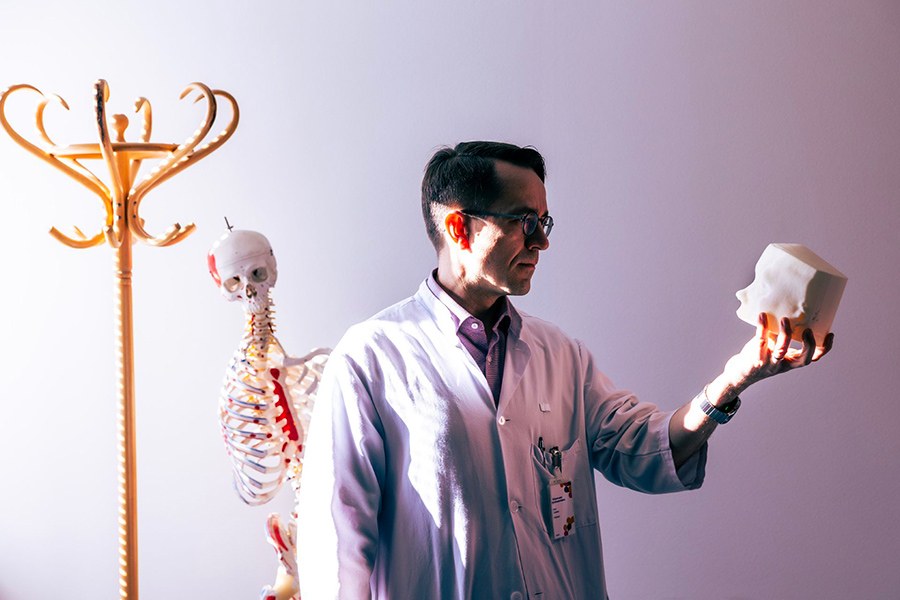
Since flow calculation is more the domain of an engineer than a doctor, Kivekäs is conducting research together with flow experts on Tampere University’s Hervanta campus. However, it will still take some time before software can calculate nasal airflow in clinical practice.
“Calculation is a very difficult and slow process. Advancing this project has taken years and requires a lot of computation. Currently, one nasal flow calculation with an extensive computer simulation takes a week,” Kivekäs explains.
Faster diagnostics with sniffing
Alongside investigating nasal airflow, another key focus of Kivekäs's research is to introduce an electronic artificial nose into clinical work.
The electronic nose, or eNose, developed by the Tampere-based company Olfactomics, can detect various diseases.
Kivekäs aims to utilise the eNose particularly for cancer diagnostics. He is researching how the artificial nose works in diagnosing and monitoring cancers of the mouth, throat, and larynx.
“Based on our research results, the eNose appears to detect cancer very well and the process is also very quick. Diagnosing cancer with current methods takes a long time, but the eNose can do it in a few minutes," Kivekäs says.
Next, further studies will investigate whether the eNose can identify patients whose cancer has been cured by treatments and those who have residual disease or recurrent cancer.
The artificial nose analyses cancer from a urine sample. Although the eNose can distinguish a cancer patient from a healthy person based on a sample, it is not yet known whether it can differentiate between different types of cancer. More control groups and research are needed for that.
“Many animals can detect diseases in people, but we cannot use animals because they often get tired and start playing at some point. Animals are not a functional solution in medicine and hospital environments either. The artificial nose would be a mechanical system to replace animals,” Kivekäs points out.
Every surgery that can be avoided should be avoided
Since doctors currently cannot measure nasal airflow in clinical practice, it can lead to unnecessary surgeries, which can be harmful at worst.
“Doctors are well-meaning people. But without objective information on how air should flow, mistakes can be made. Few people have a perfectly straight nasal septum; most have one or more deviations. Which deviation is harmful and what is normal is currently largely based on subjective assessment,” Kivekäs notes.
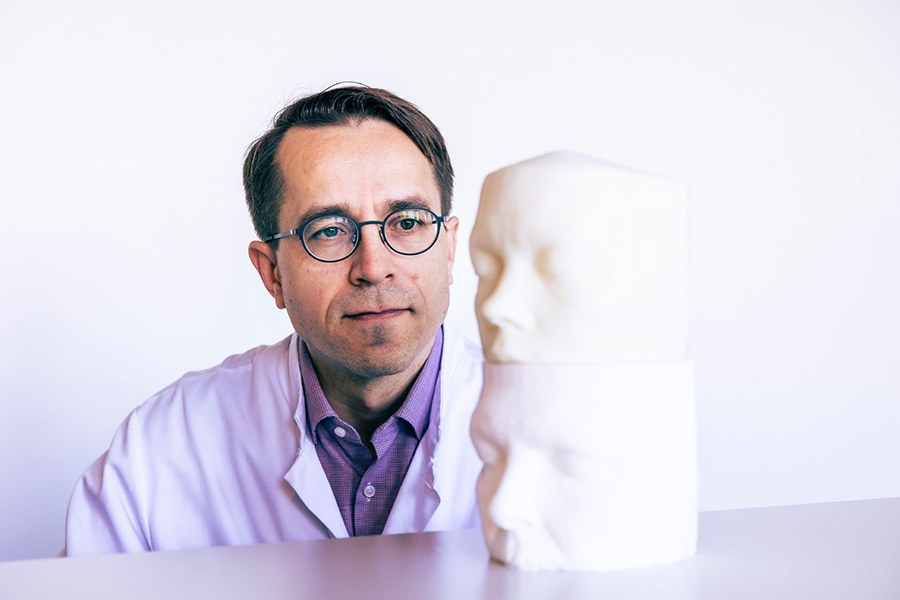
Kivekäs also shares an interesting example from a placebo-controlled study that yielded surprising results. In the study, placebo surgeries were performed on the nose, and the results showed that they eased nasal congestion almost as well as real surgery.
“People are susceptible to believing in various treatments if they are presented convincingly. No one should be deceived, but surgery should only be performed when it is known to be beneficial,” Kivekäs says.
In addition to avoiding unnecessary surgeries, Kivekäs highlights teaching as an important and enjoyable aspect of his work. He has been teaching for about twelve years. “No matter how great our research is, in the end, teaching is the area where society will reap the greatest benefits,” he says.
“The biggest contribution to the future is maintaining a high standard of education. TAYS is a relatively small university hospital, and resources for hard science are limited. But if we train good doctors, they will make sensible decisions and treatment plans. Through this, society will gain the most benefit.”
Ilkka Kivekäs
- Born in Lempäälä, lives in Tampere.
- Completed his PhD at Tampere University in 2011.
- Specialist in ear, nose and throat diseases in 2011.
- Postdoctoral degree at Harvard University in Boston 2012–2013.
- Awarded the title of docent by Tampere University in 2017.
- Head of Department at Tampere University Hospital in 2018–2024.
- Appointed Chief Physician at Tampere University Hospital in 2024.
- Appointed Professor of Ear, Nose and Throat Diseases at Tampere University in 2024.
- Does sports and different kinds of exercise. Children help to keep him active.
Author: Sari Laapotti


