Microbial encounters with families to catalyse change – a study combined science and art

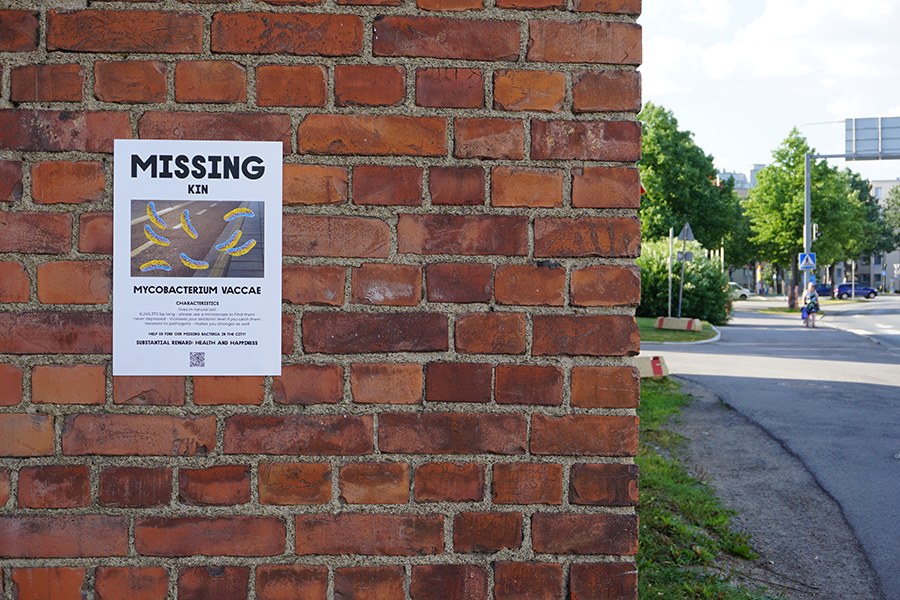
Research suggests that due to biodiversity loss in cities, a decline in environmental microbial diversity is linked to an increased risk of childhood diseases. The concept of the artwork, the posters around the cities of Hämeenlinna and Tampere and the installation at Hippalot festival, connects large scale biodiversity loss and dysbiosis, an imbalance in the microbial community of children’s gut.
“Humans are really ecosystems with countless microbial inhabitants. Giving more attention to this will surely transform the way we see the world and the unfolding biodiversity crisis” explains Professor of Early Childhood Education Zsuzsa Millei, leader of the Microbial Childhood project.
Artists Erika Aalto and Eva Bubla created a gut installation to offer a variety of activities. The installation invited children and families to explore the gut, communicate with microbes and to immerse their hands in the microbial world of the soil by creating seedballs from compost-rich soil, clay and seeds.
“Art offers many ways to help us understand microbes,” explains Aalto. “We can explore both real microbes and imaginary ones, allowing for a range of engaging experiences.”
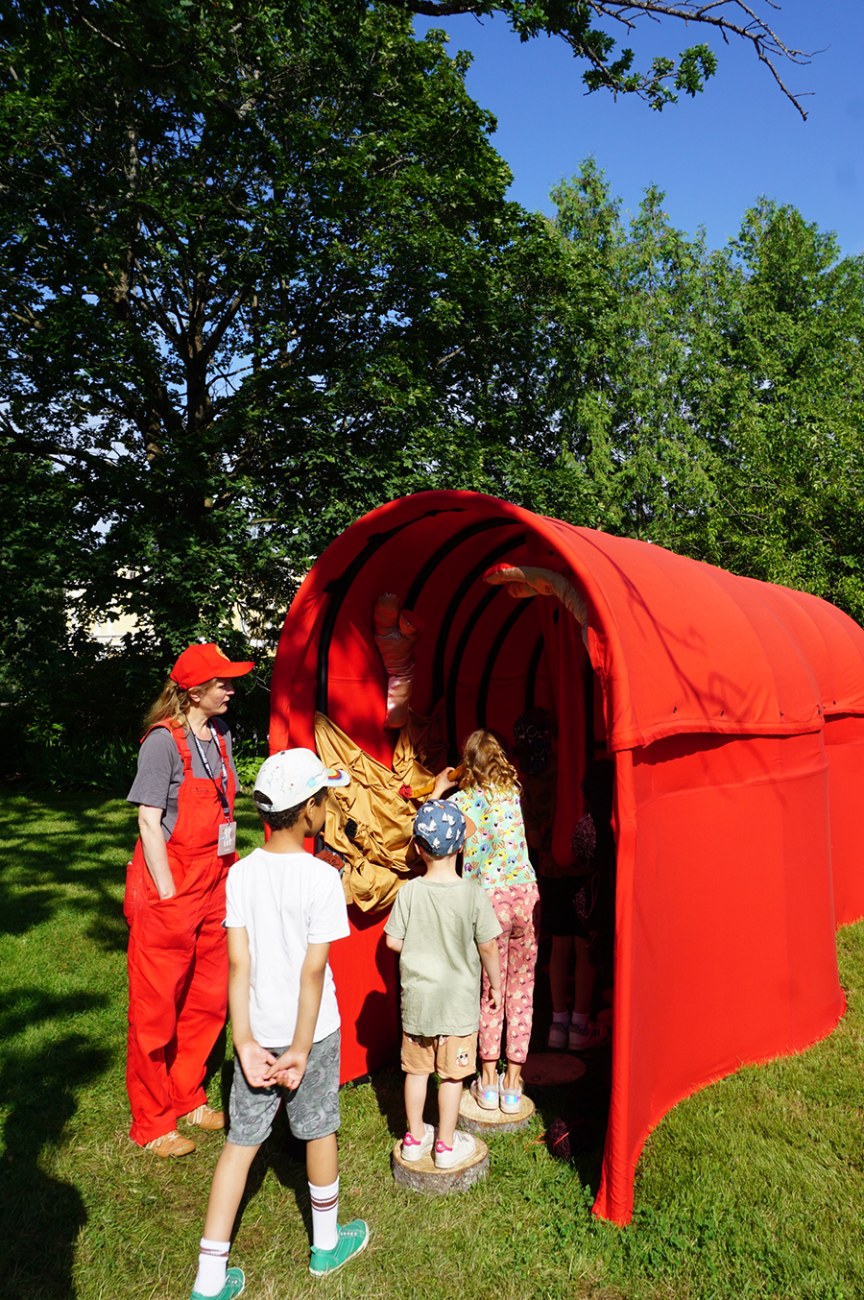 Photo: Eva Bubla
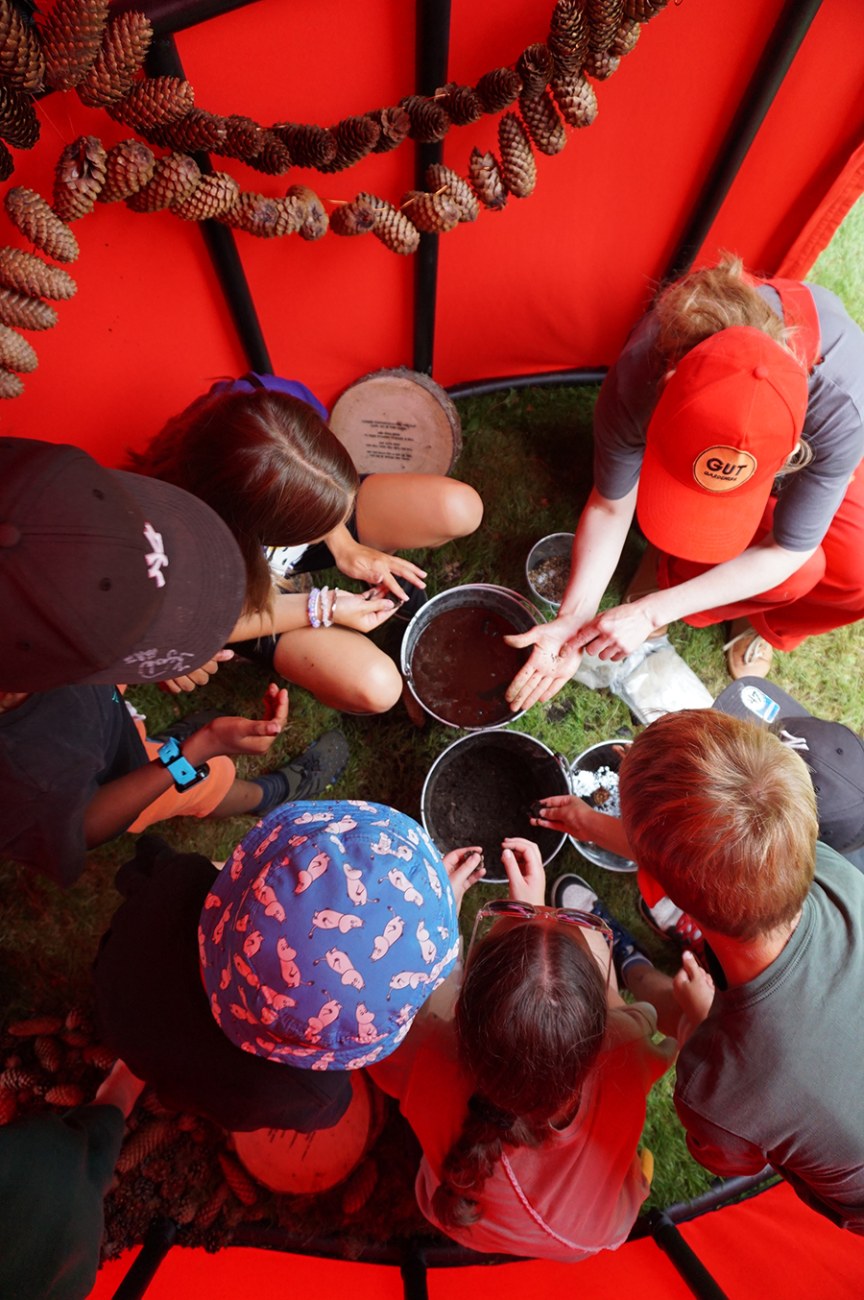 Photo: Eva Bubla
“With the gut installation, we wanted to provoke children and their accompanying adults to ponder what kind of a home they provide for our tiny invisible companions,” Bubla continues.
The almost 2000 visitors thoroughly enjoyed the possibility of journeying through different parts of the gut, encountering microbes in various forms – seeing them, hearing them, and even ‘meeting’ them through the creative sound interpretation by sound artist Tuure Tammi.
The research connected to the artwork
Researchers and artists at the Faculty of Education and Culture at Tampere University draw on art- and science-based practices in their collaboration with Tahmela Daycare, the first microbial daycare in Finland.
The aim is to help daycare children and their teachers to grasp the presence of invisible microbes and their significance in our life. The research project seeks to understand and cultivate more complex relations with microbes. Microbes form the foundation of life and should not be viewed solely in a negative light.
“We tend to think of microbes as something to kill. We use disinfectants to get rid of microbes, yet we do not fully understand that our bodies are not only made up of microbes but also deeply reliant on them,” Millei explains.
In her examples, microbes were shown to play a vital role in immune system functioning and in digesting food. Environments that are too clean can increase the risk of immunodeficiencies, skin conditions, allergies, autoimmune and gastrointestinal diseases.
The research project began in August 2024 with an art workshop created by Aalto and Bubla. It was held at the Henneri open early childhood education centre in Tahmela as part of the Mukamas international theatre festival in Tampere.
During the session, children listened to stories about microbes and created miniature microbes using natural materials. They then placed these microbes in imaginary environments to create their own stories.
“We got feedback that the children not only enjoyed imagining microbes but also continued caring for their microbes afterwards. They took them home and put them to bed to sleep” says Aalto.
We are part of the environment
According to Eva Bubla, one of the key messages of the “Making Kin with Microbes” artwork is that humans are not separate from the environment. The effects of our actions on the natural world come back to impact us. Living in cities that we create without biodiversity, the diversity of our gut microbiome suffers.
At the event, many children and even some parents were hesitant to touch the microbe rich soil. From a young age, many people are taught that mud is dirty and should be avoided. “This is concerning because exposure to microbes in compost rich soils can actually help children develop healthy bodies,” Millei notes.
Change requires action
According to Jan Varpanen project researcher, people at the festival were genuinely interested and open to learning about the topic. He hopes that families will go on to share their experiences with others. Eva Bubla continues: “Projects like this can create a domino effect of moments or encounters that help to effect change and move things forward in the long run.”
“It is important to raise awareness, establish dialogue and shift attitudes. The key is to influence the actions of major stakeholders,” Bubla adds. "Art is a powerful catalyst for change."


