Karolina Louvanto is seeking ways to improve the screening of cancers caused by an HPV infection

Have you ever had a papillomavirus infection? You probably have since almost everyone contracts the virus at some point.
Infections caused by the human papillomavirus (HPV) often heal on their own. They can also be asymptomatic or cause warts on the skin, genital area or throat. There are over 200 known papillomaviruses with types 16 and 18 being the most oncogenic. They belong to the high-risk HPV genotypes and cause, for example, 70% of cervical cancers that is the fourth most common cancer in women.
To pursue problems caused by HPV, Professor of Obstetrics and Gynaecology Karolina Louvanto is investigating the course of the HPV infection and the development of related cancers. She is particularly interested in immunological and epigenetic factors which are known to play a significant role. The levels of epigenetic markers rise when virus-induced damages become malignant.
Epigenetics refers to phenomena and mechanisms that affect gene expression without changing the structure of DNA. Epigenetic research particularly examines the mechanisms that influence how genes are switched on or off. Various environmental factors, such as lifestyle, affect epigenetic changes. These changes affect cell function and can also be partly inherited.
“It is hoped that epigenetics will also provide an answer to why one person develops cancer due to the HPV virus and another does not. The difficulty here is that epigenetics can vary between different populations. So far, a few promising epigenetic markers have been identified, but more work needs to be done to find a clear general marker,” Louvanto says.
The course of HPV infection is also not yet fully understood, and it is not known why some people’s immune systems are not sufficient to protect against the virus. In such cases, the infection can linger in, for example, cervical mucosa for a long time and develop into a precancerous condition and even cancer.
Vaccines provide protection but also pose challenges for screening
Even though cervical cancer is often mentioned in connection with HPV, that is not the whole story since the virus also causes cancers of the vulva, vagina, penis, and anus, as well as head and neck cancers. Oropharyngeal squamous cell carcinoma has been on the rise particularly in men but also in women since 2000. According to Louvanto, this may be due to the overall increase in HPV prevalence.
“Oropharyngeal cancer usually develops after the age of fifty, so it is not a new epidemic among young men. On the global scale, cervical cancer is still a much larger epidemic,” Louvanto points out.
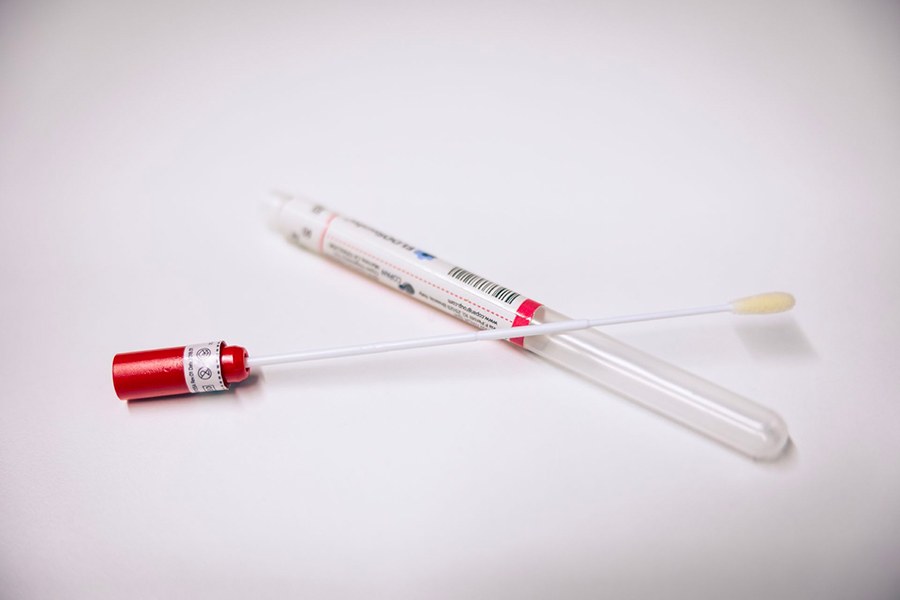
Unlike cervical cancer, no screening is available for oropharyngeal cancer. Since the disease mechanisms of cervical cancer are better understood, it is now being investigated whether its markers could be used in the screening of other HPV-related cancers. Methylation also plays an important role in these studies.
Methylation occurs in our cells continuously and it is an essential part of epigenetics. Methylation is a biochemical process that regulates gene expression, cell function and differentiation.
Methylation involves the attachment of a methyl group (a type of hydrocarbon compound) to the cytosine nucleotide in DNA. In cervical cancer research, particular attention is given to genetic regions where cytosine is next to guanine, known as CpG islands. Changes in methylation levels in these CpG islands, whether decreased (hypomethylation) or increased (hypermethylation), can be indicative of cancer, making methylation a useful marker for detecting cancer.
However, even in cervical cancer, the role of the markers is not fully established yet. The situation changes for those who have received the HPV vaccine. In Finland, all 10-12-year-olds receive the HPV vaccine free of charge.
Those vaccinated against HPV lack the high-risk HPV types 16 and 18. Some of them have been diagnosed with precancerous conditions which do not seem to progress to cancer and may even heal on their own in young people. This is why it is not known which markers would be best for the vaccinated, what the optimal screening interval would be, and whether monitoring alone might be sufficient for vaccinated individuals with precancerous changes in the cervix.
“It would be great if we could avoid unnecessary loop electrosurgical excision procedures, in other words the removal of abnormal cells from the cervix, because the procedure is known to cause, for instance, premature births due to cervical shortening,” says Louvanto.
Self-sampling can lower the threshold for screening participation
While the increase in oropharyngeal cancers appears at an older age in this century, most cervical cancers are found in women aged 35-45. The cases are often united by the fact that the patients did not attend screenings.
In June 2024, a study was launched in the Tampere region where women who do not attend a screening after the first invitation can take the HPV test at home. Louvanto is the principal investigator in the project. This year, the research will extend to the wellbeing services counties of Kanta-Häme, Päijät-Häme, Central Finland and Ostrobothnia.
“Young people are already accustomed to self-testing for sexually transmitted infections, which is why it makes sense to be hopeful that they will also take up HPV self-testing,” Louvanto says.

However, self-testing has not been well received so far. Louvanto suspects that one reason is that many people were unaware of the opportunity because they may not have opened the reminder invitation sent by the laboratory, which offered self-testing. Some may also believe that a self-administered test is not as reliable as a laboratory test.
“People might not realise that the same HPV test is used in both the laboratory and the home test. In the laboratory, a cytology sample, known as a Pap test, is also taken, but it is only examined if the HPV test result warrants it. If a high-risk HPV is detected in a home test, the person is sent an invitation for a Pap test. The principle is the same and equally reliable.”
As the possibility of self-sampling expands and becomes more familiar, it is hoped to increase participation, especially in remote areas where it is more difficult to get to a laboratory. In the future, it might be possible to offer self-sampling as the first option.
If things progress according to Louvanto’s goals, a methylation test can also be utilised alongside HPV self-sampling in the future. Together, they would indicate whether monitoring is sufficient or if there is a need for a colposcopy examination.
“This would eliminate the need for the Pap test which some find unpleasant,” Louvanto says.
Karolina Louvanto
- Born in Gothenburg, Sweden, lives in Kissanmaa in Tampere.
- Earned her doctoral degree at the University of Turku in 2011.
- Appointed an adjunct professor of experimental science in obstetrics and gynaecology at the University of Turku in 2018.
- Completed her specialist training in obstetrics and gynaecology at the University of Turku in 2019.
- Postdoctoral researcher of cancer epidemiology at McGill University, Montreal, Canada in 2012–2015.
- Worked as a senior clinical researcher in molecular epidemiology at Queen Mary University of London, United Kingdom, from 2016 to 2017.
- Has undertaken several longer clinical and research assignments in Sweden, Australia, United States and Canada.
- Joined Tampere University as an associate professor, tenure track, of obstetrics and gynaecology in 2020.
- Leads the Infection and Cancer research group at the Faculty of Medicine and Health Technology.
- Promoted to full professor of obstetrics and gynaecology at Tampere University in 2024.
- Spends her free time with four sporty teenage children and her Irish Wolfhound and Great Dane.
Author: Sari Laapotti


