Urban rewilding increases the diversity of life

This hive of activity is not just any ordinary park, but a specially designed biodiversity zone located on the green lawn of Tampere University’s Hervanta campus. Launched in October 2024, this campus intervention is part of the multidisciplinary MUST project that aims to rewild and regreen the urban environment to enhance species diversity – the rich variety of life.
Professor Juho Rajaniemi, who leads Tampere University’s portion of the project, describes the MUST project as a new and revolutionary approach to urban planning. The campus biodiversity interventions included in the project are designed not only to support the well-being of people and other species but also to identify and acknowledge multispecies coexistence.
“For thousands of years, cities have been primarily designed to meet human needs. In the MUST project, we examine how urban planning can promote well-being among both people and other living creatures.”
In addition to the Hervanta campus, similar interventions are implemented on the University of Turku’s main campus and LUT University’s Skinnarila campus. The team of researchers are examining how the number of plant and animal species changes in these test zones and how people perceive these areas. The first survey has been conducted among campus users, and the researchers are currently analysing the results from more than 300 respondents.
Experimental and practical approach to increasing the variety of life
Postdoctoral Researcher Laura Uimonen is excited about the green intervention taking place on the Hervanta campus. She points out that the test zone is still in its early stages and appears modest, but more plants will be added over time. Through their regreening efforts, the researchers are aiming to enhance habitats for pollinators, increase biodiversity, and spark interest among campus users in the plant and animal life around them.
According to Uimonen, the biodiversity zone will be maintained with a lighter touch compared to the other outdoor areas on campus. For example, the section of lawn edged with gravel and rocks will be left unmown, as letting the grass grow freely creates a more favourable environment for a greater number of species to thrive.
Uimonen hopes the zone will attract a lively mix of users. The area has already become a habitat for insects, squirrels and rabbits – and people enjoying picnics. Even a hammock has been strung between the two maple trees.
“Felled tree trunks from the nearby Sähkötalo construction site have been brought in and left to decay undisturbed. Rotting wood and wood chips used as mulch are believed to harbour a particularly rich variety of microbes, which are also beneficial to human health,” Uimonen says.
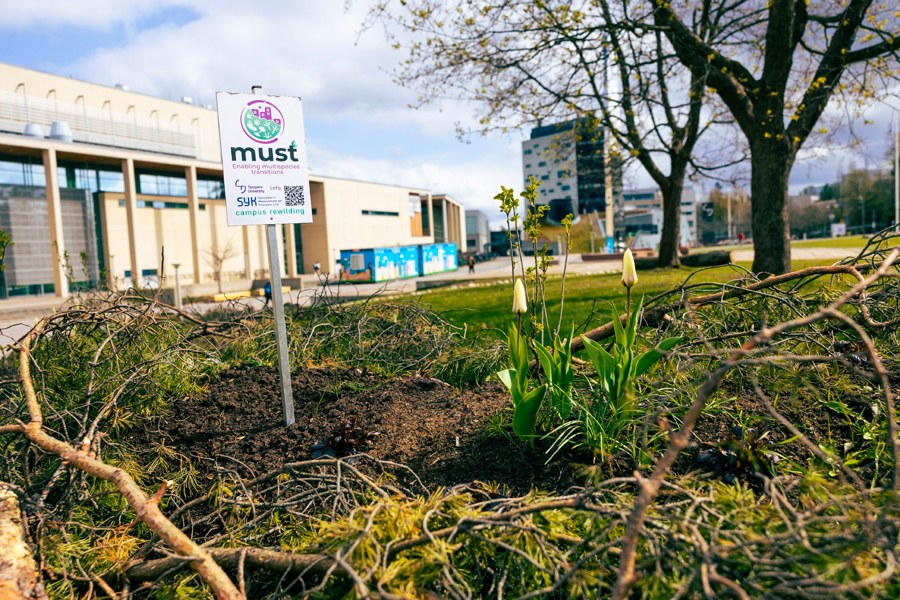
The MUST project takes a hands-on approach to research, aiming to improve our understanding of the relationships and interdependencies between people and nature. The project is set to continue for three years. However, Professor Juho Rajaniemi hopes it will be extended by another three years to give the plants time to grow and take root and to allow species richness to increase as much as possible.
This international, multidisciplinary project brings together researchers from a wide range of fields, including environmental education, human geography, environmental economics, ecology, and urban and regional planning. Besides Tampere University, the project team consists of researchers from universities of Helsinki, Turku and Oulu, Demos Helsinki, Finnish Environmental Institute and Aberystwyth University in Great-Britain and Monash University in Indonesia.
Aiming to increase biodiversity on the Hervanta campus
The Hervanta campus is managed and maintained by University Properties of Finland Ltd (SYK), which maintains 13 university campuses in ten cities across Finland. The biodiversity zone on the Hervanta campus was created by Mansen Ekotarhuri and is located right next to the campus landmark: the obelisk reaching toward the sky. All university campuses maintained by SYK have dedicated campus gardeners. Maria Sandberg from the property maintenance company Kotikatu is the campus gardener in Hervanta.
The Kampusareena building has featured a green roof ever since it was completed in 2015. The roof has attracted wildlife to campus, at least rabbits and foxes. Audrey Muratet, a member of the Scientific Committee of the MUST project and a lecturer at the University of Strasbourg, describes Kampusareena’s green roof as an extensive green roof with a thin layer of soil. In her own research, Muratet is currently studying green roofs with significantly thicker growing media that can even support trees.
Researchers at Tampere University are also participating in other biodiversity initiatives, such as the Biodiversity Interventions for Well-Being (BIWE) project. This project seeks to restore microbial biodiversity in densely populated urban areas and studies both ecological and human well-being. In addition, the University has recently started collaborating with the City of Tampere to promote biodiversity through innovative urban planning practices.
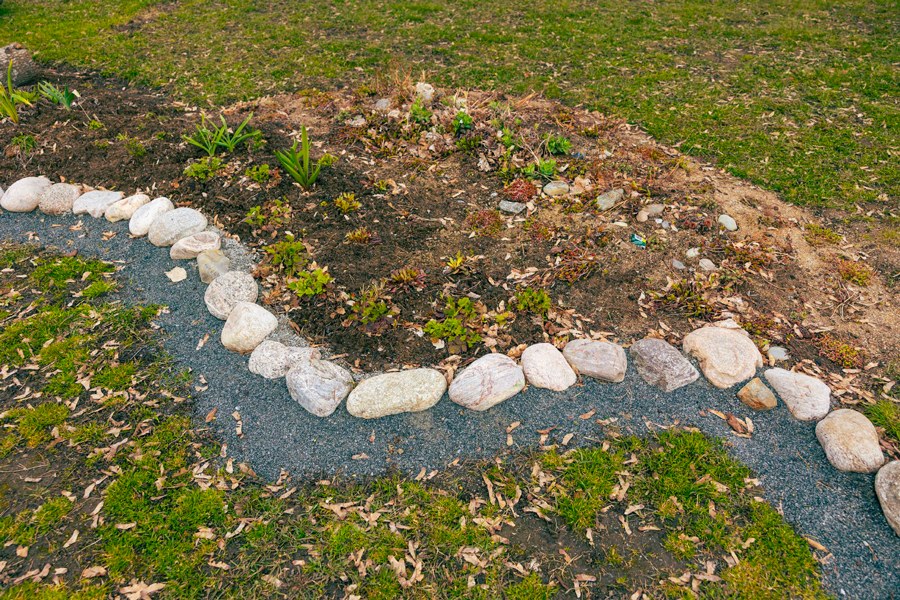 Photo: Jonne Renvall, Tampereen yliopisto
Welcome to explore the multispecies city of the future!
The MUST Festival, taking place in Tampere from 21 to 22 May 2025, invites local residents, researchers, nature enthusiasts, officials and policymakers to come together and envision cities where both humans and other species – from butterflies to trees – can thrive side by side.
All the events are free of charge and held in accessible premises. Please note that some of the events require advance registration. The festival is spread across multiple locations in Tampere.
Further information
Author: Anna Aatinen


