Faculty of Information Technology and Communication Sciences
Connecting Humanities, Science, and Technology
The Faculty of Information Technology and Communication Sciences (ITC) brings together expertise in the humanities, natural sciences and technology into a unique multidisciplinary environment. Through our research and education, we respond to the changing needs of society and working life while preparing students for expert and research careers in a rapidly evolving world. We offer more than 60 study options at the bachelor's, master's, Master of Science in Technology and doctoral levels in both Finnish and English.
Our community includes more than 7,000 students and over 900 staff members. Internationality is an integral part of who we are: nearly 40 per cent of our staff come from outside Finland. Diverse expertise and backgrounds enrich our research, teaching and collaboration at both local and international levels.
The faculty consists of four units: Languages, Communication Sciences, Computing Sciences, and Electrical Engineering. Together, they form a broad and multidisciplinary academic community where different perspectives complement one another and generate new solutions to complex societal challenges. The organisational chart below illustrates the structure of our faculty.
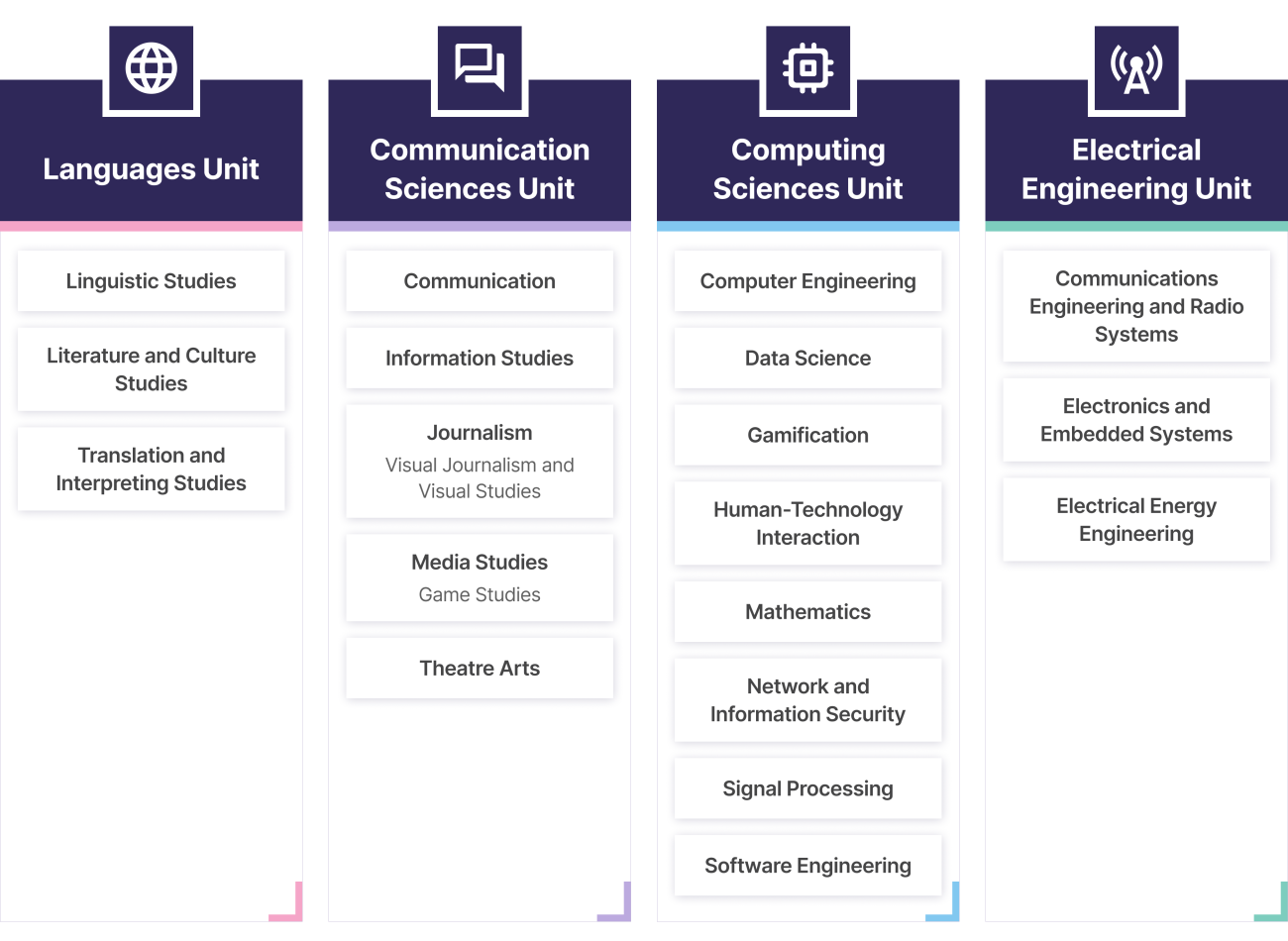

Meet our units
Explore the links below to learn more about our four units.

Explore more
Discover opportunities, videos, and updates from our faculty.
News


Upcoming events




From discovery to impact
Research at the Faculty of Information Technology and Communication Sciences is characterised by strong collaboration across disciplines and close connections to society and industry. We combine theoretical insight with practical application to address challenges in areas such as languages, media, human–computer interaction, data science, and electrical engineering.
Our 12 research centres form the core of the ITC Faculty’s research activity, bringing together experts from different fields to explore complex questions and develop innovative solutions. Through long-term initiatives and international partnerships, we develop knowledge and solutions that inform decision-making and respond to societal needs. Our work contributes to a sustainable, digital, and multicultural future.
1300+
Annual Publications
43M
Annual Research Funding
350+
Ongoing Research Projects
Our research centres
Explore our 12 research centres and follow the links to learn more about their research, activities, and collaborations.
Data Science Research Centre
The Data Science Research Centre conducts research in data science and statistics, focusing on diverse applications. Our research centre develops innovative machine learning models for image processing, medicine, and financial forecasting, explores approaches for NLP, and studies recommendation and complex systems. In statistics, we focus on probabilistic machine learning, finite mixtures, and time-series analysis.

Mathematics Research Centre (MATH)
The Mathematics Research Centre conducts research in both pure and applied mathematics, spanning areas such as algebra, topology, logic, inverse problems, systems theory, harmonic analysis, and mathematics education.
Plural. Multidisciplinary Research Centre for Languages and Cultures
The Plural Research Centre is a vibrant network of researchers from the Languages Unit, bringing together a multilingual and multicultural community with global connections and a commitment to interdisciplinary collaboration.

Research Centre of Gameful Realities
The transdisciplinary Research Centre focuses on the theories, applications, and implications of gameful realities across different areas of society.
Signal Processing Research Centre (SGN)
The Signal Processing Research Centre deals with the theory, models, and algorithms used for analysing, interpreting, capturing, and reproducing complex natural signals. We study images, video, speech, and audio, including their emerging modalities such as depth, thermal and multispectral imaging, point clouds, light fields, and spatial audio.
System-on-Chip Hub (SoC Hub)
The SoC Hub research centre combines digital design, multiprocessor system design, embedded software, microelectronics, electronics, and process management for wireless communications, signal processing, and security applications. Our research connects all related research groups and researchers at Tampere University.
Tampere Electronics Research Centre (ERC)
The Electronics Research Centre focuses on developing new technologies and methods for electronics manufacturing through sustainable, economical, and globally efficient processes. Our research spans a wide range of activities in electronics and embedded systems, including printed electronics, thin-film devices and circuits, low-level software, and system design for industrial, healthcare, and consumer applications.
Tampere University Computer-Human Interaction Research Centre (TAUCHI)
Through constructive and experimental research, the TAUCHI Research Centre conducts research in human-technology interaction. Our goal is to understand the phenomena behind human-technology interaction and use this knowledge to develop improved interaction methods, especially using less common modalities. Our research also aims to enhance accessibility, inclusion, and quality of life for select user groups such as mobile users, people with physical or visual impairments, children, and older adults.

Tampere University Research Centre for Communication Sciences (Taru)
The Taru Research Centre focuses on societal and cultural dynamics, dissecting their evolution and patterns through lenses of communication, media, and art. Our research spans areas such as information and media studies, games, journalism, communication, and the performing arts.

Tampere University Research Centre of Electrical Energy Engineering (EEE)
The Research Centre of Electrical Energy Engineering conducts research and develops new solutions based on strong electrotechnical knowledge and its application in the fields of electromechanics, power electronics, high-voltage engineering and materials, electrical systems, and electricity markets.
Tampere University Software Engineering Research Centre (TASE)
The Software Engineering Research Centre conducts research in software engineering, applications, and architectures. Our research focuses on developing efficient and sustainable methods for producing high-quality software, with close collaboration with industry and an emphasis on industry-oriented education, ensuring practical relevance.
Tampere Wireless Research Centre (Tampere Wireless)
Tampere Wireless Research Centre carries out high-impact basic science and applied research related to the development of new data communication and networking concepts, as well as processing methods and tools for electrical and electromagnetic communication systems. Our research builds the basis for, e.g., 5G and 6G mobile radio networks, positioning systems, the Internet of Things (IoT), and the Industrial Internet.
European Research Council Grants
About the European Research Council
The European Research Council (ERC) funds excellent, ground-breaking research. ERC grants are awarded by the career stage:
- Starting Grants (STG): 2-7 years after PhD defense (since 2026: 0-10 years)
- Consolidator Grants (COG): 7-12 years after PhD defense (since 2026: 5-15 years)
- Advanced Grants (ADG): for academics with a track record of significant academic achievement
Proof of Concept (POC) funding is intended for exploring the commercial and social innovation potential of a previously granted ERC proposal.

Ongoing grants
Okko Räsänen, Charting Infants’ Language, Auditory, and Motor Experiences in Everyday Contexts (EveryContext), ERC-2025-COG
Paavo Rasilo, Controllable Magnetic Cores for Transformers and Electrical Machines (SMARTMAG), ERC-2024-COG
Mattia Thibault, A Systematic Exploration of Interreal Translations in the Media Multiverse (InterReal), ERC-2024-STG
Past grants
Paavo Rasilo, Multiscale Magnetic Models for Emerging Energy Conversion Applications (MULTIMAG), ERC-2019-STG
Billy Brumley, Side-Channel Aware Engineering (SCARE), ERC-2018-STG.
Tuomas Virtanen, Pre-Commercialisation of Sound Recognition for Surveillance Applications (Smartsound), ERC-2016-POC
Tuomas Virtanen, Computational Analysis of Everyday Soundscapes (Everysound), ERC-STG-2014.
Research Council of Finland Instruments
About the Research Council of Finland
The Research Council of Finland (RCF) is the main public funding body for scientific research in Finland. It offers competitive instruments to support high-quality research, strengthen universities’ profiles, and foster collaboration and researcher development.
Profiling Areas
The Research Council of Finland provides competitive funding, referred to as Profi, to strengthen universities’ strategic research profiles by supporting priority research areas, recruiting top researchers, and fostering interdisciplinary collaboration.
PROFI 8 – Semiconductor technology (PHOTO-ELEC)
PROFI 7 – System-on-Chip and Wireless Technology for Intelligent Machines
Centres of Excellence
The Research Council of Finland’s Centres of Excellence programme funds outstanding research communities for eight years, promoting innovation, the development of new methods, and the training of highly skilled researchers.
Centre of Excellence in High-Speed Electromechanical Energy Conversion Systems (HiECSs)
Past Centres of Excellence
Flagships
The Finnish Flagship Programme supports long-term, high-quality research that addresses major societal and economic challenges, fostering collaboration with universities, research institutes, and industry.
FAME – Flagship of Advanced Mathematics for Sensing, Imaging and Modelling
Your path to future expertise
At the Faculty of Information Technology and Communication Sciences, we offer multidisciplinary study opportunities across fields from the social sciences and humanities to engineering and technology. Whether you are beginning your academic journey, continuing your studies, or deepening your expertise, you can find a suitable path with us—from individual courses at the Open University to full degree programmes at the bachelor’s, master’s, and doctoral levels. Our offering includes more than 40 degree programmes in Finnish and nearly 20 options for international students, providing opportunities across disciplines. These studies help you develop knowledge and skills in your field of interest and prepare you for future paths in academia and industry.
Looking for programmes in Finnish?
On this page, you can explore the programmes available to international students. To view programmes offered in Finnish, please switch the website language to Finnish or click the link below.

Our master's studies
Our faculty offers the following specialisations within the Master’s programmes in Computing Sciences and Electrical Engineering, Game Studies, and Sustainable Societies and Digitalisation.


Continuous learning
Whether you are looking to expand your skills or explore new directions, you can study through the Open University and other non-degree options.
Contact our study services
- Faculty study services (Bachelor’s and Master’s): itc.opiskelu.tau [at] tuni.fi (itc[dot]opiskelu[dot]tau[at]tuni[dot]fi)
- Faculty doctoral study services (Computing and Electrical Engineering): cee.doc.tau [at] tuni.fi (cee[dot]doc[dot]tau[at]tuni[dot]fi)
- Faculty doctoral study services (other programmes): itc.doc.tau [at] tuni.fi (itc[dot]doc[dot]tau[at]tuni[dot]fi)
- University international admissions: admissions.tau [at] tuni.fi (admissions[dot]tau[at]tuni[dot]fi)
- University admissions (programmes in Finnish): hakijapalvelut.tau [at] tuni.fi (hakijapalvelut[dot]tau[at]tuni[dot]fi)
- University international mobility services: mobility.tau [at] tuni.fi (mobility[dot]tau[at]tuni[dot]fi)
See contact information for faculty guidance and counselling services
Setting up for innovation
The Faculty of Information Technology and Communication Sciences spans a wide range of disciplines, from the humanities to engineering. This multidisciplinarity is also reflected in our research and teaching infrastructure, which is organised into five clusters along a spectrum from soft to hard sciences: Media, Communication and Technology; Imaging and Acoustics; Wireless Communications Engineering and Radio Systems; Electronics and Embedded Systems; and Electrical Energy Engineering.

SiPFAB: From chip to system, all in one place
We are building SiPFAB on our Hervanta campus to bring chip packaging, integration, and testing together under one roof. Here, we will combine Wide Band Gap (WBG) chips and other semiconductor components into complete system solutions. Our pilot line will provide researchers and industry partners with a unique environment to explore sustainable, future-oriented technologies and move ideas from concept to prototype. As part of the ChipsJU WBG Pilot Line, we also aim to contribute to a stronger European semiconductor ecosystem. The infrastructure is currently under development and will become operational in stages between 2027 and 2028 as the equipment is installed.
Our research and teaching infrastructures
Media, Communication and Technology infrastructure cluster
The media, communication and technology infrastructures enable research and teaching in communication, languages, game culture, gamification, and human-technology interaction.
Imaging and Acoustics infrastructure cluster
The imaging and acoustics infrastructure supports audiovisual signal processing research.
Wireless Communications Engineering and Radio Systems infrastructure cluster
The wireless communications engineering and radio systems infrastructures enable wide-scale research, prototyping, demonstration, and testing of radio communications devices, wireless networks, and RF systems.
Electronics and Embedded Systems infrastructure cluster
The electronics and embedded systems infrastructures enable the development of new technologies and manufacturing methods for electronics through sustainable, economical, and globally efficient processes.

Electrical Energy Engineering infrastructure cluster
The electrical energy engineering infrastructures support the maintenance and development of our state-of-the-art facilities, enabling a leading role in advancing research and innovation in these fields of science.
Other infrastructure
University-level infrastructure
NEXUS is a multidisciplinary research infrastructure focused on human-centered research. It brings together the Faculty of Information Technology and Communication Sciences, the Faculty of Management and Business, the Faculty of Education and Culture, and the Faculty of Social Sciences. Through collaboration and shared infrastructure, NEXUS offers broad opportunities for research and education across faculty boundaries.
National and international infrastructure
Our Faculty is involved in four research infrastructure networks that have been selected for the Finnish Research Infrastructure Roadmap by the Research Council of Finland. Please follow the links below for more information about these infrastructures.
FIN-CLARIAH – Common Language Resources and Technology Infrastructure
FUWIRI – Research Infrastructure for Future Wireless Communication Networks
MAGICS – National Infrastructure for Human in the Digital World

Get in touch with our Staff and Senior Scientists
Our faculty’s infrastructure is overseen by 6 Staff and Senior Scientists who ensure smooth operation and accessibility for all users. If you have any questions or require support related to our facilities, the Staff and Senior Scientists are available at the email address below.

You can reach the Faculty through the following service-specific email addresses:
- Faculty general enquiries: itc.tau [at] tuni.fi (itc[dot]tau[at]tuni[dot]fi)
- Faculty research office: research.itc [at] tuni.fi (research[dot]itc[at]tuni[dot]fi)
- Faculty docent applications: itc-docents.tau [at] tuni.fi (itc-docents[dot]tau[at]tuni[dot]fi)
- Faculty financial services: itc-talous.tau [at] tuni.fi (itc-talous[dot]tau[at]tuni[dot]fi)
- University media services: viestinta.tau [at] tuni.fi (viestinta[dot]tau[at]tuni[dot]fi)
Faculty Management

Heads of Units


Partnerships and Innovation


Management Support

Research Office


Study Services

Communications

Meet our people
Browse our staff members by unit to easily find the right contact.
Faculty Council members and deputy members, chaired by Dean Jyrki Vuorinen (1.1.2023–31.12.2026)
Professors
Järvinen Hannu-Matti (Raisamo Roope)
Lilja Niina (Lehmuskallio Asko)
Mäntysalo Matti (Järventausta Pertti)
Nikunen Kaarina (Sotamaa Olli)
Virtanen Tuomas (Peltonen Jaakko)
Research and teaching staff
Kuusisto Antti (Peltonen Sari)
Leino Unni (Harjunpää Katariina)
Sand Antti (Rintala Matti)
Stenros Jaakko (Henttonen Pekka)
Ruuth Kalle (Säe Joonas)
Students (1.1.2025–31.12.2026)
Erkkilä Valpuri (Lehtonen Anni)
Lohikainen Oona (Valkonen Laura)
Piekiäinen Jesse (Nykyri Sanna)
Porkka Ville (Seppänen Iida)
Pynnönen Miia (Loimuneva Eetu)
Where to find us
City centre campus
Located in the heart of Tampere, specializing in the humanities, social sciences, and theatre arts
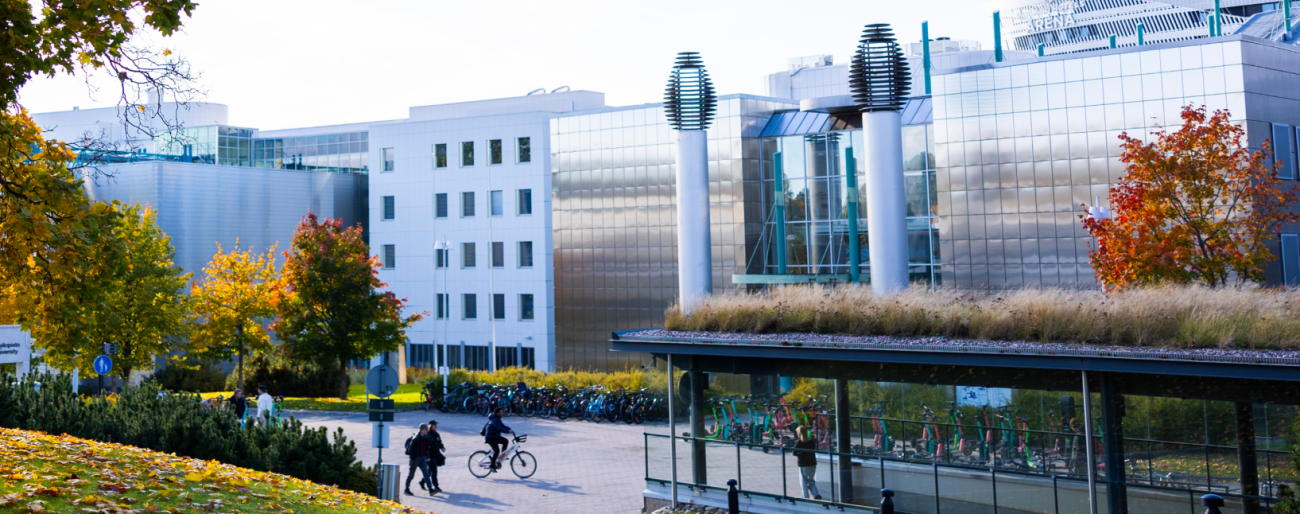
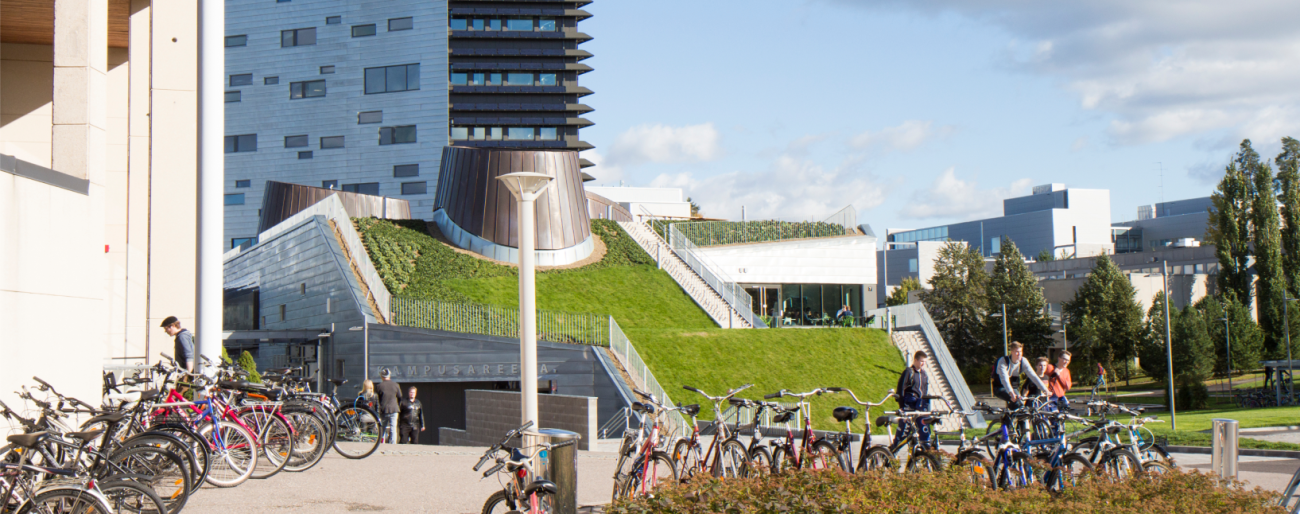
Hervanta campus
A technology and engineering-focused research and collaboration hub with strong industry and business ties
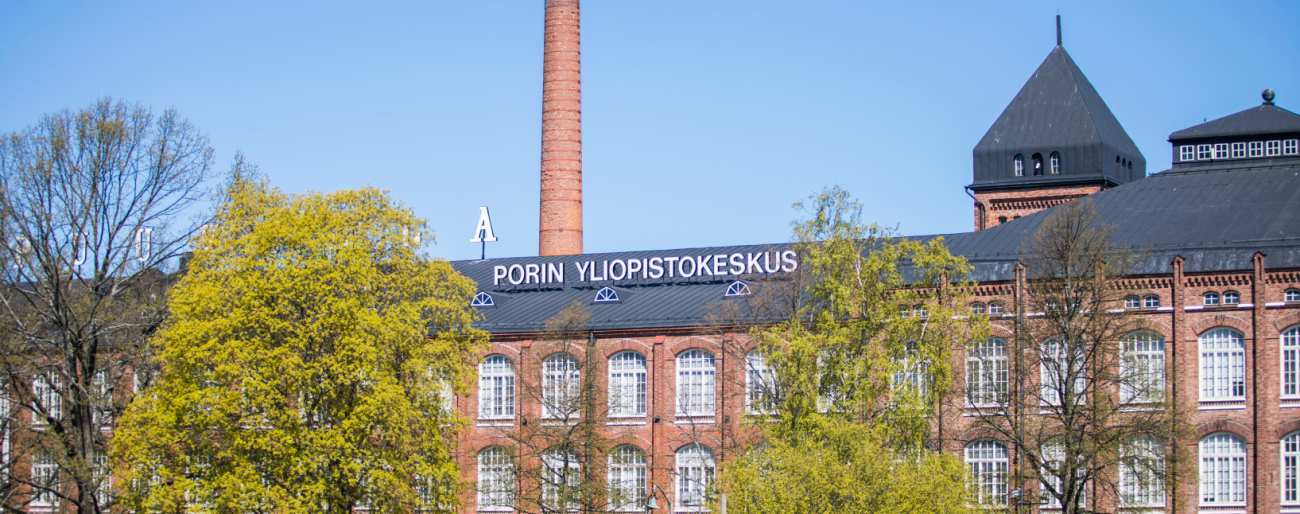
Pori campus
A dynamic and functional study and research environment within the University Consortium of Pori
Seinäjoki campus
A multidisciplinary research and education network within the University Consortium of Seinäjoki