Human-Technology Interaction, Computing Sciences and Electrical Engineering
Study Human-Technology Interaction
Application period
Type
Degree earned
Planned duration
Extent of studies
City
Tuition fee for non-EU/EEA citizens
Why choose Human-Technology Interaction?
Every digital product shapes how people act, communicate and make decisions. HTI helps you examine this relationship and design technology that fits people’s abilities, needs, values and contexts.
Choose this study track if you are curious about both people and technology. It suits students interested in user experience, design, software and prototyping, psychology, research, emerging technologies or the wider effects of digitalisation.
Human-centred design and emerging technology
Your studies combine human-computer interaction, human-centred design, user research and technical experimentation. You can explore:
interaction design, user interface design and service design
User research, user psychology, usability and user experience evaluation
human-centred software development and rapid prototyping
Accessibility and human diversity
Sustainable design, digital ethics and sociotechnical systems
Human-centred artificial intelligence and conversational interfaces
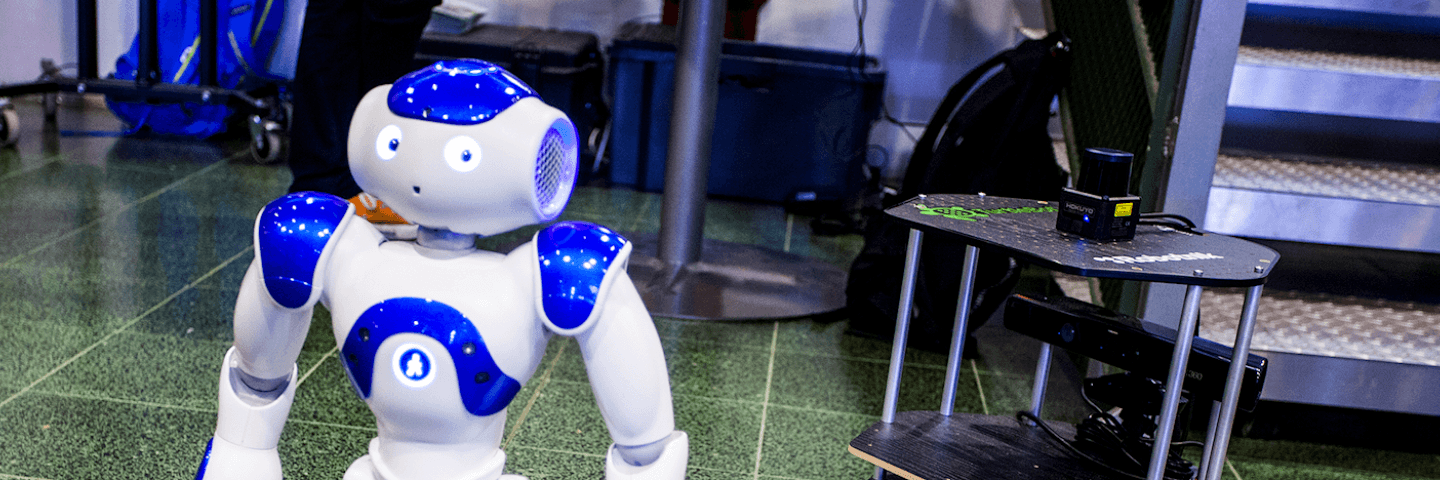
multimodal interaction, haptics, extended reality and human-robot interaction
gamified and playful design approaches
You can focus on one of three advisory profiles or combine them when choosing your courses:
Designer: develops your skills in user interface, user experience and service design, including accessible and sustainable design.
Interaction Developer: develops your skills in front-end technologies, rapid prototyping, and interactive or immersive systems.
HTI Researcher: develops your skills in qualitative and quantitative user research, experimentation, usability and user experience evaluation, and scientific reporting.
Learn through research, design and development
Most courses combine theory with practical assignments. You may interview users, analyse qualitative and quantitative data, create interaction concepts and prototypes, conduct evaluations, and communicate evidence-based design decisions.
Many courses include team projects, and you study with people from different academic and cultural backgrounds. Course projects and your master’s thesis may connect you with ongoing research or industry partners.
This Master's programme is taught in English. Before applying, please check our language requirements for Master's programmes.
Human-Technology Interaction is a specialisation in the Master's Programme in Computing Sciences and Electrical Engineering.
While there may be courses that are available online, studies at Master's Programme in Computing Sciences and Electrical Engineering require on-campus attendance.
Curriculum
Detailed information on the content and structure of the studies is included in the curriculum.
Become a student
Learn more about the studies, admissions, and eligibility criteria on Studyinfo. In addition, applications are submitted via the Studyinfo.fi service.
Why study HTI in Tampere
HTI education is closely linked to our research at the TAUCHI Research Centre and the Gameful Realities research centre at Tampere University. Our work covers user experience, multimodal interaction, accessibility, extended reality, human-centred AI, sociotechnical systems, social technologies and gameful applications. The Hervanta and City Centre campuses connect you with expertise across computing, design, psychology and social sciences.
Depending on your courses and thesis topic, you may work with research environments for virtual reality, eye tracking, haptics, robots, and psychophysiological measurement.
Design responsible and sustainable technology
Responsible design is integrated into HTI studies. You learn to consider accessibility, diverse users, ethics, social effects and environmental sustainability when defining requirements, making design choices and evaluating systems.
What you will learn
By graduation, you will have a broad foundation in HTI. Through your course choices, projects and Master's thesis, you can build a profile that matches your interests and career goals.
You will be able to:
understand people's needs, abilities, values and contexts through systematic and ethical user research, and use evidence to guide your decisions
design meaningful, accessible and sustainable interactive technologies, services and experiences based on what you learn about people
choose and combine suitable design methods and technologies to create, prototype and evaluate interactive solutions
use AI purposefully and critically as a partner in research, design and development, while checking its outputs and taking responsibility for the decisions you make
explore multimodal interfaces and other emerging technologies, while considering their effects on people, organisations, society and the environment
communicate your ideas, work effectively with people from different disciplines and cultures, adapt to change and take charge of your professional growth
You can choose which of these areas to explore in greatest depth.
Career opportunities
Modern societies need professionals with thorough understanding of both humane and technological aspects, which makes it possible to design and develop user-friendly, innovative, and sustainable digital products and services, as well as engaging ways to interact with them.
HTI graduates work in software companies, consultancies, industrial and public-sector organisations, research units and universities. Depending on your profile, possible roles include:
Designer roles: UX or UI designer, interaction designer, service designer, or a design specialist focusing on accessibility or sustainability
Interaction development roles: front-end developer, UX engineer, interaction or prototype developer, or immersive technology specialist
Research and evaluation roles: user researcher, UX researcher, usability specialist, HCI researcher, research consultant or doctoral researcher
The research profile and Master's thesis also provide a strong foundation for doctoral studies.
Examples of key courses
Your study plan combines foundational HTI studies with advanced courses chosen according to your background and goals. Examples of key courses include:
User Interfaces and Human-Centred Design
Psychology in Human-Technology Interaction
User Research Methods
Prototyping Interactive Systems
Conversational Interaction with Artificial Intelligence
Multimodal Interaction Techniques and Applications
Research and Innovation Project in Human-Technology Interaction
Other advanced options cover topics such as human-centred and societal perspectives on AI, haptic interaction, accessibility, sustainable design, social robots and information visualisation. The exact course offering is updated for each curriculum period.
The Curriculum
Please note that the curriculum is currently under revision, and changes may be introduced from autumn 2027. The revised curriculum will be available in March 2027.
Why Human-Technology Interaction matters in daily life?
TAUCHI studies how people use and experience technology, especially in everyday situations. By exploring new ways of interaction—like touch, smell, and eye movement—they create solutions that make digital tools easier to use for everyone, including children, seniors, and people with disabilities.
Meet the people shaping HTI
Professor Roope Raisamo
Roope explores future user interfaces through haptics, multimodal interaction and emerging technologies. He leads the TAUCHI Research Centre.
Professor Kaisa Väänänen
Designing AI around people. Kaisa explores how human-centred design can make AI more inclusive, responsible and supportive of human agency.
Professor Thomas Olsson
Thomas investigates how digital technologies transform social interaction, media and communities. He is the professor responsible for HTI studies. (Video in Finnish with English subtitles)
Professor Markku Turunen
Markku explores how virtual reality and other interactive technologies can support wellbeing, accessibility and inclusion across ages and abilities.
Associate Professor Johanna Virkki
Johanna develops intelligent clothing and wearable technologies that connect movement, health and playful interaction.
Associate Professor Oğuz ‘Oz’ Buruk
Oz designs playful futures at the intersection of humans, nature and machines, exploring wearables, extended reality and emerging forms of play.

Get to know Computing Sciences unit of the Faculty of Information Technology and Communication Sciences (ITC)

For more information
Please read through the information provided. For further questions regarding the application process, contact our Admissions office at admissions.tau@tuni.fi