Professor Roope Raisamo conducts research on future user interfaces

In June 2026, Roope Raisamo was appointed to lead MAGICS, the National Infrastructure for Human in the Digital World. The infrastructure was previously coordinated by Aalto University, with Raisamo overseeing the local node in Tampere and serving as Deputy Director.
MAGICS was established in 2020 to advance cutting-edge, human-centred research. The consortium currently comprises six Finnish universities, each of which maintains several local infrastructures that are accessible to researchers, students and external partners throughout the network.
“The guiding principle of MAGICS is to bring together science and the arts. A comparable infrastructure has not previously existed, and the inclusion of MAGICS in the Research Council of Finland’s National Research Infrastructure Roadmap (FIRI) in 2025 recognises it as one of the country’s key research infrastructures. It supports human-centred research, in which the engineering sciences play a less prominent role,” says Raisamo.
“MAGICS houses a wide range of advanced equipment, such as systems for psychophysiological measurements, virtual reality environments and haptic feedback technologies that support the development of novel interactive systems. The infrastructure brings together researchers from diverse disciplines, including education, social sciences, management, psychology and computer science.”
Researchers at Aalto University have used the MAGICS infrastructure, for example, to study how theatre performances affect audiences. Tampere University’s primary focus within MAGICS lies in gamification and human-technology interaction.
At the forefront of research in human-technology interaction
Professor Raisamo’s specific area of expertise is human-technology interaction, and he has been leading TAUCHI since 2011. The centre studies human-technology interaction from multidisciplinary and multifaceted perspectives.
While MAGICS is a pioneering national research infrastructure, TAUCHI has also consistently maintained its position as a forerunner in the field. The centre collaborates with partners worldwide and possesses expertise that can be applied across a wide range of domains, from the development of accessible user interfaces to defence technologies.
“Technology is always used by people. At TAUCHI, we understand the capabilities and limitations of people as well as the potential of technology. This enables us to design user experiences that are as efficient and intuitive as possible,” notes Raisamo.
“TAUCHI has been successful in securing funding from external sources such as the Research Council of Finland, Business Finland and the EU. We have managed to maintain TAUCHI’s budget at a stable level for the past 15 years, which is a notable achievement given today’s highly competitive research funding landscape. Our industrial partners have also recognised the value of our research and are often keen to continue working with us when a joint project is coming to an end.”
TAUCHI’s Finnish industry partners include, for example, Nokia, Valmet Automation, Sandvik and Patria. The centre also collaborates with companies around the world, especially in the context of EU-funded projects.
“For instance, 15 years ago we collaborated with Volvo, which provided us with an SUV as a research platform. We developed touchscreen systems that incorporate haptic feedback and enable drivers to make selections while driving without taking their eyes off the road.”
Decades ahead of everyday consumer technologies
This spring marks something of a record for TAUCHI, as the centre hosted three visiting professors at the same time, one from Australia, one from the USA and one from Canada.
Visiting professors often spend a period working abroad under a specific project grant, but some come with independent funding to experience TAUCHI’s work first-hand. They may spend several months at the centre, familiarising themselves with its research and building professional contacts.
“TAUCHI supports research that can be conducted in only a few places globally,” says Raisamo. This research is especially supported by the university-level Research Infrastructure for Interaction Between Humans, Technology, and Society (NEXUS) as well as the MAGICS infrastructure.
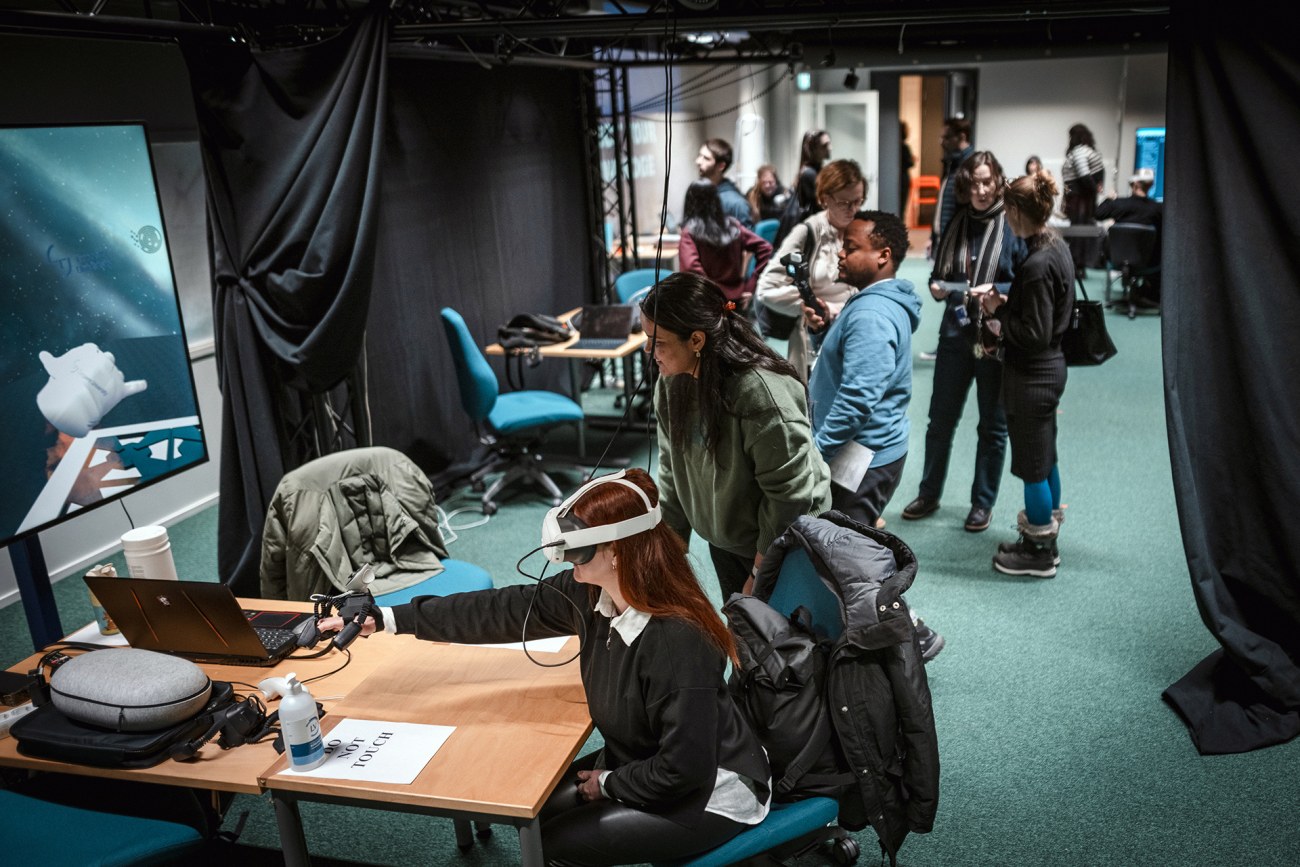
“TAUCHI is the leading hub of expertise in this field in Finland, and there are not many others in Europe with equally broad expertise. We know how user interfaces should be developed and deployed. For example, incorporating the sense of touch into a user interface requires far more than a simple vibrating screen, as the interface must also be distinctive, intuitive and pleasant to use.”
Raisamo points out that TAUCHI’s research also incorporates an element of futures studies, as the centre explores how human-technology interaction may evolve in the future. For example, in the 1990s researchers at TAUCHI created a speech recognition interface for Nokia phones that could tell users when the next bus was coming and guide them to the nearest bus stop. Smartphones did not exist at the time, and comparable speech recognition systems were not in use anywhere else.
“Today, these services are available to all. Our research is often 10 or even 20 years ahead of consumer technologies. The haptic interfaces we developed for Volvo 15 years ago have not yet been adopted in vehicles. However, Volvo was highly satisfied with the results, and we may still see them appear in cars one day.”
Currently, TAUCHI is among the first in Finland to study human augmentation, or technologies designed to enhance human capabilities. For instance, human vision can be augmented to detect infrared radiation, and memory could potentially be extended through as direct a connection to the internet as possible.
“We began exploring this area around five years ago. These technologies hold significant potential for the defence sector and the mining industry, where workers operate heavy and hazardous equipment. They could also support police officers and firefighters in the field. For example, the human eye cannot see in a smoke-filled environment, but sensors can.”
TAUCHI develops non-invasive approaches to augmenting human capabilities and focuses on wearable technologies, such as smart glasses and haptic vests.
“We avoid invasive technologies, as they fall more within the domain of medicine.”
A detour in economics before embarking on an academic career
Leading the research centre occupies Raisamo in multiple roles, not only as a researcher but also as an innovator, negotiator and fund‑raiser. Although he specialises in human-centred research, he also admits to enjoying number-crunching.
“I prefer to prepare budgets myself. I come from a long line of retailers and could have become a fourth-generation hardware store owner. In fact, in 1991 I enrolled to study economics and business administration at the same time as beginning a computer science programme at the former University of Tampere.”
However, Raisamo did not complete his studies in economics and business administration, as he was hired by the University in the autumn of his third year to teach an introductory course in computer science, software use and the internet, which was still in its early stages at the time.
“Staff in the department had noticed that I was knowledgeable in these areas. That marked the beginning of my academic career. However, I spent enough time studying business to develop an understanding of areas such as private law, accounting and marketing, sufficient to run a company.”
Raisamo teaches a course on multimodal interaction and supervises master’s theses and doctoral dissertations, but his work is largely focused on research, research leadership and responsibilities related to research infrastructures.
Given that Raisamo’s work focuses on human-technology interaction from a strong future-oriented perspective, does he still enjoy science fiction films in his spare time?
“I do, definitely. While watching them, I occasionally come across themes that we have only just begun to explore.”
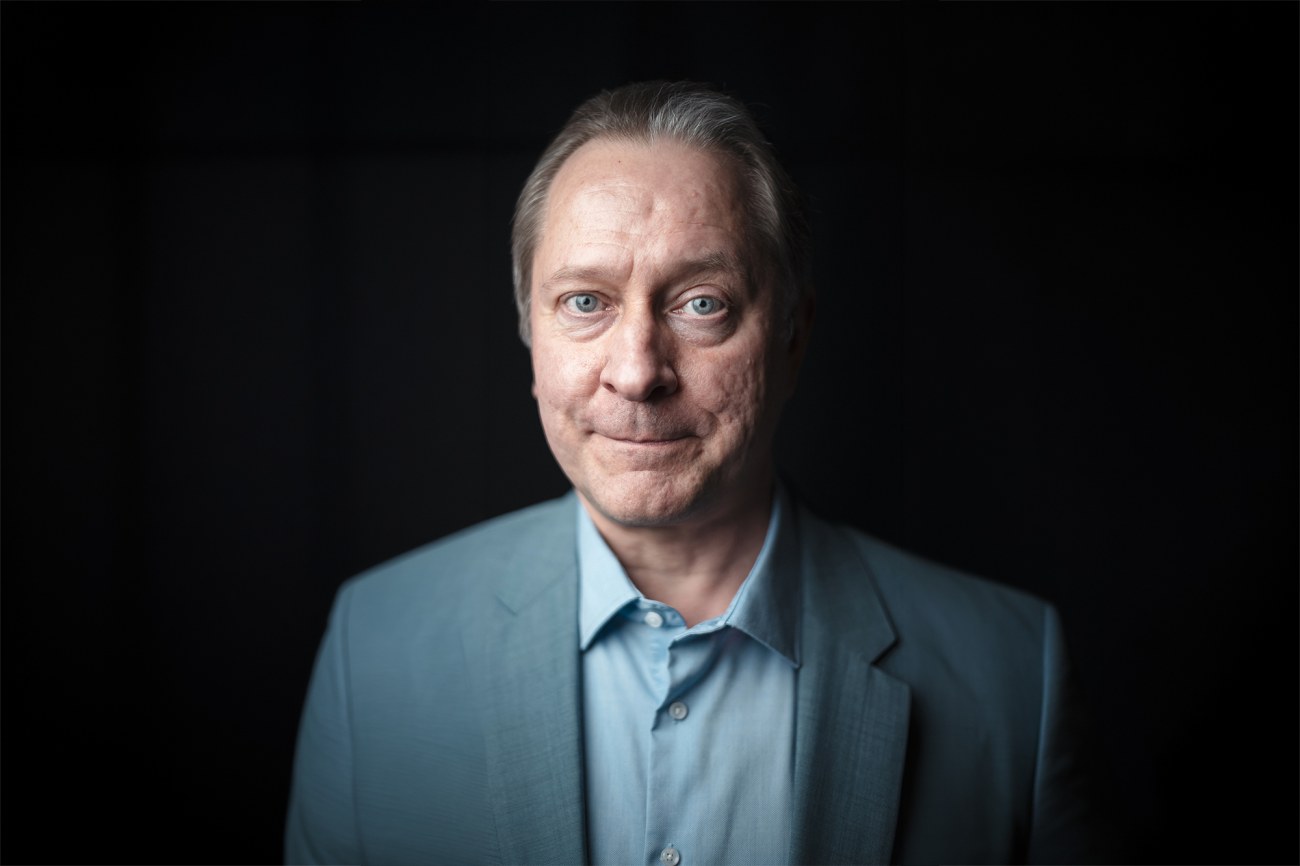 Photo: Antti Yrjönen
Roope Raisamo
professor,
Faculty of Information Technology and Communication Sciences | Computing Sciences
Head of TAUCHI Research Center
Head of Haptics Coding Research at Nokia Technology Standards
Research and Areas of Expertise
- Human–Computer Interaction (HCI)
- Multimodal interaction
- Haptic interfaces and touch feedback
- Audio and visual user interfaces
- Eye tracking, speech control, and hand and body gestures
- Haptic encoding and generation technologies
In addition:
- Participated in MPEG-I and 3GPP standardization work
- Over 300 scientific publications
- Over 20 patents or patent applications
- Member of the Finnish Academy of Science and Letters since 2026
NEXUS combines the research environments across faculties of Education (EDU), Information Technology and Communication Sciences (ITC), Management and Business (MAB), and Social Sciences (SOC). At its core, NEXUS promotes cross-faculty collaboration, expands interdisciplinary research opportunities and provides methodological and technological support for all the faculties and research traditions involved.
Author: Eli Harju


