Learned verses echo nature – Academy Professor Sari Kivistö uses poetry as a lens to research the story of science

Occasional verse or situational poetry represented lyric poetry composed for public or private events or used, for instance, for congratulating. During the 17th and 18th centuries, it became customary to compose occasional congratulatory poems, for example, for doctoral dissertations in the Swedish Empire and thus also at the Royal Academy of Turku in Finland. At first, the language was Neo-Latin, but under the influence of utilitarian thinking in the 18th century, Swedish also became an acceptable scholarly language.
Literary scholar, Professor Sari Kivistö is interested in what scientific texts were like in the early modern period. She has studied Latin and Neo-Latin literature as part of literary history for a long time. The Research Council of Finland has appointed Kivistö an Academy Professor at Tampere University where she will work at the Faculty of Social Sciences for six years from 2026 to 2031.
For Kivistö, poetry and rhetoric are key to understanding how science was written in past centuries. Her project as Academy Professor investigates the role of poetry and rhetoric in the history of knowledge, especially in natural sciences.
“I think of myself metaphorically as an optician who is fitting a new lens, which I use to see what old science looks like when it is analysed through poetry. Myths and cultural narratives were an essential part of early scientific literature and people’s experience of nature,” Kivistö explains.
To understand nature from a cultural perspective, we must be familiar with the often obsolete literary genres, forms, and rhetorical devices that were used to conceptualise it.
Poetry, rhetoric and research came together in dissertations
The research also examines occasional poetry in Sweden and Finland more broadly and asks, for example, what kind of networks were created with the help of poetry. The dedications and congratulations in dissertations not only praised the patrons and benefactors but also signalled belonging to the learned society.
Academy Professor Kivistö studies early dissertations by, among other things, identifying poetry quotations in them. Poetry does not appear solely in acknowledgements or congratulatory sections because it also plays a role within the scientific texts. This perspective sheds new light on the development of scholarly writing in past centuries. Furthermore, the acronym of the research project, VERSITAS, combines words meaning verses and university.
“The project is closely linked to my identity as a literary scholar. I approach scientific texts specifically as literature with historically changing means of expression. We want to show that, rather than being merely conventional ceremonial verse, epideictic rhetoric served several cultural, social and epistemic functions,” Kivistö points out.
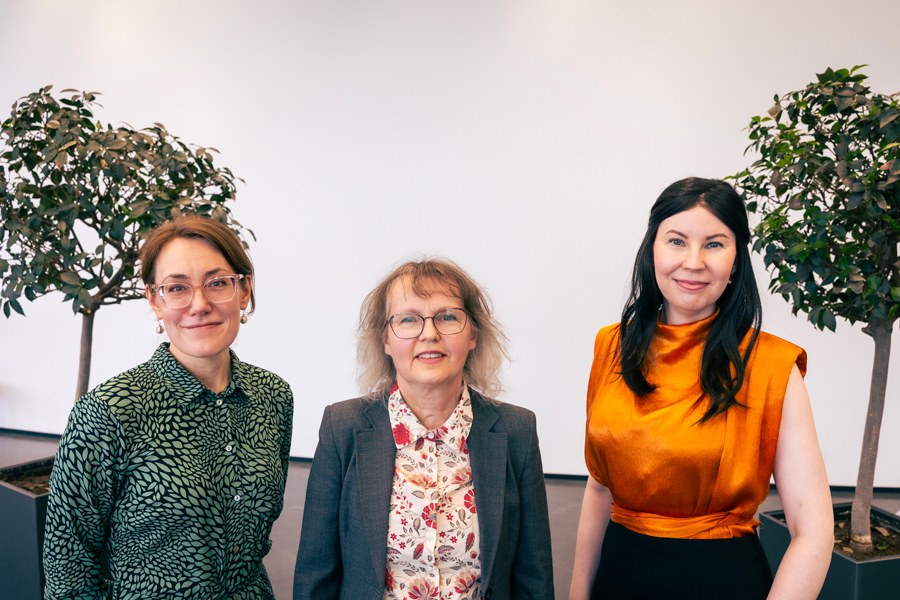
Ultimately, the Academy Professor’s central research question is to determine what poetry and rhetoric actually meant in early science and dissertations written in Neo-Latin.
“The phenomenon can be seen amusingly, e.g., in dissertations on entomology. Insects are praised as objects of study that have been regarded as small, modest and even useless. However, to learned writers, they turned out to be truly fascinating, beautiful and remarkable creatures,” Kivistö says.
Experts master literary genres and their languages
Kivistö is delighted to have recruited Doctor of Philosophy and Docent Eeva-Liisa Bastman to her group, whom she considers a leading scholar of occasional poetry. Bastman complements Kivistö’s expertise in Neo-Latin with her knowledge of Finnish- and Swedish-language materials. In the VERSITAS project, Bastman will continue her research on occasional poetry and changes in poetics, focusing especially on the 18th century.
Postdoctoral Research Fellow Erika Pihl completed her doctorate on medieval literature at Tampere University. Pihl and Kivistö have previously collaborated on a project funded by the Kone Foundation that examined lost literary genres. In the Academy Professor’s project, Pihl will study sixteenth-century court panegyric (laudatory) poetry as well as the history of animal and environmental protection rhetoric in Finland.
Si vel cum solis piscibus maris instituerit colloquium, & audiverit ea, quae hi enarrant.
(Job XII:8, quated by Mennander & Malm, 1751)Sari Kivistö: “These lines were written by Professor of Physics Carl Fredrik Mennander (1712–1786). The Biblical quotation reflects the natural history taught at the Royal Academy of Turku where some scholars combined science with a religious worldview. Here Mennander urges us to listen to fish. What do they have to say about nature? Mennander also wrote about birds and studied insects by incorporating theological themes in his studies. In dissertations, the knowledge of entomology was conveyed to readers using the rhetorical methods of the time.”
Humanities thrive through long-term work
Through another of Kivistö’s research groups, Tampere University is also involved in the Research Council of Finland Centre of Excellence in Meliorist Philosophy of Suffering (MePhiS) coordinated by the Faculty of Theology at the University of Helsinki. The eight-year Centre of Excellence is led by Professor Sami Pihlström.
The highly competitive funding for such projects evokes respect in Kivistö. At best, the success may increase appreciation for the humanities among students and young researchers.
“The selections clearly show that the Research Council values long-term humanistic research. The philosophy of suffering is a quintessentially humanistic topic, yet it also justifies its relevance through its importance in the contemporary world. The themes seem to directly reflect current global events,” Kivistö points out.
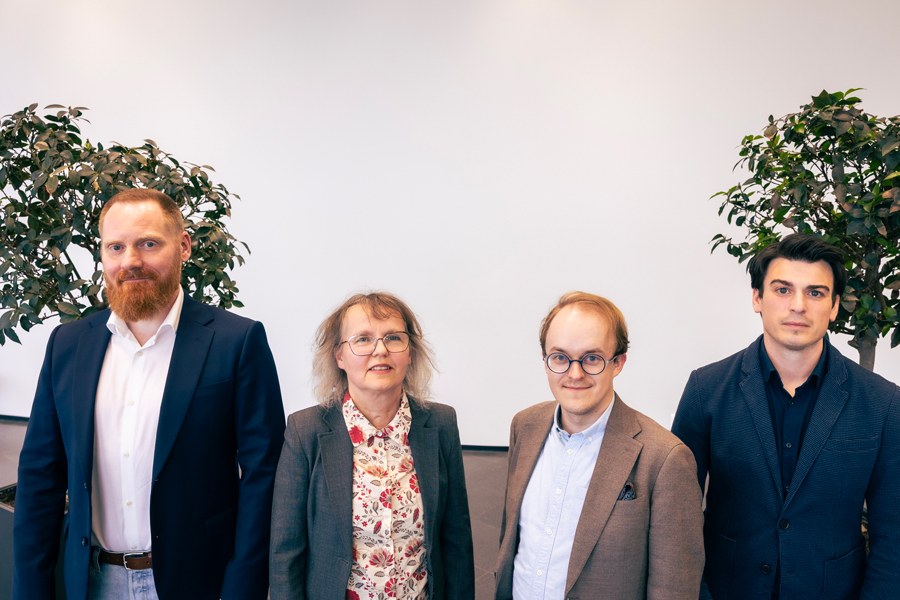
Through interdisciplinary work, the Centre of Excellence seeks to renew the ways in which philosophy addresses suffering. Melioristic philosophy is not thought to eliminate suffering but to develop new and responsible ways of understanding it.
“We are foregrounding ethical questions more strongly,” Kivistö notes.
Professor Kivistö believes that Research Council of Finland-funded research at the international forefront of her field provides inspiration for the humanities. Even in niche disciplines, success can be achieved through strong research ideas and sustained effort.
Kivistö hints at the possibility of more forceful contributions to science policy discussions. For now, however, she will turn her attention to scholarly texts.
“Above all, I get to devote six years to research in peace and to use my expertise—to do work where knowledge of Neo-Latin is an asset. I have worked on these areas my whole life, and I particularly enjoy refining texts. Research also teaches you to write for broader audiences,” Kivistö says.
According to her, a broad understanding of the history of science has societal significance. It helps us see that science develops not as a straightforward story of progress, but within multiple cultural contexts.
Contact person
Sari Kivistö
Academy ProfessorVerses of Learning
Epideixis and the Cultural Stories of Nature at Early Modern Universities (VERSITAS)
- The Research Council of Finland selected 15 new Academy Professors for the period from 1 January 2026 to 31 December 2031.
- The academy professorship funding scheme provides funding to researchers who are at the international forefront of their fields and whose research strives for scientific renewal and breakthroughs.
- The VERSITAS project examines poetry that depicts nature and informs the development of scientific knowledge in natural sciences at e.g. the Royal Academy of Turku in Finland. At the same time, it sheds broader light on early occasional poetry and the history of rhetoric.
- The research partner is Trivium | Tampere Centre for Classical, Medieval and Early Modern Studies.
Author: Mikko Korhonen


