The greatest deception is the idea that photographs do not deceive – Yanai Toister on seeing in the age of AI

Text and photos: Antti Yrjönen
Midway through our conversation — over Finnish filter coffee, which he tolerates rather than loves — talk turns to a robot vacuum cleaner. Mine photographs anything on the floor that shouldn’t be there and sends me a picture. Yanai Toister nods. “Yeah, and that is also what your police department does.”
It is a small joke with a philosophy of vision folded inside it. We live amid more cameras than at any moment in history, yet most of the images they produce will never meet a human eye.
“Most cameras aren’t intended for people to be able to look at the outputs,” Toister says. “There’s never a person at the other end to go through the footage.” The camera at the junction, at the border, above the supermarket till: these devices do not make pictures for us to contemplate. They sense, they compare, they flag — and increasingly, they decide.
This is the territory Toister works in. Ask him to describe his research to a friend outside academia and he answers without hesitation: “I think about the reciprocity between vision and knowledge — how seeing allows us to learn about the world, how images allow us to communicate that knowledge, and how visual systems might help us act on it, for a greater good.” And, he adds, “what those visual systems might make possible tomorrow.”
The stakes, he argues, are not confined to art galleries or photography departments. “You don’t have to ride in an autonomous vehicle to know that it is part of your world. You cross the border; you buy stuff at the supermarket. Everything is going in those directions. So the question is no longer simply what vision shows us, but what individuals, institutions and societies are allowed to do with it.”
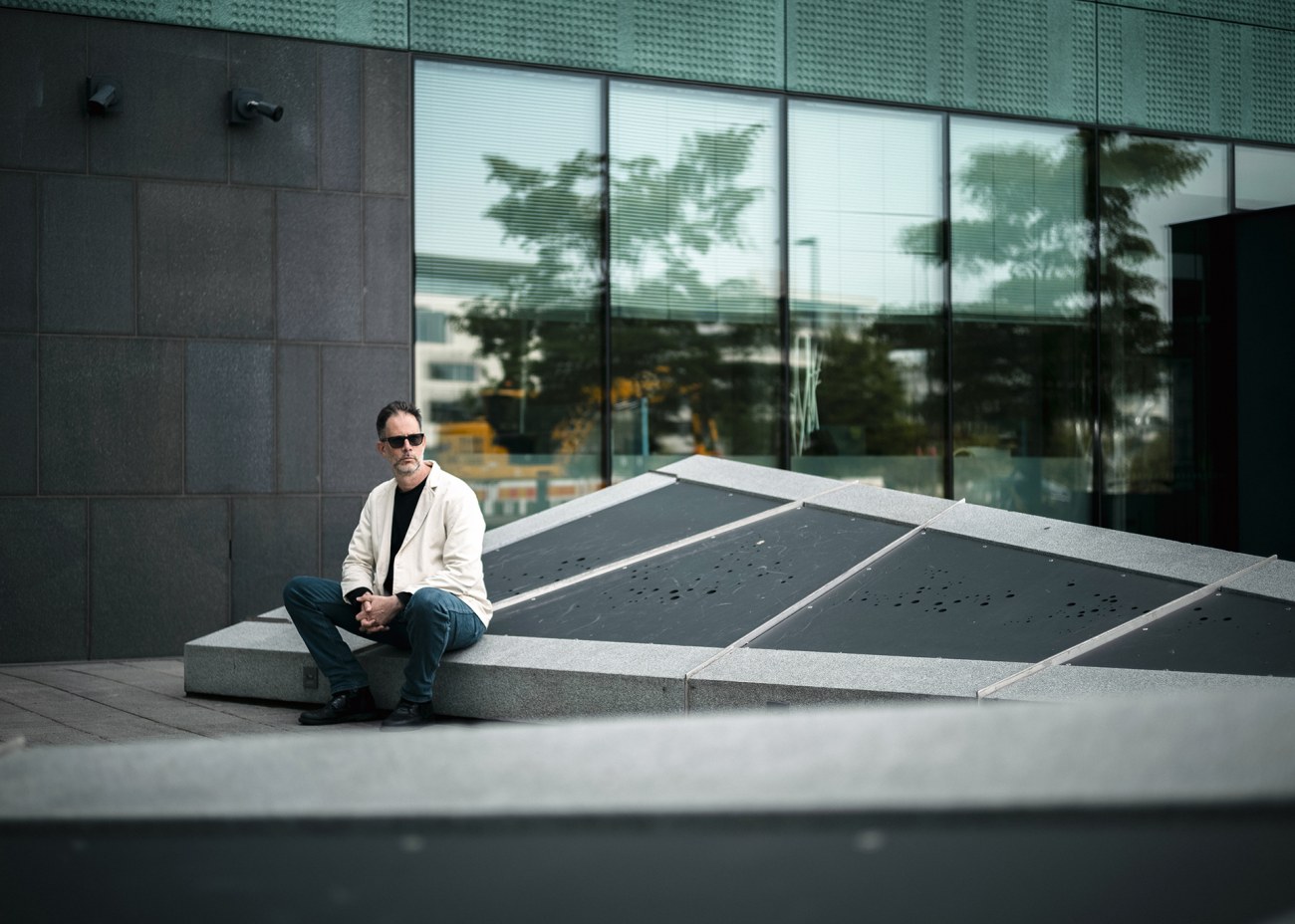
One type of sensor
Start with an apparently naive question: what is a camera? “A camera could be a phone. It could be a car. It could be something flying in the sky above us,” Toister says. And all of these devices work with things humans cannot perceive — the iPhone on the table between us, he points out, can sense its surroundings with lasers, sound and temperature. “So is the camera still tied to the photograph, to light, to human vision?”
It’s an idea Toister credits to his Tampere colleague Asko Lehmuskallio: “the camera is but one type of sensor”. But if the camera is only one sensor among others, it is no longer the privileged device it once was. “Its how isn’t technical,” Toister says. “It is an epistemological one: what kind of knowledge is being produced, and for what purpose?”
In a recent article written with Lehmuskallio and Ariel Caine, Toister develops this into what the trio call the speculative camera. A camera, they argue, is best understood not as a box with a lens but as an assemblage — sensors, clocks, models, algorithms, infrastructures and people, sometimes tens or hundreds of devices held together in constellation, as with satellite imaging. Seen this way, photography’s ancestors include not only the camera obscura but bat echolocation, in which space is mapped by measuring the return time of sound, and the astronomers of Greenwich, whose disciplined night-time observations and travelling chronometers let sailors plot themselves onto an imagined grid of the Earth. Time measurement, they contend, has always been one of the hidden conditions of image-making. And because so many of today’s camera systems exist to support decisions — when to raise an alarm, where a vehicle should steer — photography is, in the article’s phrase, “media bred for speculation”: oriented as much towards predicting futures as recording pasts.
None of this is politically innocent, a point the article is careful to register: scholars have repeatedly documented systematic biases in these decision-making systems, from skewed training data to deciding, quietly, who gets watched and who gets to watch. Which is precisely why, in Toister’s view, humanists need to be in the room. Vision, after all, is not simply one human faculty among others. “The majority of the processing power in our brain goes towards processing visuals — more than all the other peripherals combined,” he notes, reaching instinctively for the vocabulary of computing.
‘Time to end your career’
Toister came to these questions the long way round. He was educated in a photography department shaped by what was then called New German photography — “in the mid-nineties, that meant people like Thomas Ruff, Thomas Struth and Andreas Gursky”, with its strong social and psychological inflection. “I was always very wary of it,” he says. He drifted instead towards conceptual work: “I always wanted to make images that don’t say anything directly — or maybe they only say things about the conditions of their own production.” That meant deep immersion in darkroom techniques and digital manipulation, and, eventually, a backhanded compliment he still turns over: “Later in my career, people said, ‘Oh, you know a whole lot about photography, for an artist.’ I also know too much about art for an academic. And neither is exactly a compliment.”
He took a master’s degree under Allan Sekula — “one of the most important Marxist, postmodernist critics of photography”, as Toister glosses him. “We had some differences when I was his supervisee, but those were productive, and we remained friends. And I never quite realised exactly how important he was, until he passed.”
The decisive turn came from within his own practice. “I said to myself: it’s all so conceptual — why not just start writing text? Because text is also imagery, mental imagery.” One thing led to another, and to a PhD in philosophy. During its first year he was given a museum retrospective as an artist. “The museum director said at the opening, ‘This is the first time we’ve had a mid-career retrospective for such a young person.’ And I said to myself: OK, this is really good — now time to end that career.”
He is mostly serious. His artwork had been shown internationally, from galleries and museums to the Venice Architecture Biennale, but since then his output has been overwhelmingly scholarly: articles, essays and the monograph Photography from the Turin Shroud to the Turing Machine (2020), written while he taught and led the Unit for History and Philosophy at Shenkar design university in Israel. His subjects have ranged from a macaque’s stolen selfies — and what the ensuing copyright circus revealed about agency and automation — to, most recently, Plato and artificial intelligence.
“I’d say ninety per cent of the time, I think about images. I don’t make them actively,” he says. The shift feels less like a rupture than a change of medium for a self-confessed slow maker: “I could think six months about taking one photo.” Academic writing, footnotes and all, doesn’t cramp him. “There is something incredibly creative in writing academic texts. Maybe I’ve just found another way to pour creative energy into a very traditional format.” He is cheerfully unapologetic about where his methods sit: “I’m not always interested in empiricism in the narrow sense. Can I prove it? Must I always try? Often not” — an answer, he concedes, that most academics would not give.
Since 2024 he has worked at Tampere University’s Faculty of Information Technology and Communication Sciences, whose improbable mixture pleases him. “A lot of people think of it as this really bizarre creature, because it has theatre and it has computer science — how will the two ever meet? But I think of it as a virtue. If the two can meet, then perhaps that is exactly where the interesting questions begin. I’m not saying I see those meetings happen every day. I don’t. But I see the potential for them.” A recent conference at the Hervanta campus — home to the engineering-driven Tampere Imaging community — captured the productive friction he is after: “Imaging, in their sense, is not really close to imaging in my sense. It really challenges my definitions of what people actually want from images. And I’m hopeful that I am able to challenge them as well.”
Even his job title does philosophical work for him. “We know what the visual is, probably. But information isn’t just lying there waiting to be found. Information is what you do with inputs and percepts, in short: what you do with data, how you construct those and relay them.”
Life in Finland has supplied its own lessons in perception. The first winter was hard — “not because of the temperatures. Because of the darkness. I wasn’t prepared for it” — until he took up skiing for the first time in his life, with his daughter, and discovered the sociability hidden inside Finnish winter sports. Other things felt oddly familiar. “I was born in a kibbutz in Israel — a socialist agrarian collective,” he says. Watching Finns move through a lunch buffet and slot their dishes into the clearing machine, “common conduct around lunch-time was immediately recognisable.”
Anything that functions like a photograph
At the time of our conversation, Toister was finishing an article on image agnosticism, built on what he describes as “a very bold and intentionally offensive argument: that a photograph is essentially anything that functions like a photograph”. The justification is functional. “If it passes as a photograph — if it provokes the same kind of effect, or affect — then I’m willing to treat it as a photograph.”
The provocation dissolves on inspection into a series of awkward historical facts. “Many things we call photographs aren’t really made of photo — they’re not made of light. They’re made of measurements, calculations, interpolations, decisions.” What’s more, “much of it isn’t graphed either”. So nothing is inscribed onto anything. And images with no light and no inscription — CGI, AI renderings — can do exactly the work we ask of photographs. “Often they might have a better truth-telling capacity than your average photograph,” he argues, pointing to simulation: “You want to train firefighters on board a vessel at sea how to put out a fire. That’s a perfect use of manipulation.” Hence the agnosticism: “I’m agnostic about whether an image comes directly from the real world or not. The question is what it does — in the real world, to us and through us, today.”
By this logic even a working photojournalist’s computational, multi-exposure, laser-assisted kit has quietly left photography behind. Call it visual journalism, he suggests, or optical storytelling: “It’s image communication of one sort or another.”
What he refuses is the story of a lost golden age of photographic truth. “We know as photographers that the photograph can deceive. It has always deceived — that’s the one thing it has always succeeded in doing. And the greatest deception is the idea that it never deceives.” Exhibit A predates the digital era by 130 years: Oscar Gustave Rejlander’s The Two Ways of Life (1857), a moral allegory of virtue and vice composited from around 32 separate negatives. “The religious allegory holds if manipulation holds it together,” Toister observes. “That isn’t new. AI didn’t invent visual (or other forms of) deception. It only industrialised it.”
The panics, he notes, arrive on schedule: “Societies had this anxiety in the nineties with Photoshop. It happened again when deepfakes were new. And then again with generative AI.” Of the AI-generated image of the pope in a designer puffer jacket that went viral: “Will a pope ever wear a Balenciaga puffer? I don’t know. Does it matter, for the image’s cultural life, that no photons ever hit the pontiff? No.”
He knows how this position lands. “Most people find it very intimidating to imagine a world in which authenticity is no longer guaranteed in advance. Truth and fiction no longer staying neatly in their assigned places — that strikes people as a very dangerous idea, one bordering on nihilism. Now, I wouldn’t call myself a nihilist, far from it. But I don’t have a problem with that kind of understanding of the world. In fact, I find it provides some sense of security, because you don’t rely on anything as a given.” He pushes it one step further: “If you don’t grant trust automatically, then maybe you’re safer than you were when you trusted images by habit.”
It is a bracing form of epistemic hygiene, and an unresolved one. Newsrooms, courts and human-rights investigators still run on photographic trust, and Toister’s own co-authored work underlines how consequential — and how biased — machine-made imaging can be when it feeds real decisions. His framework does not settle those institutional questions so much as relocate them: away from “is it real?” and towards a more difficult set of questions: who built the imaging system on what data, under whose authority or request, and to what end.
Hacking the mind’s eye
Nowhere is that relocation more contested than in the debate over generative AI, where the prevailing critical mood — synthetic images as averaged, homogenising slop — leaves Toister unconvinced. In a recent article with the media philosopher Joanna Zylinska, he argues that text-to-image models do not retrieve pictures from a vault; they project them, statistically, from everything the model has absorbed. What comes out is less a picture of the world than a picture of an idea — a reversal, the authors suggest, of how Western thinking has assumed cognition works. Where thought is often imagined as moving from concrete thing to mental image to abstract concept, a diffusion model (like the artist Mira Schendel, in Vilém Flusser’s reading, which Toister and Zylinska extend) starts from the concept and makes it visible.
What worries — and fascinates — them is the loop this creates. Prompts become images; images are captioned, recirculated and fed back into training data; the loop reshapes what we expect images, and eventually our own imaginations, to look like. They give this process a deliberately double-edged name, cognitive hacking: not necessarily a malicious breach, but a gradual, largely involuntary recalibration of human perception through constant traffic with machine-made pictures. The article does not wave away the risks its critics emphasise — uniformity, recursion at scale, a creeping statistical sameness — and it concedes its focus on cognition brackets urgent questions about the labour and platform economics behind these systems.
Its sharpest suggestion cuts inward: the panic about AI imagery is really horror vacui — the fear that our own imagining might be more statistical, more derivative, than we like to believe. Either way, the authors warn, “the future we visualize will already have passed through the machine’s filter of plausibility.”
The gap
Keeping philosophical pace with all this is, Toister freely admits, almost impossible, and therefore part of the job. “Technology moves so fast that it’s very difficult to philosophise it at an acceptable pace. There’s that feeling of chasing after a fantastic beast, which is forever faster than you are.” His response is to stretch in both directions at once — backwards (“Just now, I was writing something about Plato and AI. That’s a very difficult gap to bridge”) and formally forwards: “Can I output an academic article in audiovisual form? And on the other hand, I might want to write something which isn’t an academic article — like a script for a film. I’m actually doing both things now.” His pitch to prospective students is correspondingly broad: “Choose to study it if you’re creative, you’re techie, or you’re interested in people. Ideally: all three.”
If his conclusions unsettle — no innocent photographs, no privileged cameras, no imagination untouched by machines — Toister insists that unsettlement is not the end of thought but its beginning. “There is always a gap between the real world, if such exists for us, and our perception of it,” he says. “And into that gap, all sorts of things fit. Art exists there; literature and philosophy exist there. If you assume that the gap is always there, then there’s always still an opening for the artistic, for the poetic, for thought itself.”
Yanai Toister is Associate Professor of Visual Information in the Communication Sciences Unit, Faculty of Information Technology and Communication Sciences, Tampere University. His book Photography from the Turin Shroud to the Turing Machine was published by Intellect/University of Chicago Press in 2020. Recent work includes “The speculative camera” (with Ariel Caine and Asko Lehmuskallio, Philosophy of Photography) and “Image thinking after artificial intelligence” (with Joanna Zylinska, Journal of Visual Culture).
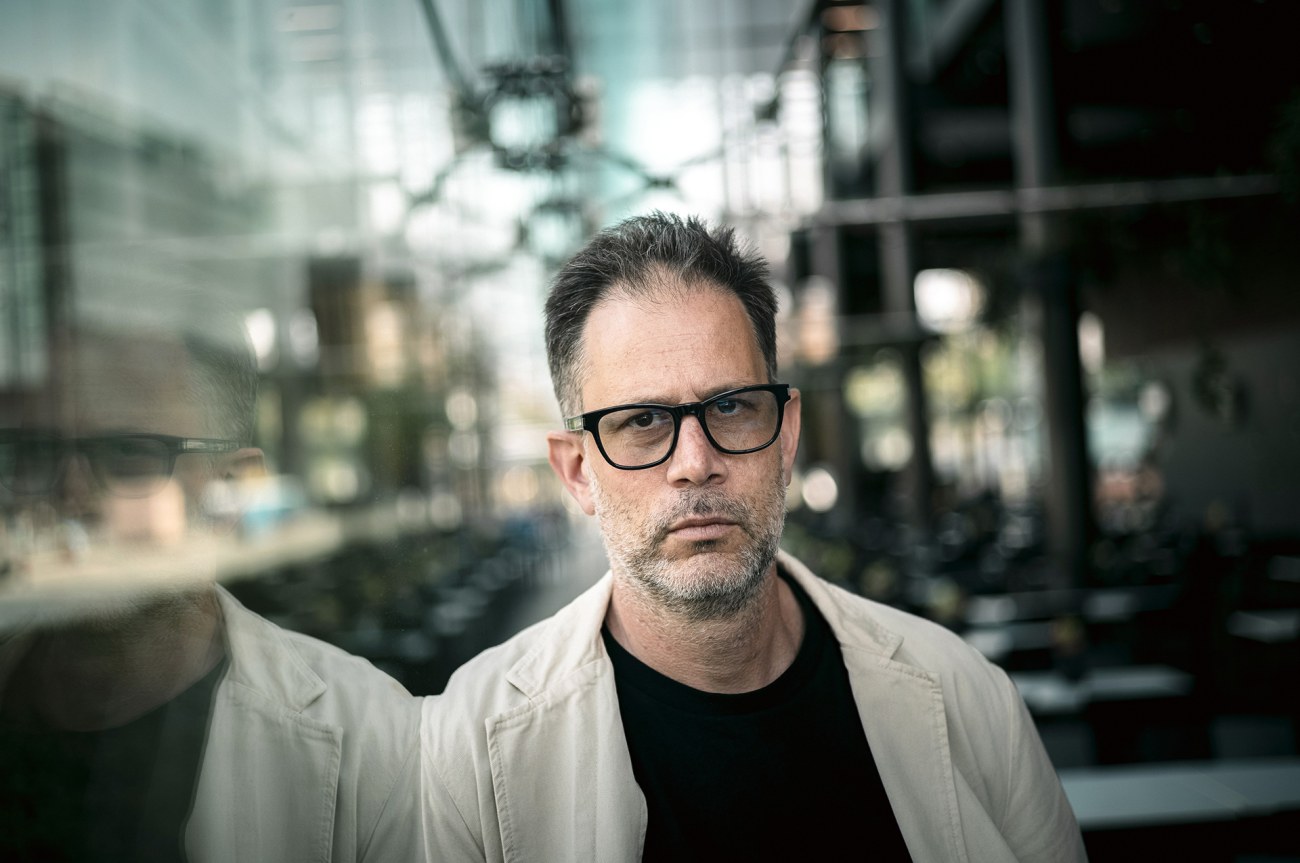 Photo: Antti Yrjönen


