Tampere is home to an internationally admired community of game studies researchers

Although games and play are ancient cultural phenomena, game studies is a comparatively young academic discipline. In the early 2000s, there were still only a handful of researchers worldwide focusing on the academic study of games.
“Games are older than films, comic books or plays. In fact, they even pre-date cuneiform writing. Holes carved into rock in Eritrea and Ethiopia are believed to be ancient game boards for playing mancala, making games an invention as old as the wheel. If we do not study this, what do we study?” says Jaakko Stenros, Senior University Lecturer in Game Studies at Tampere University.
Game studies as a recognised field of research is generally considered to have emerged in 2001. Stenros began his academic career a few years later. He has contributed to the development of this young discipline and witnessed its growth for much of its existence.
At Tampere University, researchers specialise in the study of gaming both as a cultural practice and as a form of culture in its own right.
The field of cultural game studies holds a strong position at the University, with three professors, two university lecturers and several doctoral researchers working in the field. Together, they form a vibrant research community that attracts both Finnish and international visitors to the city centre campus.
“We have a large number of people working on this topic and publishing research articles and books. We have been at the forefront of exploring new areas of inquiry in gaming, and this research has received widespread attention. Finnish game studies researchers are widely cited and well recognised within the field.”
Stenros is part of the Game Research Lab, but it is not the only group studying gaming at Tampere University, which is also home to the Gamification Group. Games are also studied by researchers at the Faculty of Education and Culture (EDU).
Laying the foundations of a young academic discipline
Jaakko Stenros found his way into academia through games. In the late 1990s, he travelled across the Nordic countries as a role‑playing enthusiast, observing different forms of live-action role-playing (LARP).
“Compared to role‑players in Helsinki, those in Lahti had an entirely different way of role‑playing. When I took part in a LARP with participants from all over the Nordic countries, I came across such a wide range of gaming cultures that it opened my eyes to a fascinating new world.”
Together with other role‑players, Stenros began to reflect on what LARP actually is. Gradually, they started to develop theories around LARPing.
Stenros began working on a compilation on the topic with his colleague Markus Montola. They felt that a serious non‑fiction book on gaming should include a foreword written by a professor, and they invited media studies scholar Frans Mäyrä to provide the opening words.
At the time, Montola was studying communications and Stenros sociology.
“We were LARPing like we were academics: neither of us was a student of game studies. We noticed that if you pretend to be something for long enough, you begin to adopt the practices of the field. Eventually, you are no longer pretending,” says Stenros.
Their book Beyond Live Role Play was published in 2004 and marked the beginning of Stenros’s academic career. He started out as a research assistant, analysing LARPs as part of a research project.
“It took some time before the first doctoral dissertations in the field were completed.”
Since then, much of Stenros’s work has focused on laying the theoretical foundations of this young discipline. In 2015, he completed his doctoral dissertation, in which he developed core theoretical tools for the scientific community for understanding playfulness, play and games.
The phenomena of play and gaming have been examined within the disciplines of sociology, mathematics and philosophy. Throughout his career, Stenros has sought to foster dialogue between these different strands of game studies and to synthesise their theories into a coherent whole.
“One article I wrote brought together definitions of games from the past 80 years. The only point on which they all agreed was that rules are somehow essential to games.”
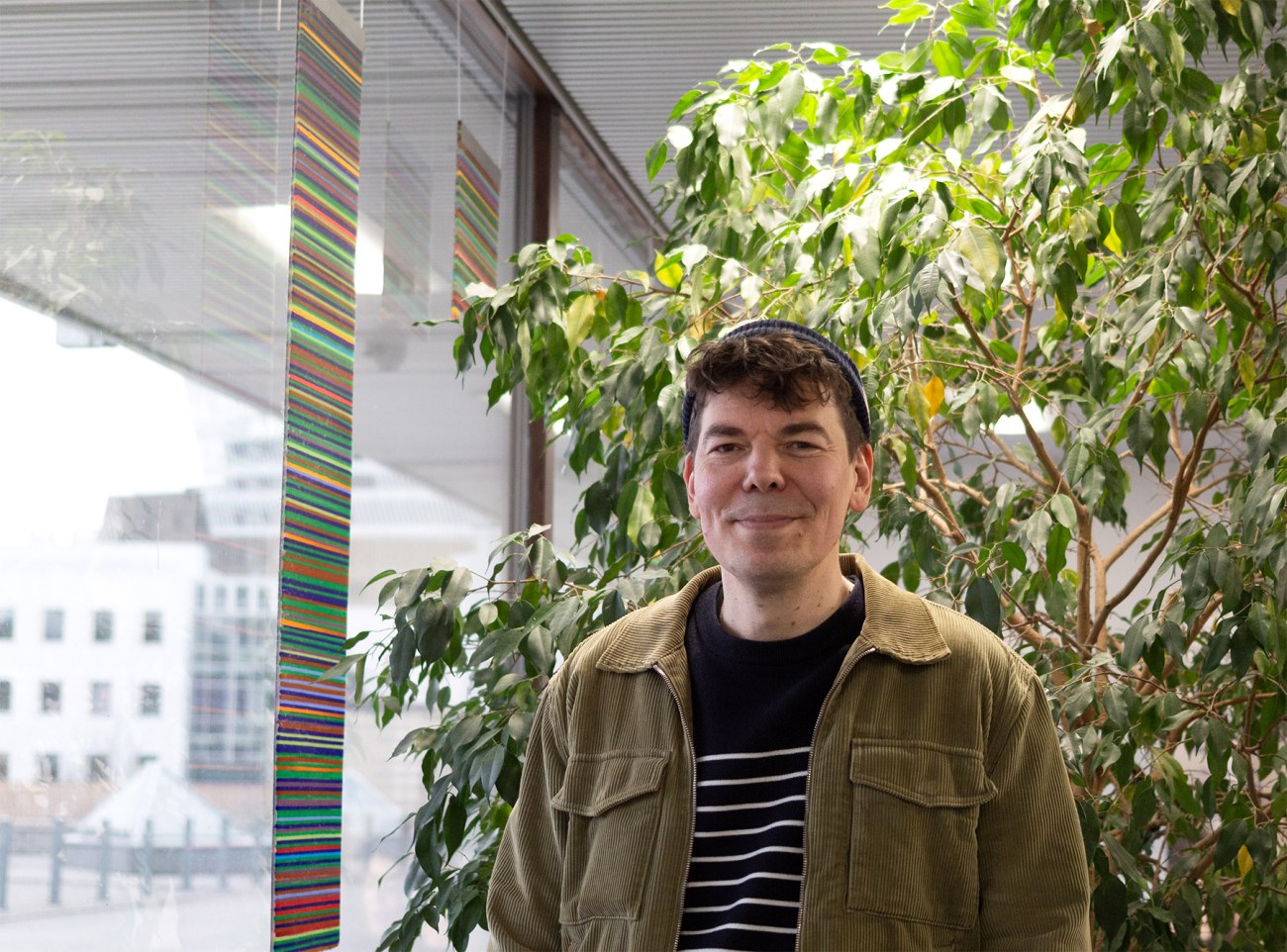 Photo: Eino Rissanen
What do LARPs have to do with democracy?
Stenros is currently participating in an international EU-funded research project titled Larpocracy, which studies the relationship between LARP practices and democracy.
In role playing and LARP, the participants adopt characters who operate within the agreed boundaries of an imaginary world. This world is created through a set of shared agreements between the players and may, for example, be set in the year 1963.
“When taking part in a LARP, you quickly notice that our ways of interacting with others can be transformed through mutual agreement. The Covid-19 pandemic offers a real-world example of this, as handshaking disappeared almost overnight simply because people collectively agreed to change their behaviour,” notes Stenros.
For researchers, LARP functions as a kind of laboratory where shared agreements reshape social interaction between the players. One commonly observed LARP practice is the so-called empty chair principle.
“At some international gaming events, there is a rule that whenever a conversation is underway, one chair is left empty. Similarly, if people are conversing in a circle, one space is always left open. This signals that anyone is free to join the discussion,” says Stenros.
Role-players may also use subtle signals to indicate their willingness to take part in activities or to convey their status within the group.
The researchers involved in the multi‑year Larpocracy project aim to identify democratic practices within LARP communities that could potentially be scaled up to the wider world.
Ultimately, shared agreements between people are what hold both our society and role‑playing communities together.
“Playing and gaming create spaces for experimentation, missteps and unexpected directions. They can lead to the discovery of new ways of thinking and being. I believe that all culture is created through play.”
Play transcends species
Playfulness, playing, games and gaming are omnipresent cultural phenomena, and gaming is far from a niche pastime. According to the Finnish Player Barometer – a national survey on gaming conducted by researchers at Tampere University – 98% of Finns play games at least occasionally.
As a researcher specialising in play and games, Stenros finds his field of study present everywhere around him.
“I am always wearing my game studies researcher’s hat. The perspective shifts depending on whether one is looking for examples of positive playfulness or analysing how gamification is integrated within the measurement systems of a university.”
The methods employed in gaming can encourage specific forms of behaviour in workplaces and organisations, and the tools developed in game studies can and have been used for this purpose.
Games have the capacity to reshape reality in multiple directions. They can offer an escape from reality or a moment of respite with like‑minded people.
Yet, like all technologies, games come with environmental costs.
“Where do the minerals needed for mobile phones and gaming consoles come from? The issue of conflict minerals cannot be overlooked,” says Stenros.
Like culture itself, play and games open up a limitless arena for scientific inquiry.
“If you have a vertebrate, you can play with a dog, and the dog will play with you. Play transcends the boundaries between species, and culture is created through play. My understanding of my own field has deepened along the way – we are dealing with profoundly important questions.”
Author: Eino Rissanen


