Professor Ville Santala promotes sustainable production through synthetic biology

Synthetic biology, an emerging discipline that combines life sciences, information technology and engineering sciences, is opening up a world of innovative possibilities across various fields. It enables the development of precision drugs for serious diseases, insect-resistant crops with enhanced yields, biofuels, as well as increasingly lightweight yet robust biomaterials.
Key application areas also include the replacement of fossil fuels with green alternatives and the utilisation of carbon dioxide.
“The ultimate goal is to achieve sustainable production that not only replaces existing methods but also delivers improved results. My research largely focuses on developing tools that enable this transition,” Professor Ville Santala says.
Santala believes that the importance of biotechnology and synthetic biology will grow tremendously in the future. Responsibility is the guiding principle of this research.
Plastic-eaters advance the transition to a circular economy
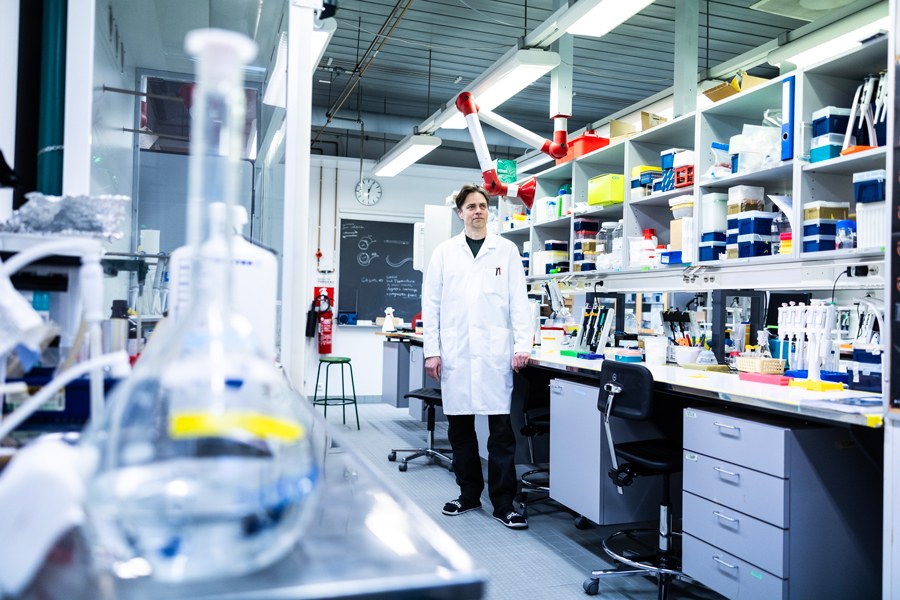
Santala’s research interests centre on reprogramming, modelling and engineering bacteria using genetic engineering and other advanced technologies. The new custom compounds produced by these bacteria –such as microbial oil – can be used in various applications, including the production of lubricants.
Currently, Santala’s Synthetic Biology (SynBio) research group is engineering plastic-eating bacteria to reduce plastic pollution in our environment. Bacteria can not only break down plastic waste but also produce new and improved plastics. In theory, plastic waste could even be transformed into something edible, which could have significant implications for future space colonies.
Santala commends Tampere University and the Faculty of Engineering and Natural Sciences for providing the necessary infrastructure for his research and understanding the unique requirements of experimental studies. He expects the quality of research to further improve with the completion of the new Noodi research hub on the Hervanta campus in 2026.
A lifelong nature enthusiast dives into the depths of science
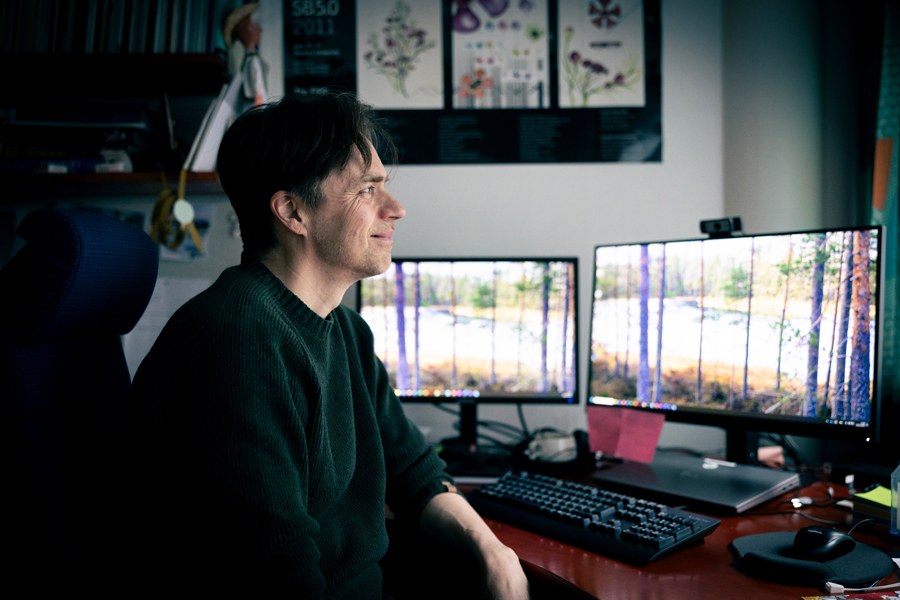
Ville Santala has been fascinated with biology from a young age, ever since he attended a nature club in his hometown in the late 1970s. As a child, he also enjoyed building and disassembling things. In synthetic biology, all these interests converge.
“Instead of following a definite career plan, I have allowed the tide to take me and only occasionally taken the helm. It has been a mix of drifting and white-water rafting. Or maybe my career journey is more like a submerged log because this field definitely lets you delve deep,” he says, laughing.
Santala’s academic career in biotechnology began as a doctoral researcher at the University of Turku. After transferring to the then-Tampere University of Technology, he started laying the groundwork for his own research group, which he later established. A particularly inspirational period was the year he spent as a visiting scholar at the Massachusetts Institute of Technology (MIT).
“At MIT, I was part of the research group led by Professor Gregory Stephanopoulos, a world-leading pioneer in biotechnology. Internal competition within groups of this calibre is usually fierce, but his group emphasised the importance of collaboration.”
Dreaming of creating something unique from scratch
In addition to leading his own research group, Santala oversees the teaching of industrial biotechnology and synthetic biology as major subjects within the Faculty of Engineering and Natural Sciences. Supporting early-career researchers is a special priority for him, and he predicts that the demand for PhD-level researchers in industry will continue to grow in the future.
“I have a naive faith in the significance of our research. I believe biotechnology and synthetic biology hold promise for addressing many of the current global challenges.”
Santala has a particular study on his wish list: he dreams of one day creating a synthetic biological system from scratch for a specific purpose.
“Once a cell is stripped of all genetic material, it can be implanted with a new, artificial genome. The ultimate purpose of the cell is known already while building it,” he explains.
For example, a synthetic bacterium designed in this manner could tirelessly produce drugs or food. Nevertheless, Santala acknowledges that it will take several decades for this vision to become a reality.
Welcome to the inaugural lectures of the new professors on 15 May 2025
Ville Santala
- Professor of Biotechnology, Tampere University, 11/2024–
- Associate Professor (tenure track), Tampere University, 2020–2024
- Assistant Professor (tenure track), Tampere University of Technology, 2016–2020
- Visiting Scholar, MIT, USA, 12/2018–12/2019
- Docent in Synthetic Biology, Tampere University of Technology and Tampere University, 2012–2016, 2017–2022
- University Lecturer and University Instructor, Tampere University of Technology, 2010–2016
- Senior Researcher, Tampere University of Technology, 2006–2010
- PhD in Biotechnology, University of Turku, 2006
- Research Scientist, Tampere University of Technology, 2005–2006
- Research Scientist, University of Turku, various periods between 2001 and 2005
- MSc in Biotechnology, University of Turku, 2001
- Assistant, University of Turku, various periods between 2001 and 2004
- Research Assistant, University of Turku, various periods between 1999 and 2004
Author: Anna Aatinen


