President Keijo Hämäläinen at the opening ceremony of the academic year: Universities are an important part of the foundation of the country's economy and economic growth

The opening of the academic year 2025–2026 coincides with the Year of Celebrations of the multidisciplinary Tampere University. In 2025, we are celebrating Tampere University’s 100th anniversary and the 60-year history of research and education in the field of technology in Tampere.
"Today, we look forward to the journey of the next century with memories of the anniversary year," said President Keijo Hämäläinen in his opening speech.
Hämäläinen pointed out that the country's economic situation and its future prospects in the face of social changes also affect the operations of universities.
"Of course, the core task of universities is not to develop their operations primarily on the terms of economic growth. We educate experts for the country, conduct scientific research based on the freedom of research, and maintain the cultural capital of our society. Through their statutory duties, universities are an important part of the foundation of our country's economy and economic growth.”
"The State Government's ongoing spending limits negotiations will show whether universities are perceived as public expenditure items or as engines of economic growth. It would be very destructive to cut universities’ core funding and not fund the raising of the level of expertise. Such savings would undermine RDI growth measures and the effectiveness of additional funding.”
In his speech, Hämäläinen also highlighted the ongoing debate on the freedom of research in Western countries.
"There are two types of threats: ideological restriction and narrow utilitarianism. We must participate in the debate on the usefulness of science, while cherishing the balance between freedom and the responsibility associated with it.”
“The research ecosystem is fragile. If the forests of science are felled through clearcutting, there will be momentary benefits, but in the long term, the basis for future growth will be lost. We must manage the forests of science with wisdom and the method of continuous growth – so that we can harvest and at the same time nurture new budding seedlings. We should not choose the winning disciplines too narrowly, but grow a mixed forest. In this way, we can safeguard the diversity of science, the emergence of new ideas and societal impact also for future needs.”
According to Hämäläinen the state of Tampere University is now stronger than before by many indicators, both academically and financially. He also spoke about the importance of the University's internationality and the well-being and sufficient income of students for the future of the university community. He concluded his speech by quoting the author Väinö Linna: “The future does not come about by itself – it is made.”
Deputy Mayor Jaakko Mustakallio: "Research-based decision-making is more important than ever"
The main speech at the opening ceremony was given by Deputy Mayor of Tampere Jaakko Mustakallio. He emphasised the strong interconnection between the success of the city, the university and the higher education community.
"Without a successful university, there is no successful city – and this also works the other way around. We must see our connection as a strategic, long-term partnership in which the strengths of both parties complement each other.”
As an example of the results of the cooperation, Mustakallio mentioned the solid position achieved by Tampere as the most student-friendly city in Finland:
"This is not a coincidence, but the result of determined, joint work. It is important to us that students feel that Tampere is a safe, inspiring city that offers opportunities. This is an investment in the future – in young talents staying in the city, building their lives here and bringing new skills and energy with them.”
Mustakallio also highlighted the importance of freedom of research and emphasised the importance of research-based knowledge in decision-making.
"Free research produces new knowledge, challenges established perceptions and provides us with tools to understand the world more deeply and to develop it for the better. An autonomous university is a significant critical voice in society and a spur that does not bend in the face of momentary pressures or trends. An autonomous university builds a well-thought-out, research-based and sustainable future.”
"Right now, when we live in a complex and rapidly changing time, research-based decision-making is more important than ever. The City of Tampere is currently exploring new ways to promote it – and we are happy that the university's researchers and research groups have been involved in the city's development programmes and their working groups.”
Laura Heino, Chair of TREY's Board: "Years spent at university are not just for studying"
In her speech, Laura Heino, Chair of TREY's Board, reminded that the start of studies is one of the biggest changes in many people's lives.
“For all of you new students who feel like there’s so many new things, remember this. It’s okay to feel nervous, it’s okay to be lost in the corridors, it’s okay to miss some little detail. We all, the whole university community, are here to help you.”
“And for all of us more experienced students I want to say, it’s okay if also we feel a little lost sometimes. Because these years spent at university are not just for studying. These years are also for searching your own thing, learning about the world and finding yourself.”
In her speech, Heino also brought up students' livelihoods.
"Our livelihoods have been repeatedly weakened, and an increasing number of us students have therefore been forced to work alongside our studies. However, it is not understood how much time and energy students have left to spend on studying themselves. Not to mention how hard it is to carry all this mentally. In my view, it is necessary for us as a university community to discuss these challenges faced by students more than before and to understand that progressing on schedule in studies is not so simple these days,” Heino said.
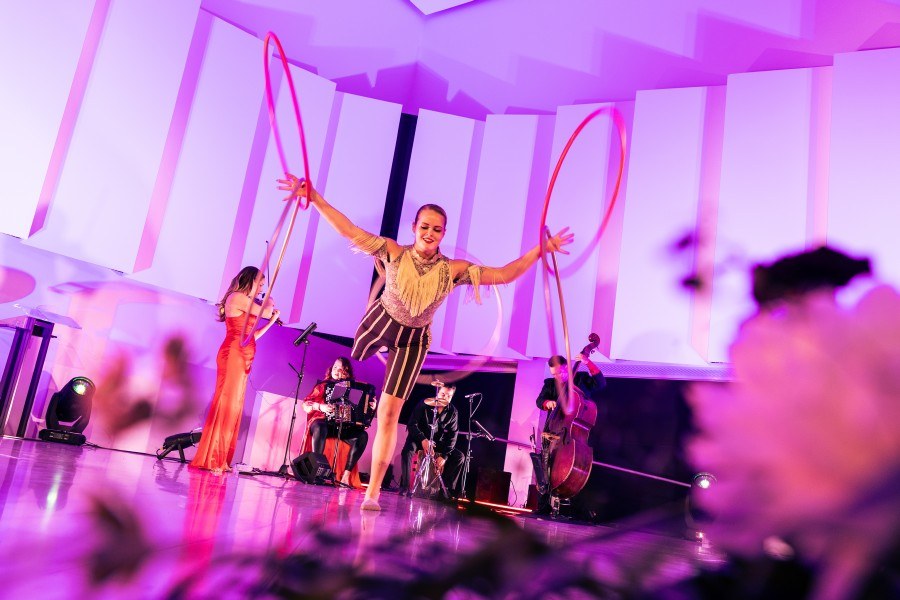
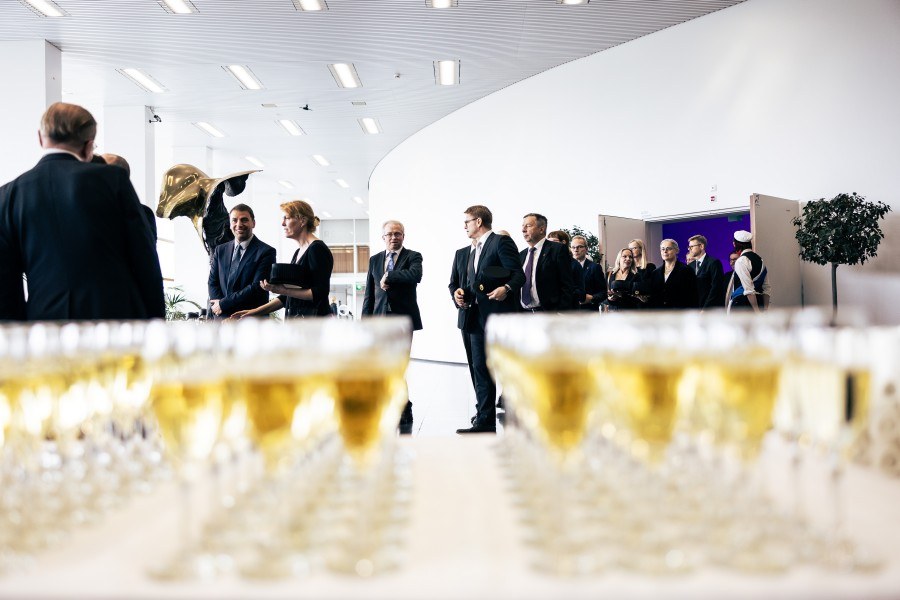 Photo: Jonne Renvall


