Miika Lipiäinen appointed Professor of Practice at Tampere University: sustainable experiences in life and business

Professor of Practice in experience economy Miika Lipiäinen is concerned about how social media shapes our experiences. The fast pace of social media threatens to erode our sense of community even though shared experiences have always been the hallmark of memorable moments.
“I believe we have moved towards a culture of disposable experiences as social media apps are offering manipulated dopamine hits in an endless stream. The constant feed is not good for the experience economy,” Lipiäinen says.
Lipiäinen combats the throwaway nature of experiences by enhancing community, materiality and the role of experiences. As a Professor of Practice at Tampere University, he promotes a sustainable experience economy. His goal is to restore balance in how we experience things – what he calls the ‘experience food pyramid’ – by curbing unfocused overconsumption and fostering community.
“We need a national dialogue on the significance of experiences for people as well as research and sustainable business practices as they would enable people’s participation in experiences even during economic fluctuations. Life can and should include uncommercial everyday experiences, but there is also significant business potential in experiences,” Lipiäinen notes.
Moreover, Lipiäinen wants to bring together stakeholders in the experience economy and explore how experiences can be sustainable both commercially and environmentally.
Consumer experiences feed the experience economy
The experience economy encompasses industries focused on creating meaningful consumer and customer experiences, such as event management, cultural sectors, entertainment and gaming industries, sports, and the tourism and hospitality sectors.
Themes of the experience economy are also applied to product-oriented industries by developing the customer journey in an experiential direction. This is something Lipiäinen has promoted in his business career as a founding member of Kyrö Distillery, a craft spirits distillery making eg whisky.
“When Kyrö was founded, Finland had no business network of suppliers and customers that a small distillery could rely on to develop, stage and export experiences,” Lipiäinen says.
In the doctoral dissertation Lipiäinen is writing in the field of business strategy at the University of Jyväskylä, he examines whisky as a category and explores how people define ‘whisky-ness,’ or what is considered good whisky.
“Such valuations are always connected to experiences in some way as different categories emerge and evolve socio-dynamically. In other words, they are first experienced and perceived, and then consciously and unconsciously negotiated among various groups,” he explains.
In his dissertation, Lipiäinen will highlight the market functions where different actors negotiate, sometimes even through conflict, whether, for example, oat milk is milk, contemporary art is art, or whether authentic malt whisky is only made in Scotland.
Cities as stages for the experience economy
The development of experiences has been mentioned as a means of revitalising failing city centres. However, this has never been a problem in Tampere which has pioneered in investing in and developing the event industry and the experience economy.
“An experience can be very intimate and private, yet people still also gather to share something that cannot be staged and experienced alone. In this sense, cities are perfect environments for experiences. Tampere has done excellent work and serves as an ideal testing ground for an experience economy programme," Lipiäinen notes.
“When I think of Tampere as a living lab, collaboration with the city enables building experiential business around people and test it through research. With massive numbers of people moving around the city centre, we have the perfect place to develop the experience economy,” Lipiäinen points out.
“We need to cross business boundaries and integrate stakeholders into the value chain of the experience economy. This includes all kinds of experiential activities, whether people are heading to an event or encountering something new and exciting in their work,” he continues.
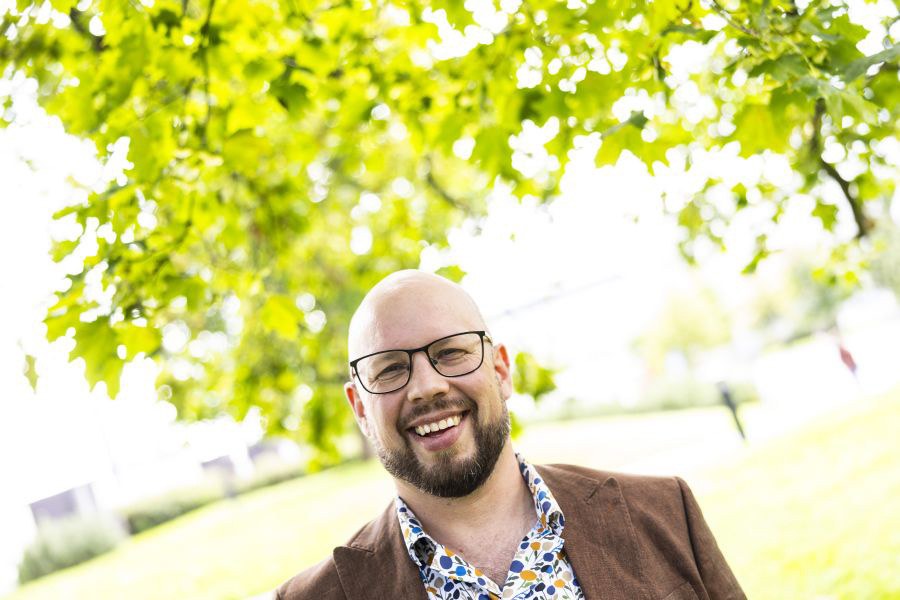 Photo: Jonne Renvall/Tampere University
Finland can draw inspiration and set an example
Lipiäinen believes it is crucial to involve international partners in business collaborations and innovative research. Global connections help to understand the experience economy.
“The great thing about experiences is that, as a species, we want to have them everywhere. While the style of experiencing may differ, the need for experiences is universal. We can see internationally how much daily and festive experiences are valued, business is conducted around experiences, and the topic is researched,” he says.
Lipiäinen wants to spark a conversation about the importance of experiences. He believes that experiences are not just about business but about people creating them for other people in everyday life.
“Finland is a model country in sustainable experience economy where experiences fuel the entire society. I think we have great potential for enhancing Finland’s global image in this field”, Lipiänen says.
Experience economy is researched and taught in the Unit of Business Studies at the Faculty of Management and Business. In the initial phase of the project, the professorship is a professor of practiceship.
The aim of appointing Professors of Practice and Industry Professors is to strengthen Tampere University’s societal interaction in Finland and internationally. In the role of a Professor of Practice, outstanding achievements in business, the public sector, or the third sector are required rather than traditional academic merits. That is why the post of a Professor of Practice does not correspond to a professorship as set out by the Universities Act.
Master of Science in Economics Miika Lipiäinen
- Professor of Practice at Tampere University.
- Doctoral researcher at the University of Jyväskylä.
- Kyrö Distillery co-founder in 2014 and managing director until 2022.
- Strategic Advisor for Lykke Coffee (Finland and the Baltics) and Intune (United Kingdom)
- M.Sc. in business economics with a focus on finance and management accounting, University of Jyväskylä in 2008.
- Hobbies: jazz drummer in amateur bands, swimming and games
Further information:
Miika Lipiäinen
Professor of Practice in experience economy
Tel. +358 (0)400 484 576, miika.salmilipiainen [at] tuni.fi
Hannu Saarijärvi
Professor of Marketing
Faculty of Management and Business
Tel. +358 (0)40 535 1369, hannu.saarijärvi [at] tuni.fi


