Candles, cooking and chemicals: citizen science uncovers sources of household air pollution

Postdoctoral Research Fellow Anna-Kaisa Viitanen notes that the study conducted in the autumn of 2024 marked one of the first occasions in Finland where indoor air quality was measured and observed by citizens themselves. The study was conducted using a compact, household-compatible device, the kind that has only become available on the market in recent years.
Citizen science refers to research in which members of the public participate in data collection, analysis or other stages of the research process in collaboration with professional researchers. Viitanen found citizen science to be a promising approach for measuring indoor air particles and gases in domestic settings. Approximately twenty non-professional participants took part in the study.
“They not only collected valuable data for the researchers but also learned to recognise and manage indoor air pollution in their own homes. Participation in the study has undoubtedly increased their awareness of indoor air quality and its impact on human health, especially given that people spend the majority of their time indoors,” says Viitanen.
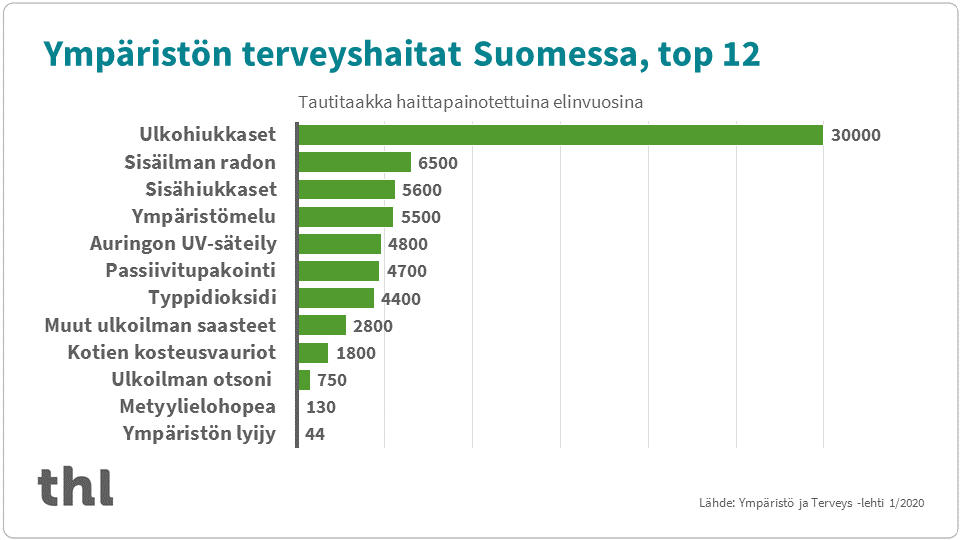
Poor indoor air quality greatly contributes to increased morbidity, or a higher incidence of health issues. According to a study published in the trade journal Ympäristö ja Terveys (issue 1/2020, available only in Finnish), indoor air particles are the third most significant environmental health hazard in Finland.
Viitanen points out that the health risks associated with poor indoor air quality are not always immediately apparent, as the effects of particulate exposure are cumulative and build up over a person’s lifetime. It may take years for elevated levels of particulates and harmful gases in indoor air to trigger the onset of disease.
Public engagement and fresh research ideas
The measurements conducted by citizen scientists revealed that everyday household activities, including cooking, burning candles, and using cleaning products and hair sprays, increased indoor air pollution levels. They also found that subzero temperatures, traffic emissions and wood burning contributed to the deterioration of indoor air quality.
During a workshop held after the measurement phase, the professional researchers shared practical tips with the participating citizen scientists on how to improve ventilation efficiency and reduce the use of chemical products in their homes.
“Our study demonstrated that citizen science is an effective approach for monitoring changes in indoor air quality within domestic settings. While the sensor data should be interpreted with caution, its collection has not only fostered public engagement in science but also inspired new directions for research,” says Viitanen.
Encouraged by their findings, the researchers are now aiming to gain a deeper understanding of regional differences in indoor air quality. Their goal is to develop solutions that promote health and well-being among urban populations. The next step is to secure funding to support further research.
Conventional scientific research on indoor air quality is also underway, as Tampere University is currently leading a multidisciplinary national study titled Global trends in IAQ: Novel technologies, Competence and Business (GIANT), which investigates indoor aerosols. The University’s role in the study focuses especially on the impact of outdoor pollutants on indoor air quality.

Author: Anna Aatinen


