The research in the Polymer Chemistry and Materials group focuses on the synthesis and properties of polymer materials. It aims to discover new ways in which polymers can be made, to understand how polymer structure influences its properties, and to demonstrate how polymers can be used to tackle today’s challenges. Of particular interest is to improve the sustainability of polymers by studying materials derived from renewable feedstocks, by developing more efficient and less wasteful polymerisation methods, and to advance end-of-use strategies.
Key research areas
Polymer chemistry Investigating new ways to make them (and break them)
Advances in this areacan give access to unforeseen polymer structures, properties, and production methods, and new chemical recycling and reprocessing strategies. Our areas of expertise include controlled radical polymerisation, ring-opening polymerisation, polymer self-assembly, branched architectures, and heterogeneous polymerisation processes.
Structure-property relationships Understanding how to design better materials
Basic research in this area improves our understanding of polymer behaviour and guides our decision-making when designing new materials. Application-driven research puts modern polymerisation techniques to use to solve real-world problems.
Sustainable polymers Reducing the environmental impact of plastics
The ever-increasing volume of polymers produced each year are a testament to their value and versatility, but their success also poses a great environmental challenge. There is an urgent need to transform the current polymer production and end-of-use landscape by finding sustainable alternatives to today’s plastics. We aim to contribute to this transformation with our basic research and through collaboration with industry partners.
Undergraduate students planning their thesis work or an internship can contact Satu directly via email. Please include a short description of your chemistry knowledge (e.g., relevant studies and work experience), possible wishes related to the project, and a preliminary schedule for your project (i.e., proposed start date).
Prospective doctoral students and postdoctoral researchers are asked to also include a CV and a cover letter describing their motivation to apply to the group, previous research experience, and the titles and supervisors of their theses.
10/2025 This month, we welcomed Hannah Buchholzer to the group for a 3-week internship. Let's hope the lab experience makes up for the miserable late-October Finnish weather...
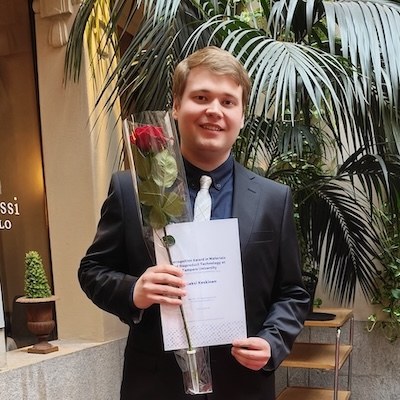
Huge congratulations to Aleksi for receiving a recognition award for his MSc thesis, Characterization of Biopolymer Blends Used in Extrusion Coating, granted by the Finnish Forest Products Engineers’ Association!
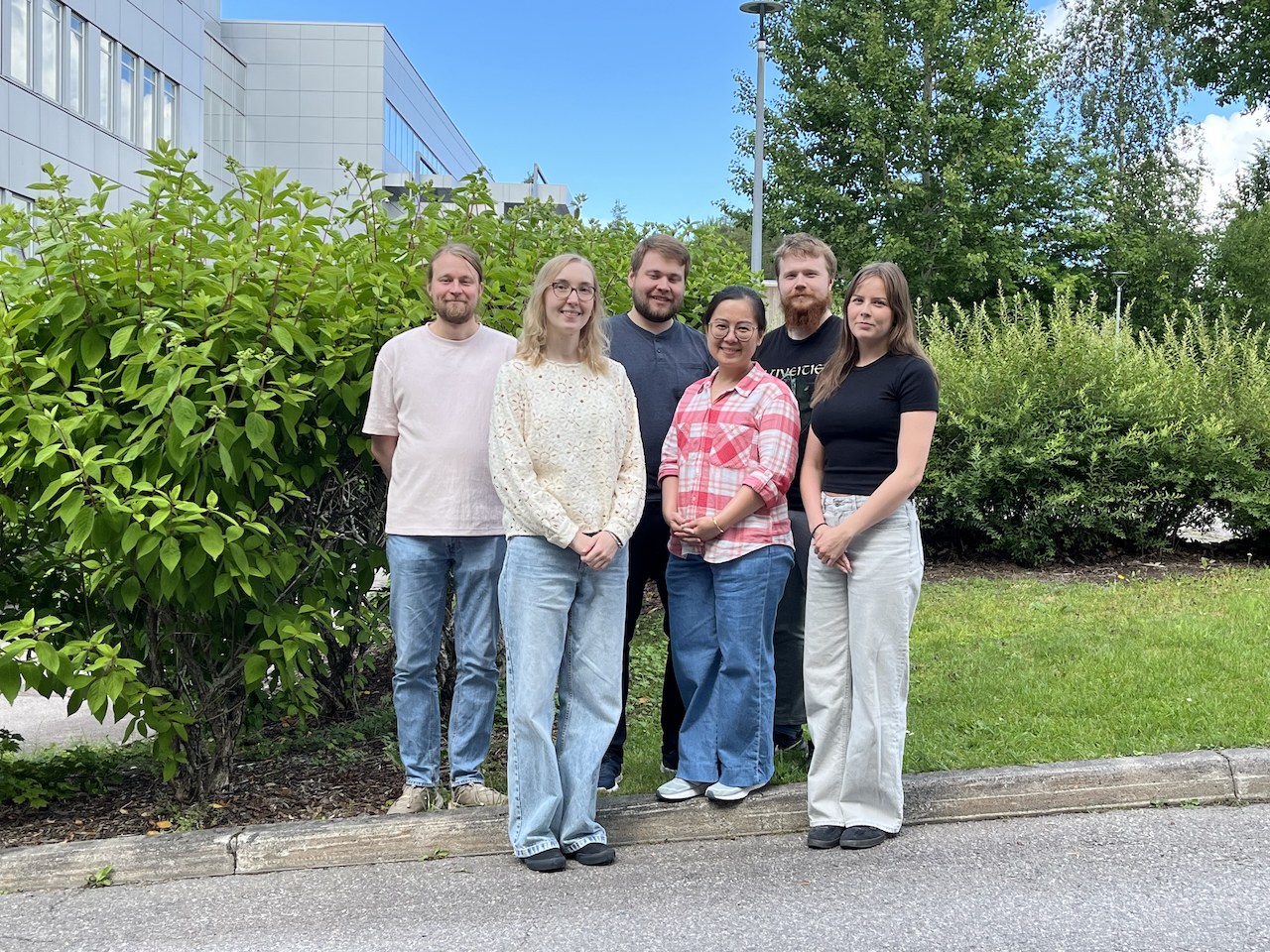
06/2025 We recently welcomed a lot of new people to the group:
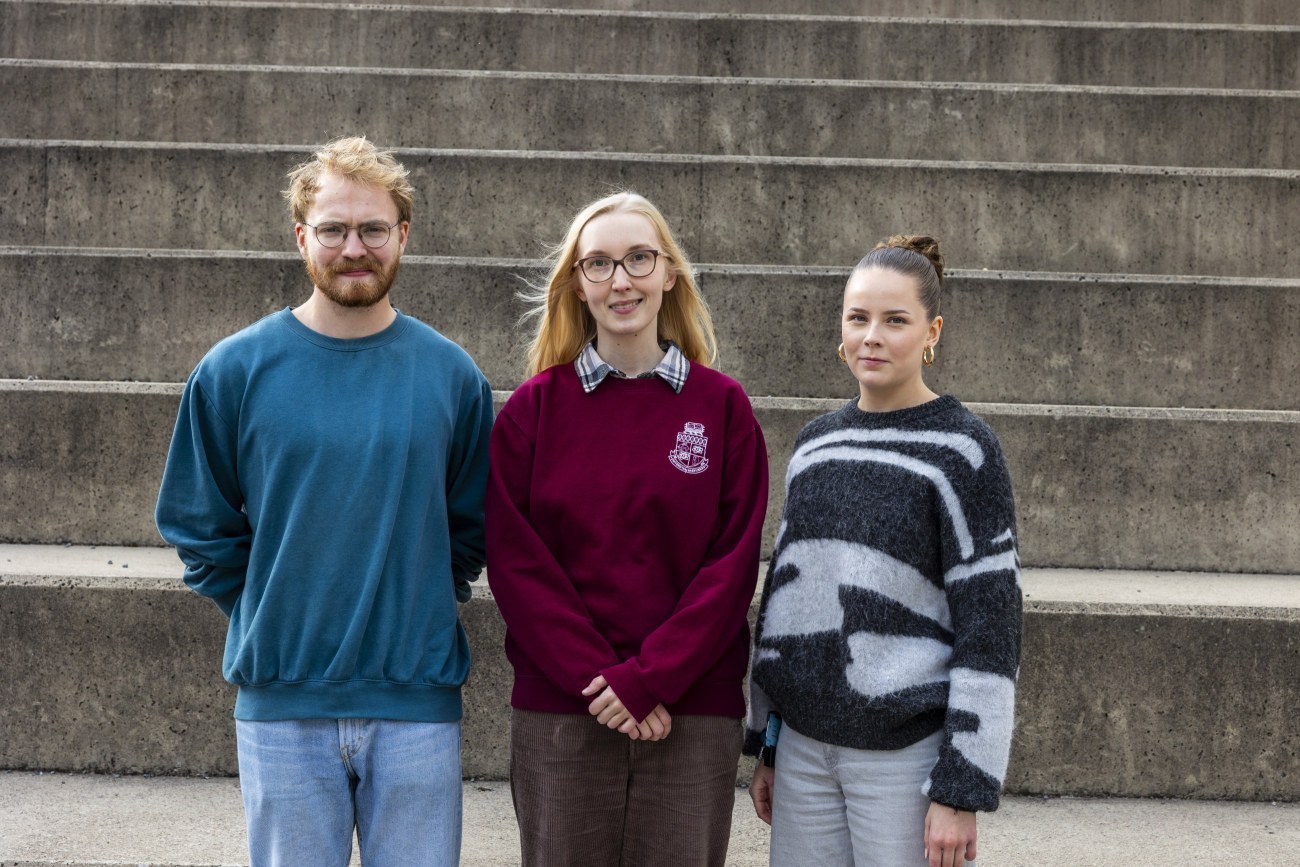
Jenna is a student at Aalto University and a familiar face in CAM after her previous summer stints in Prof. Priimägi's group. This year, she joins our group as a research assistant to study new photopolymerisation catalysts in close collaboration with Aleksi.
Mahaut joined us in May for an Erasmus+ internship. She is a second-year chemical engineering student at Université de Haute-Alsace with an interest in plastics and elastomers. During her visit, Mahaut will be levelling up her lab skills by learning how to synthesise polyamides via ROP.
Oona is an undergraduate student at Tampere University, whose newfound passion for chemistry was sparked by a polymer chemistry seminar last fall discussing the use of polymers in personal care and cosmetics. Her research assistantship this summer will involve practicing basic techniques in organic chemistry and contributing to the daily operations of our lab.
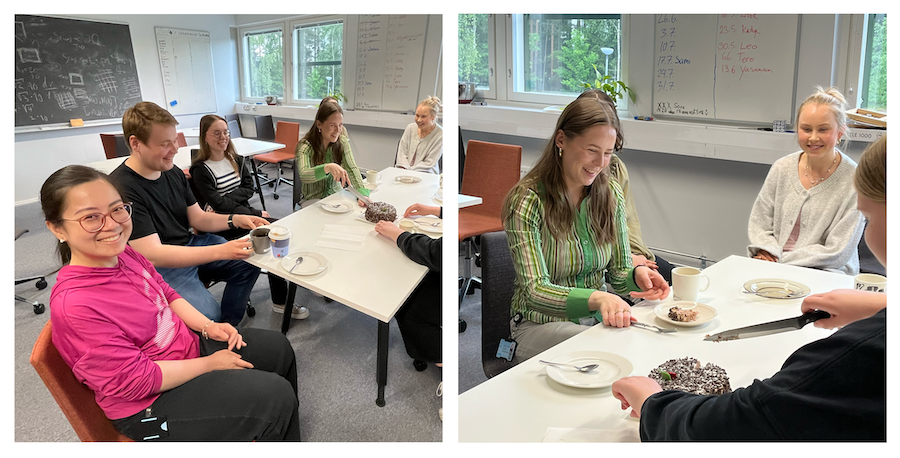
Last but not least, we are happy to welcome back Linnea, who never really left but took a well-deserved breather after the busy semester before returning to the lab full-time. She finalised her bachelor's thesis last month and graduated in June - congratulations Linnea!! Celebratory cake pictured below :)
05/2025 A warm welcome to our new doctoral researcher, Van Le! Van completed her MSc degree in Tampere University's environmental engineering programme in 2024 and decided to continue her professional development by studying chemistry in our alumni programme. Van's multidisciplinary education, work experience, and interest in sustainable technologies and environmental challenges provides an excellent foundation for her sustainable polymers research.
The group enjoyed a lovely day in Vanajanlinna, attending the annual seminar of the SUSBIO profiling action. The programme included intriguing talks in sustainable biomedical and soft matter research. Thank you to the organisers and the speakers for the event!
Congratulations to Maria on her successful MSc seminar! Maria will stick around for a little longer to continue this project, working as a research assistant and finalising her thesis.
04/2025 Meet Aleksi - the first doctoral researcher to join the group! Aleksi majored in chemistry in his BSc and MSc studies and got interested in polymer science whilst studying materials technology as his minor. He joins the Emil Aaltonen project to investigate new photopolymerisation chemistries - and possibly to level up the group's disc golf skills (summer students take note 😉).
03/2025 Satu's research article entitled "Renewable Lactam Monomer for Tunable and Processable Polyamides"was just published in Macromolecules! Read more
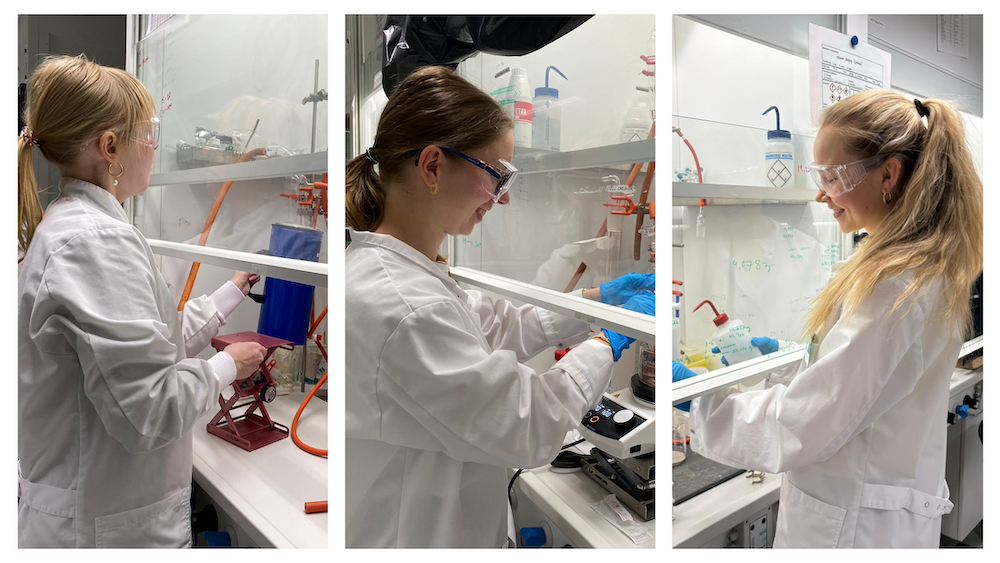
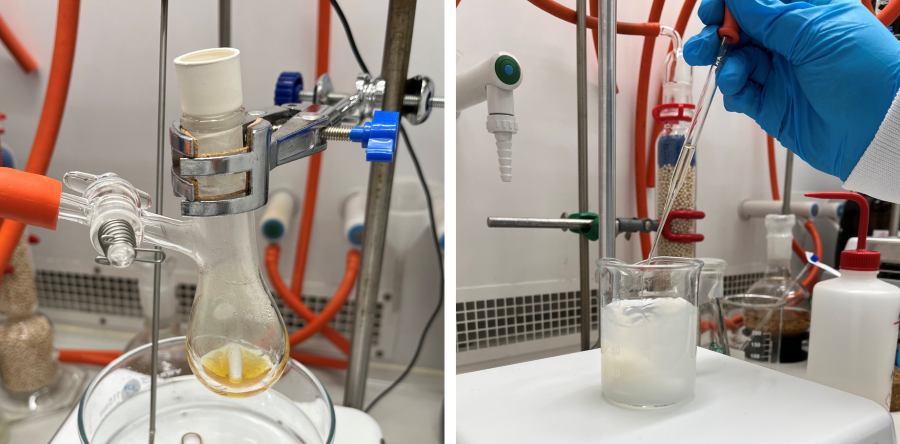
02/2025 Maria joined us in January to carry out her M.Sc. research project and synthesised the first polymer of the group in no time! The project is off to a great start, and Satu can barely wait to see how things will pan out :)
First polymer of the group getting purified by precipitation.
01/2025 January was a busy month for Satu, with a funding call, polymer chemistry lab course, and summer recruitments kickstarting the new year. CAM's summer job info session was absolutely packed this year, and it was great to see so much interest towards chemistry research from our students.
12/2024 We have received a few inquiries regarding BSc and MSc thesis projects and are currently at capacity until June 2025.
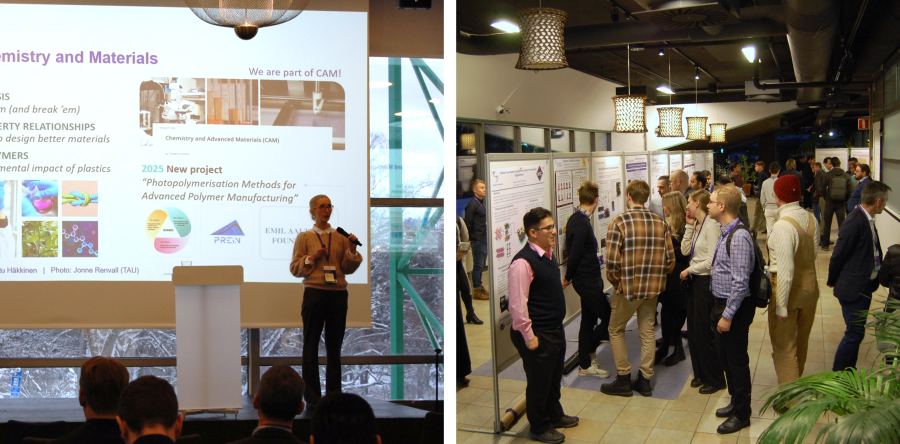
ENS Science Day was the perfect way to wrap up the year with a good mix of science chat and celebration. We are very excited for next year for the new people joining our group - but first, a couple weeks of hibernation.
ENS Science Day 2024Photo: Petra Vesa / Tampere University
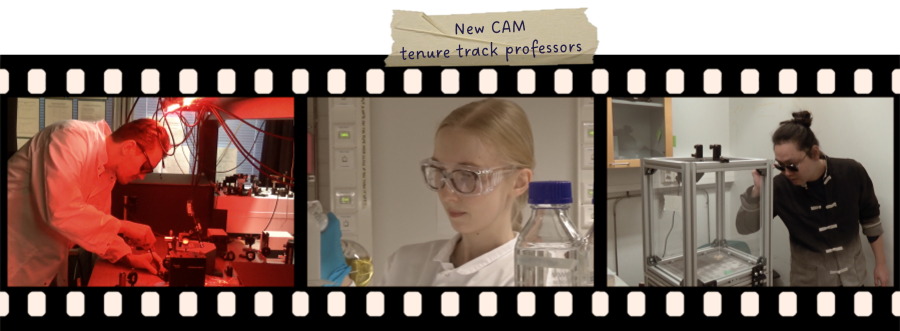
11/2024 November was a busy month! Satu lead a series of polymer research and industry seminars as a part of the Polymer Chemistry course, and a video shoot in preparation for this year's ENS Science Day. The latter involved recording a short video of the faculty's new tenure track professors to introduce them to the ENS staff. A huge thanks to research assistant Petra Vesa for her help with this project!
New CAM tenure track professors: Tero-Petri Ruoko (left), Satu Häkkinen, Hao Zeng
10/2024 Linnea reflects on her summer job experience in her recent perspective article.
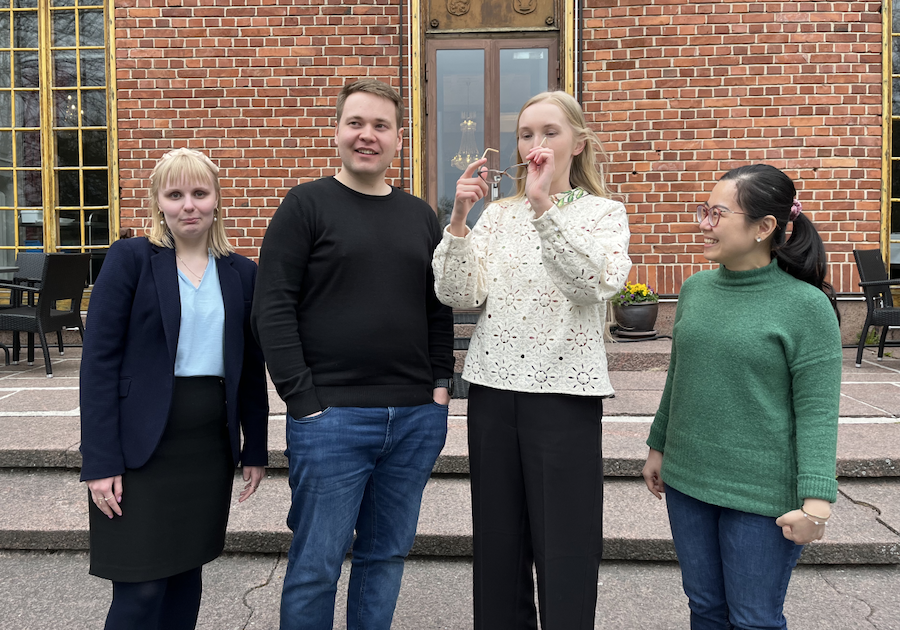
Jonne Renvall (Tampere University) snaps the first group photo!
Photo: Jonne Renvall / Tampere University
09/2024 Niklas Helfer joins the group for a 3-week internship.
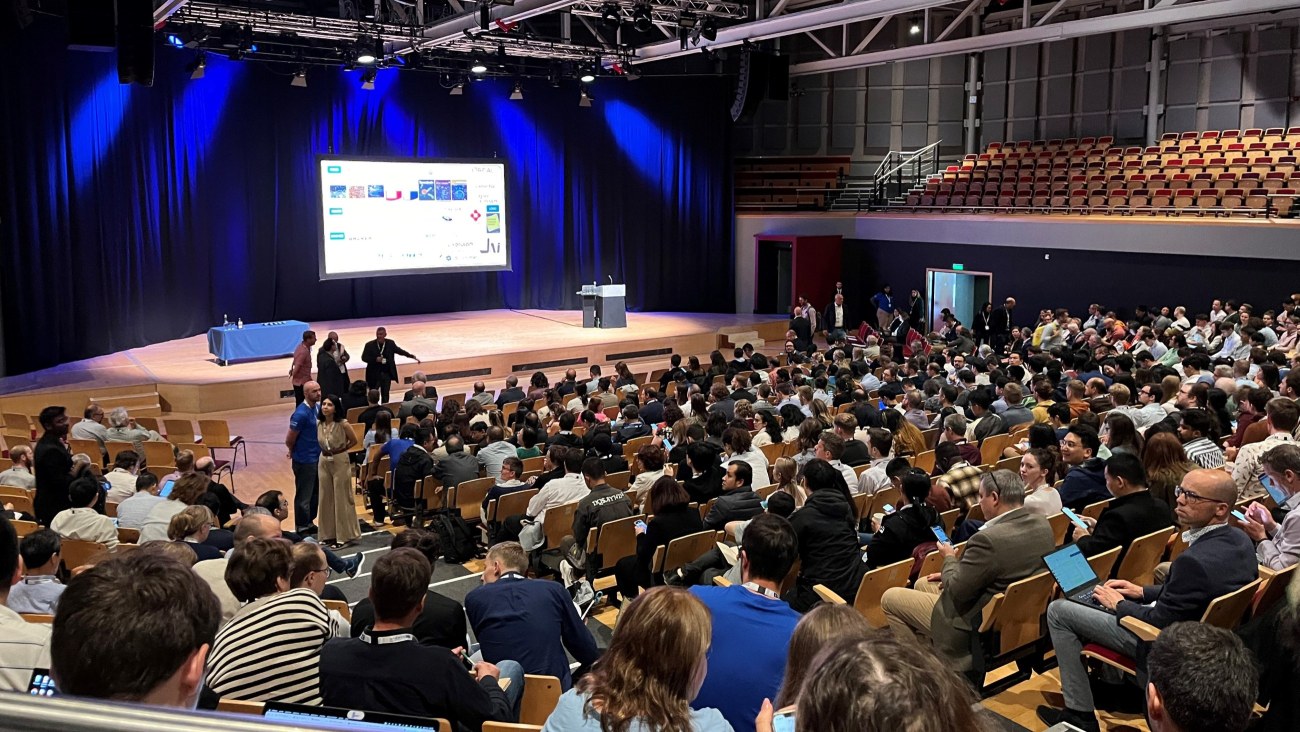
07/2024 Satu visits University of Warwick to participate in the IUPAC MACRO 2024 and to reunite with many of her former colleagues. What a fantastic conference!
06/2024 Satu receives funding from Emil Aaltonen foundation to investigate new photopolymerisation methods. The group will be growing very soon!
Linnea Tornberg joins the group as a research assistant and the first group member to help Satu in the lab over the summer. Welcome Linnea!
01/2024 Satu Häkkinen is appointed as Assistant Professor of Polymer Chemistry at Tampere University. Read more

 Satu Häkkinen