A tissue transplant can restore sight – it is worth recording your donation wishes in MyKanta

Would you like your organs, tissues, or cells to be used to help others after your death?
If your answer is yes, it is advisable to record your organ and tissue donation wishes in the MyKanta online service and to inform your family about it.
“When a donation wish is recorded in MyKanta, it is easier for us to approach relatives regarding a potential tissue donation. A traditional organ donor card is also valid, but if the information is recorded in MyKanta, we are sure to find it,” says tissue coordinator Kiti Huuhilo from the Regea Tissue Center at Tampere University.
Tissue grafts are used to treat serious illnesses and injuries that significantly impair quality of life. For example, a corneal transplant can restore someone’s sight, while a bone graft can speed up recovery after surgery.
In Finland, everyone is legally considered an organ and tissue donor unless they have explicitly refused it during their lifetime. In practice, however, the wishes of the deceased are confirmed with their relatives whose views are also heard and respected.
“Some people might think that if they do not oppose organ and tissue donation, they automatically become donors after death. However, their relatives will not know this unless the matter has been discussed or the wishes have been recorded in MyKanta,” tissue coordinator Anna Kivimäki notes.
Finland’s only multi-tissue bank
Regea at Tampere University is the only multi-tissue bank in Finland. Its clients include virtually all Finnish hospitals that use tissue grafts in patient care and do not have their own bone or eye banks.
“Other Finnish tissue banks operate within hospitals and mainly supply grafts to their own patients,” explains team leader and quality manager Tiia Tallinen.
Regea’s mission is to ensure the availability of tissue grafts in Finland.
It is a non-profit operation, with fees for transplants only covering the tissue bank’s operating costs.
Most tissue grafts – including corneas and most bone and connective tissues – come from deceased donors. Amniotic membrane (inner layer of the placenta), which is used in the treatment of eye injuries, is obtained during planned caesarean sections while bone tissue can be collected during joint replacement surgeries.
Regea has its own tissue collection operations in the cities of Tampere, Kuopio, and Turku. It also imports certain tissues, such as dried amniotic membrane, pericardium (the connective tissue sac around the heart), and sclera (the white outer layer of the eye).
“The imported tissues have been selected based on clinical need,” Tallinen notes.
Last year, well over 400 recipients got transplants recovered by Regea of whom 160 received corneal transplants, 180 bone and support tissues, and 60 transplanted amniotic membrane. In addition, nearly 150 patients received a transplant imported by Regea, most commonly, dried amniotic membrane.
Next of kin is contacted soon after death
At Regea, three tissue coordinators work in a rotation, each taking on different responsibilities from week to week.
One coordinator looks for suitable tissue donors, contacts the next of kin and arranges the procurement of tissue transplants along with the necessary laboratory tests. Another receives orders from hospitals and delivers tissue grafts to clients while the third focuses on documentation tasks, such as maintaining the quality management system.
“The work is varied and diverse. Rotating the roles ensures that none of us finds the job too overwhelming,” Kivimäki says.
Tissue coordinators receive notifications from procurement hospitals about deceased persons for selecting potential donors. To ensure the safety of the transplants, tissue donation should begin within 24 hours of cardiac arrest.
“If the 24-hour window is still open, we assess the age and medical history of the deceased to determine their suitability as a donor. After that, we call the next of kin to confirm whether the deceased would have wished to donate tissue. In the conversation, we also clarify the health details of the deceased,” Huuhilo explains.
The call from a tissue coordinator often comes very soon after the death of a loved one while many are still in shock, and discussing the matter can feel difficult.
“We aim to provide just the right amount of information – enough for the family to understand the issue and decide, but not so much that the call becomes distressing. We want to treat everyone with respect,” Huuhilo emphasises.
Although the call comes at a time of grief, it may also offer comfort.
“The next of kin may feel that something good can come from the loss of their loved one,” Kivimäki points out.
Deep freeze and incubators
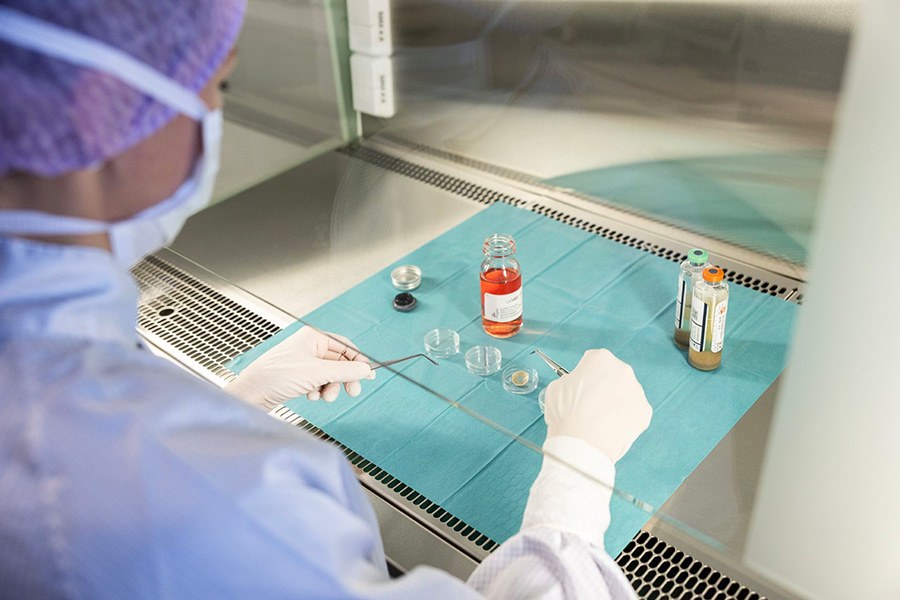
Once a tissue graft has been retrieved, its quality and safety are meticulously verified.
Blood samples are taken from the donor to ensure that the donor does not have diseases that would be communicated to the recipient from the tissue. The tissue itself is also tested for microbial growth.
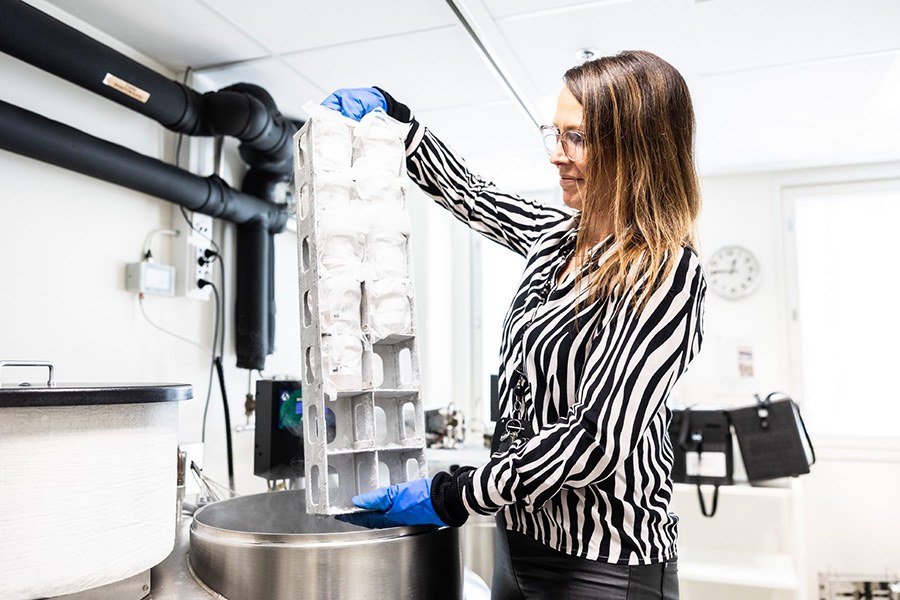
As the name suggests, the tissue bank is a facility where tissues are stored for future use. Bone and connective tissues, as well as amniotic membranes, are kept in deep freezers at –80°C. Corneas are stored in nutrient solution in incubators at 31°C.
While bone and connective tissues can be stored for up to five years, and amniotic membranes for one year, corneas must be transplanted within 30 days.
“With corneal grafts, we aim to transplant living, functional cells. We verify this by examining the grafts under a microscope at the beginning of storage and again 1–3 days before surgery,” explains development manager and designated responsible person of the tissue establishment Annika Hakamäki.
Due to the short storage time, corneas are only retrieved when there is a known need. Bone and connective tissues, as well as amniotic membranes, are stored in larger quantities which are enough to meet the demand for at least six months.
Will stem cell therapies replace tissue grafts?
In the future, new treatment methods may reduce the need for tissue grafts.
“Innovative therapies are being developed, but they are not yet widely used in clinical practice. For example, treatments for eye diseases include grafts made from stem cells and cultured endothelial cells from the corneas of young donors,” Hakamäki says.
Tallinen notes that new cellular therapies are likely to be significantly more expensive than tissue grafts. That is why she does not believe they will completely replace tissue grafts, at least not in the foreseeable future.
“Tissue donors will thus be needed also in the future,” she says.
The Annual Congress of the European Association of Tissue and Cell Banks will be held in Tampere on 12–14 November 2025.
Learn more and explore the programme
Tissues for different purposes
- Bone grafts are used to promote bone healing and to replace bone deficiencies, for example, in the treatment of fractures, joint replacement surgeries, and bone tumour operations. A bone graft supports the bone loss area and releases substances that are needed to grow new bone.
- Tendon grafts are used to repair various tendon injuries.
- Osteochondral transplants are used to repair chondral defects eg in the knee.
- Corneal grafts are used in the treatment of eye diseases and injuries.
- The amniotic membrane is the inner layer of the placenta, collected during planned caesarean sections. It is used, among other things, in the treatment of eye injuries and diseases.
- Other tissues used in eye treatments include the sclera (the white of the eye), the pericardium (the connective tissue sac surrounding the heart), and dried amniotic membrane. Regea imports these grafts from European tissue banks.
- Read more about the Regea Tissue Center

Author: Virpi Ekholm


