Tampere University trains future System-on-Chip experts through new Chip Implementation course

Educating new chip design experts is essential for Europe’s technological sovereignty. Through SocHub and collaboration with industry, Tampere University is contributing directly to building that competence.
Mohsin Abbas
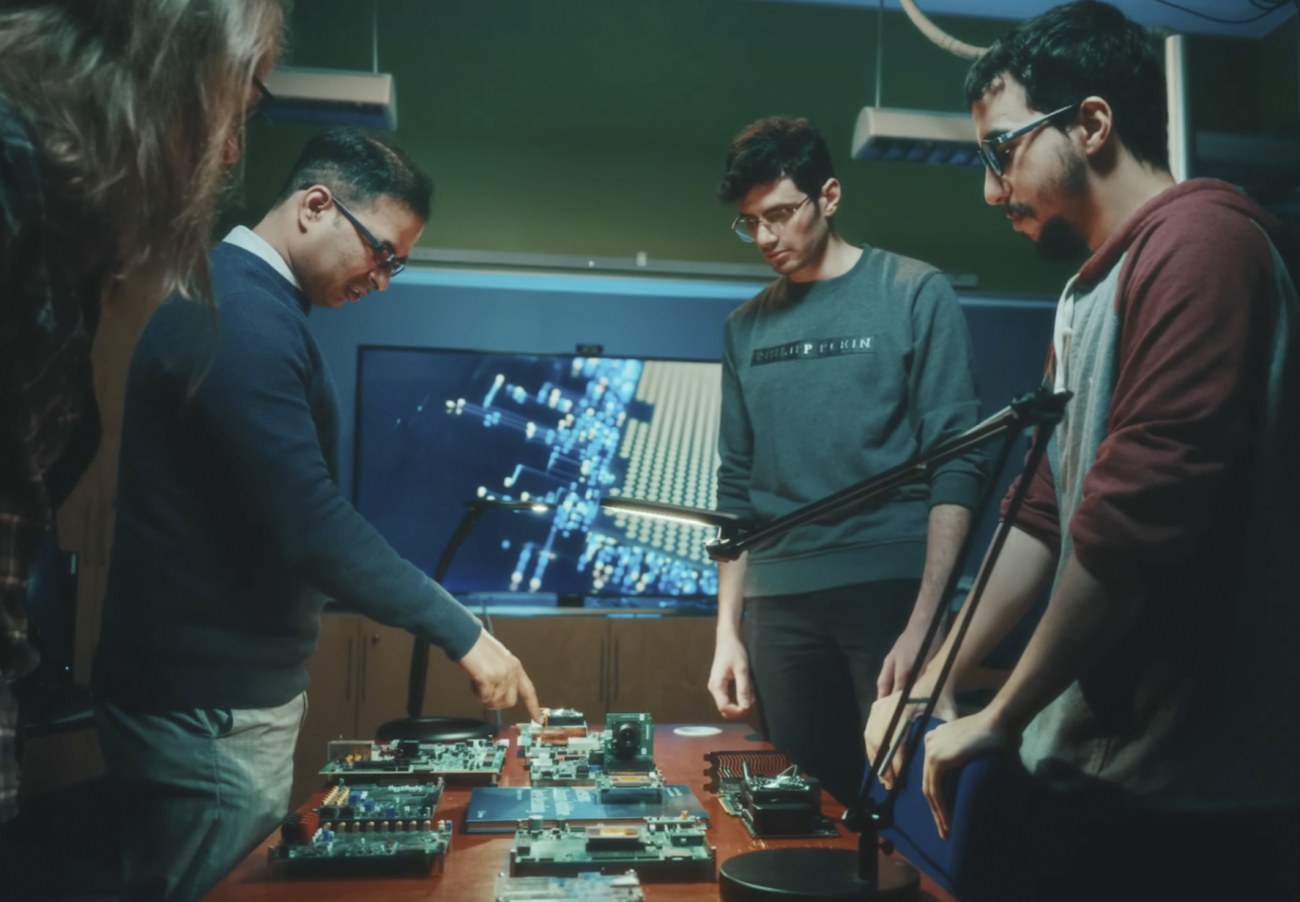
The course is part of the European Edu4Chip project and complements the earlier SoC Design course, where students design their own subsystems into a larger system-on-chip. In Chip Implementation, students take the next crucial step—placing their design on silicon, ready for fabrication. A third new course focusing on chip testing will follow once the first student-designed chip has been received from the foundry.
The first round of Chip Implementation has already proven popular, attracting around 40 students, most of them nearing graduation. The course prepares them for careers in the rapidly growing microelectronics industry, where skills in chip design are increasingly in demand.
“All the course materials have been developed from scratch with the goal of inspiring students to pursue this challenging yet rewarding career, making chip design education engaging, and lowering the entry barrier for new students,” says Mohsin Abbas, the responsible teacher of the course and tenure-track professor at Tampere University.
Hands-on experience with real chip design
The course focuses on ASIC synthesis and physical design, standard cell technologies, and the use of modern ASIC sign-off tools. Students gain practical experience by going through the full design flow—from RTL to GDSII—covering every step such as static timing analysis (STA), logical synthesis, clock tree synthesis (CTS), floorplanning, placement, routing, I/O design, and packaging.
After completing the course, students are capable of performing a tape-out for a simple chip and understand both the technical and practical challenges in ASIC backend design.
“One of the learning objectives is to understand the challenges in the ASIC backend flow and figure out how to solve them. Students gain this knowledge through hands-on exercises, working on an existing project that presents a relevant problem to solve,” explains Arto Oinonen, university instructor at Tampere University.
Until now, Tampere University has had a strong course offering in digital system design but lacked a deep focus on backend design processes. The Chip Implementation course fills this critical gap.
“Backend skills are in high demand in the industry. Later, we will also offer this course through open university, enabling experts from companies to participate and expand their knowledge,” Abbas adds.
Building Finland’s microchip future through SoC Hub
SoC Hub is an ecosystem initiative led by Tampere University’s research centre, aimed at strengthening Finland’s capabilities in System-on-Chip (SoC) design and microelectronics. Through versatile activities, SoC Hub aims to broaden awareness of SoC design, enhance expertise in the field, and attract new talent to meet the growing demand for skilled professionals. At its core, SoC Hub promotes co-creation between the university and industry partners through collaborative research projects, fostering innovation and knowledge exchange.
At Tampere University, SoC Hub operates as a research centre that integrates expertise in digital design, multiprocessor system design, embedded software, microelectronics, electronics and process management for wireless communications, signal processing and security applications. The centre brings together all related research groups and researchers at Tampere University.
Edu4Chip (https://edu4chip.github.io/) (Joint Education for Advanced Chip Design in Europe) is an EU-funded project for improving chip design education. The target is to create an aligned structure for Master's programme in chip design between five European universities - Technical University of Munich, Technical University of Denmark, Tampere University, KTH Royal Institute of Technology, Institut Mines-Telecom – and four industrial partners. Tampere University implements the Edu4Chip program in the study module Advanced Studies in System-on-Chip Design.
Microchip design and manufacturing are at the heart of today’s technological progress—powering everything from AI systems and mobile devices to renewable energy solutions. As Europe seeks to strengthen its self-sufficiency in semiconductor technologies, initiatives like SocHub and educational collaboration such as Edu4Chip play a vital role in ensuring a skilled workforce for the future.
“Educating new chip design experts is essential for Europe’s technological sovereignty. Through SocHub and collaboration with industry, Tampere University is contributing directly to building that competence,” says Abbas.
"Edu4Chip allows us to mold our SoC Hub experiences into best teaching practices, together with our European partners", adds Oinonen.
Degree programme System-on-Chip Design, Computing Sciences and Electrical Engineering


