Professor Okko Räsänen specialises in the computational modelling of early language acquisition

Despite decades of research, the mechanisms by which children learn to understand and produce their native language remain unknown. Professor Okko Räsänen employs computational modelling to study early language acquisition, aiming to develop a comprehensive understanding of this complicated process.
Currently, there are no universally accepted theories that fully explain early language acquisition. Although developmental psychologists and linguists have extensively studied this topic, the obtained knowledge is fragmented and an overall understanding of the process is lacking.
“The first stages of language acquisition and the general ability to use language are among the most complex human cognitive processes,” Professor Räsänen says.
However, computational modelling can help us to gain a more in-depth understanding of these processes. According to Räsänen, computational models can illuminate how children learn speech sounds, words and their meanings from the language they hear and are exposed to in their environment.
“In addition, computational models can improve our understanding of the dynamics between children’s language experiences – such as the quantity and quality of the language inputs they receive – and the learning mechanisms underlying language acquisition,” he adds.
Computational modelling is an interdisciplinary science that requires high precision
Computation modelling requires a detailed specification of the factors involved in the learning process, including the inputs received by learners, the mechanisms of learning and the protocols for evaluating learning outcomes. By utilising these detailed specifications, computational models can be applied to test different language acquisition theories in practice.
“Since modern computational models can be trained with realistic input quantities and language acquisition can be measured from multiple perspectives, these models can also be used to develop and test comprehensive theories. This supports traditional empirical research on language acquisition, which relies on experimental methods and direct observation,” Räsänen says.
Räsänen points out that once the developed models become capable of simulating early language acquisition with sufficient precision, they could be immensely useful, for example, in identifying challenges in linguistic development and providing individualised support. In addition, these models will improve our theoretical understanding of human cognitive functions and language as a phenomenon.
The creation of computational models involves the application of signal processing and machine learning technologies. For researchers to develop algorithms that autonomously understand language, these algorithms must be capable of processing acoustic speech signals and, in the case of multisensory models, visual inputs as well.
“Consequently, research in this field requires a strong interdisciplinary approach that brings together expertise from technology and speech sciences,” Räsänen says.
The human brain is a prediction machine
The research conducted by Räsänen and his Speech and Cognition Research Group has demonstrated that linguistic structures can be acquired without any prior knowledge of the language.
“Learners do not have to be familiar with speech sounds, syllables or words. They simply need to maximise the predictability of their sensory environment. Our brain functions like a prediction machine, constantly striving to make predictions,” Räsänen says.
Räsänen describes this insight as a pivotal discovery for his research group, opening up new perspectives for studying speech development and elucidating why and how language acquisition occurs in children’s brains.
Räsänen and his group continue their fundamental research on the computational modelling of early language acquisition in the project “Modeling Child Language Development using Naturalistic Data at a Scale” (L-SCALE), which is funded by the Kone Foundation and runs until 2026.
Räsänen describes speech signals as a challenging research topic.
“An acoustic speech signal contains an enormous amount of information. Besides linguistic content, speech conveys a great deal of information about the speaker, the situation and the hearer, such as information about identity, attitudes and emotional states. This makes the study of speech so fascinating and always intricately connected to questions about humanity.”
Open-access speech analysis tools benefit researchers worldwide
Räsänen is broadly interested in language and speech. One of the topics studied by his research group is emotional expression when speaking Finnish. Räsänen supervises doctoral researcher Kalle Lahtinen, who investigates how speakers convey their emotions and how people or machines identify emotions from speech.
“We analyse a large Finnish speech corpus to study the expression of emotions through the Finnish language. We also develop tools for the automatic recognition of emotions in Finnish,” Räsänen says.
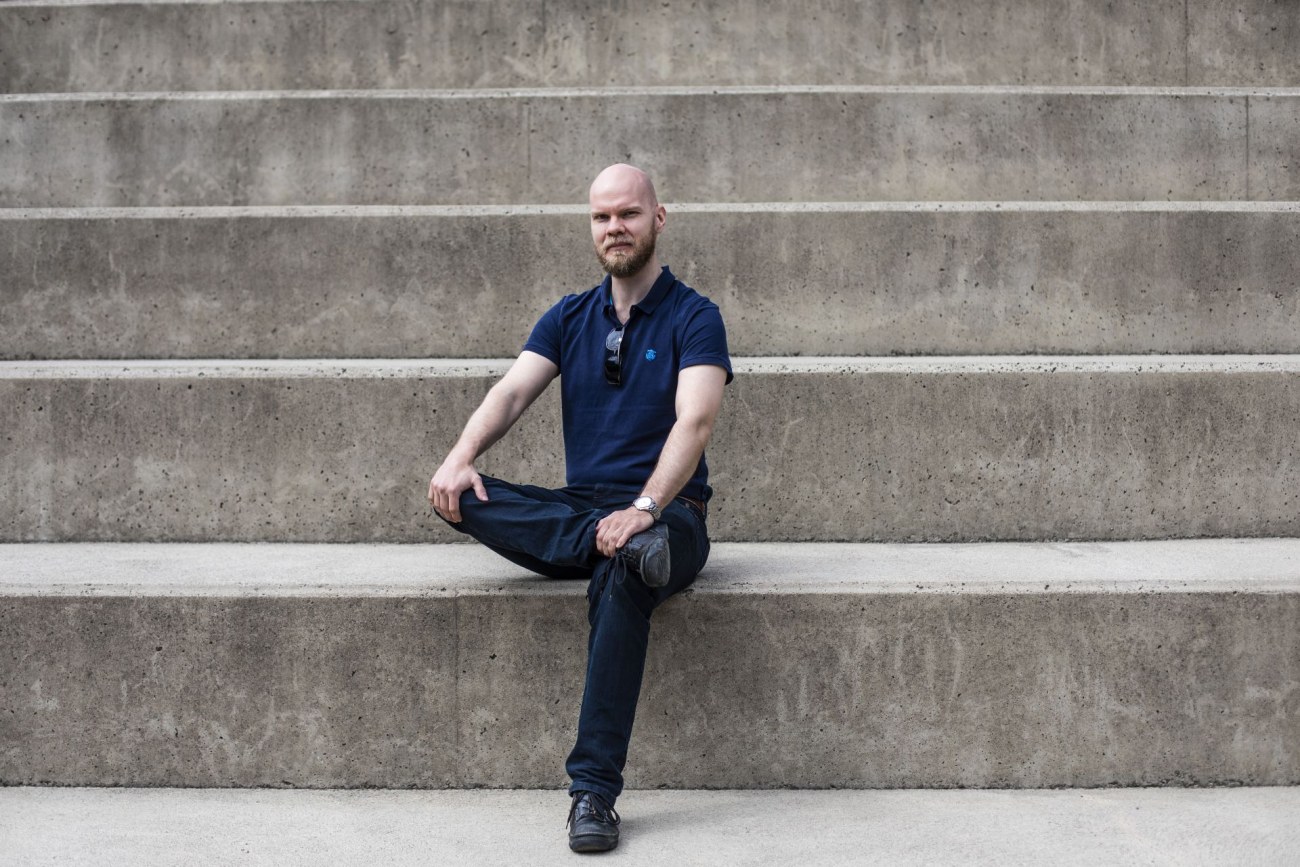
Räsänen’s research group has applied the study of speech across multiple areas. For instance, they have developed tools for the automatic analysis of speech data to replace the need for manual data annotation when studying children’s language experiences.
“Nowadays, children’s language development is typically studied by placing a microphone in their pocket and recording their speech throughout the day. As the resulting audio material can stretch up to tens of thousands of hours, our analysis tools help researchers uncover what happens in this material,” Räsänen says.
To make these tools accessible to researchers globally, Räsänen has made them available as an open-source GitHub library.
“Our audio tools are utilised worldwide. Last year, I attended a conference on early child development and learned that many of the researchers had utilised our tools, which were even mentioned in several presentations,” Räsänen notes.
What can speech reveal about our health?
As speech signals can also shed light on speakers’ health, Räsänen has incorporated a health perspective into his research.
For example, he has collaborated with vocologists to study vocal fatigue during singing and with speech therapists to examine changes in speech in people living with Parkinson’s disease.
The automatic analysis of speech signals also presents opportunities for telemedicine.
“In theory, it is possible to automatically measure changes in speech caused by various diseases. These automatic measurements could support both diagnostics and patient monitoring. However, it is important to assess the true potential of technological solutions, as there is significant hype surrounding this research area,” Räsänen says.
Räsänen has also been involved in the development of a smart jumpsuit that tracks babies’ movement. He has participated in developing the signal analytics for the data collected with the jumpsuit, as the recorded measurement signals are time-series data, just like speech data. The jumpsuit provides insights into infants’ motor development and, consequently, their brain development. By tracking infants’ movements at home, the jumpsuit helps to detect potential early neurodevelopmental issues, allowing timely therapeutic interventions.
“This smart jumpsuit for babies delivers a genuine positive impact on society and is currently being tested internationally,” Räsänen says.
Combining technology and human sciences
Räsänen has a solid background in technology, yet he has always been intrigued by the workings of the human mind and brain.
Räsänen originally enrolled at Helsinki University of Technology (now Aalto University) to study electronics and electrical engineering. After delving into cognitive technology as his major subject, he started working on his master’s thesis at the Acoustics Laboratory as part of an EU project on human-like speech recognition, under the guidance of Professor Unto K. Laine.
“This position was initially intended for a doctoral researcher, but they decided to hire me. I was so captivated by the blend of technological and human perspectives that I decided to continue this research, ultimately compiling my research articles into a doctoral dissertation. At the same time, I shifted my research focus to speech and language technology, a field I have pursued ever since.”
After earning his doctoral degree, Räsänen continued his research career as a post-doc and later as an academy research fellow with funding from the Research Council of Finland.
He joined the former Tampere University of Technology, now Tampere University, as an Assistant Professor in 2018 and was promoted to Full Professor in February 2025.
Räsänen finds that a professorship offers broader opportunities to invest in research, teaching and activities that benefit the scientific community and the University. Early in a research career, the primary focus is on building research credentials and accumulating personal achievements.
“A professorship opens up entirely new stages in one’s career,” he sums up.
Räsänen believes that his greatest impact as a researcher will come from sharing his knowledge.
“Educating, supervising and teaching students and young researchers is extremely rewarding,” he says.
Welcome to the inaugural lectures of the new professors on 11 May 2026
Okko Räsänen
- Professor of Signal Processing, Faculty of Information Technology and Communication Sciences (ITC), Tampere University.
- Responsible teacher for advanced studies in in Signal Processing and Machine Learning, and in Speech and Language Technology.
- Assistant/Associate Professor (tenure track), Tampere University of Technology/Tampere University, 2018–2025.
- Academy Research Fellow funded by the Research Council of Finland, 2018–2023.
- Research Fellow, Aalto University, 2017–2018.
- Docent of Spoken Language Processing, School of Electrical Engineering, Aalto University, 2016–.
- Visiting Researcher, Stanford University, USA, 2015.
- Academy Postdoc funded by the Research Council of Finland, 2014–2017.
- Doctor of Science (Technology), Aalto University, 2013.
- Master of Science (Technology), Helsinki University of Technology, 2007.
- Hobbies include sports, literature, music, games and cooking. Enjoys spending time in nature, such as fishing and picking mushrooms.

Author: Elina Kirvesniemi


