An extraordinary time to be a cancer researcher – Heidi Haikala calls for bolder action

“Lung cancer is the deadliest form of cancer. Yet in Finland, it has been somewhat neglected,” Haikala notes.
The historical stigma associated with lung cancer, which is often perceived as a self-inflicted disease due to its strong association with smoking, may partly explain the lack of research and public attention.
“Smoking naturally continues to be a major risk factor, but there are also many relatively young patients who have never smoked, and they are unfairly stigmatised in the same way,” Haikala points out.
Given lung cancer’s underdog status in Finland, Haikala is on a mission to support patients by advancing lung cancer research, introducing novel therapies and fostering innovation. Together with her colleagues, she is developing immunotherapeutic approaches for lung cancer. These are treatments that harness the body’s own immune system to fight the disease. She is also tackling the challenge of therapeutic resistance to targeted medicines.
A general rule of thumb in precision oncology is that resistance to targeted therapies will emerge in all patients sooner or later. The challenge lies in the unpredictability of when resistance will occur and the mechanisms behind it.
“It is stressful for patients to not know whether a drug will work for three months, three years or ten years. Drug resistance research has previously focused heavily on acquired mutations. However, we now understand that the intrinsic features of tumours may predispose them to resistance to begin with,” Haikala explains.
Therapeutic resistance is a vast and complex puzzle. Cancer is inherently heterogeneous as it comprises diverse cell populations. In addition to malignant cells, immune and stromal cells and tumour vasculature also contribute to the progression of the disease. The greatest challenge on top of these is that each patient’s cancer is biologically unique.
Research uncovers cancer’s backup plan
Haikala’s interest focuses on EGFR inhibitors and the prevention of EGFR inhibitor resistance. The epidermal growth factor receptor (EGFR) is a cell surface protein involved in cell growth regulation and proliferation. There are more of these receptors, or they are mutated in cancer cells, leading to the uncontrolled growth of malignant cells. The inhibitor aims to slow down or prevent this from happening.
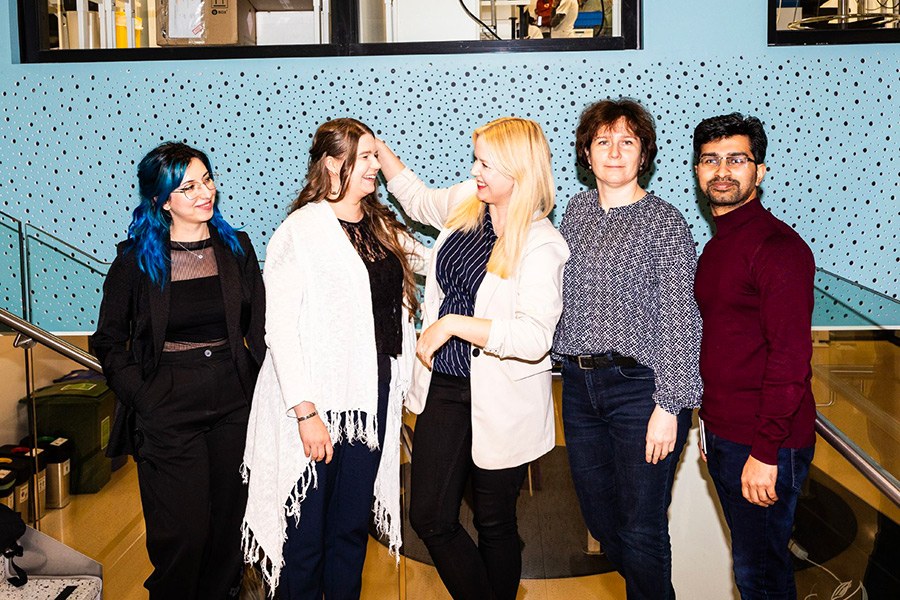
One of Haikala’s research findings has already led to a significant clinical trial.
“The EGFR family also includes HER3 proteins which are of a similar type. We noticed that when EGFR is inhibited, HER3 takes over and begins to do the same things as EGFR,” Haikala says.
Based on their findings, the research group was able to demonstrate that EGFR inhibitors should be combined with a HER3-targeted antibody drug. An international pharmaceutical company is now developing a precision drug that can identify and bind to the HER3 protein expressed in cells. This enables the targeted delivery of cytotoxic agents precisely to the malignant cells. Clinical trials are being conducted in the United States, and further outcomes are anticipated.
Technology is rapidly evolving, which can also be seen in cancer research. For example, it is now possible to investigate the molecular events occurring within individual cells inside a tumour. And that is not all. In collaboration with their clinical partners, Haikala’s research group has access to a novel device that effectively provides ‘GPS coordinates’ for each cell, revealing their location, functional state and intercellular communication.
“It feels as though we have finally gained vision after being blind. It is incredible how far we have come in just a few years, and the parallel development of artificial intelligence is significantly speeding up progress. This is a fantastic time to be a cancer researcher!” Haikala says.
Accelerating drug development with biobanks and microchip technology
HaikaLab that Haikala is leading is approaching its fourth anniversary. In this time, the team has built a range of enabling technologies and resources. One of their initiatives is the establishment of a living biobank in collaboration with Helsinki University Hospital. The biobank comprises tumour, stromal and immune cells harvested from the blood of consenting patients.
“Previous discoveries have often been based on very simple cell or murine models. Mouse models are particularly problematic for immuno-oncological research as the immune system of mice differs significantly from that of humans. Because these models fail to accurately reflect human biology, over 90% of the new drug candidates of pharmaceutical companies fail clinical trials” Haikala explains.
This is why the biobank is such a critical resource: it allows researchers to model tumours using the patient’s own cell types. Haikala also sees strong potential for synergy with Tampere University’s Centre of Excellence in Body-on-Chip Research.
“Using microchip technology, we can construct three-dimensional cultures of tumour tissue. The cultures can be supplemented with stromal cells and vasculature. By introducing drugs or immune cells into the vasculature, we can observe how they home in on tumour tissue. We have already obtained preliminary evidence that our modelling approach predicts patient-specific drug responses more accurately than traditional models,” Haikala says.

By utilising the new model, it is possible to identify human-derived drug mechanisms and combinations, biomarkers, and drug resistance mechanisms. In October 2025, Haikala received over one million euros in funding from the Jane and Aatos Erkko Foundation to build a novel drug development platform. The multidisciplinary project will also utilise machine learning.
“Traditional drug development is a lengthy process. By using patient samples and artificial intelligence, we can step up the work because we can identify drug targets ourselves, synthesise the most promising drug candidates and test them in human-derived models. Our main goal is to ensure that treatments reach patients more quickly,” Haikala says.
Playing it safe does not lead to breakthroughs
If there is one thing Haikala would like to shake up in the field of cancer research, it is the routine way of how things are done. Compared to what cancer treatments should be, the current approach is still rather primitive and outdated. The genetic testing of cancers, i.e. identifying specific markers in DNA, has been researched for at least 20 years, but in Finland, the importance of broad genetic testing still needs to be justified.
“At present, treatments are based on the average population; in other words, and to put it bluntly, on something that might be suitable to a certain extent. However, since the immune system is highly dynamic and individual, we need genetic testing and functional biological models to provide better personalised therapies,” Haikala emphasises.
That is why she values organisations like the Jane and Aatos Erkko Foundation, which dare to support high-risk projects rather than playing it safe.
“In Finland, we tend to be a bit conservative and prefer to wait and see what others are doing, but we should be bolder in making our own new breakthroughs. And if something fails, then it fails and we will just move on to something else,” Haikala points out.
Although the journey towards personalised treatments is still long, there are already many good tools and a wealth of knowledge. What needs improvement is the way scientific discoveries are brought into clinical practice.
“This is something I have set as my personal goal. I believe we need to be better and continue to demonstrate that research can genuinely make a difference,” she says.
Lung cancer
- Lung cancer is the most common cancer worldwide and among the three most common cancers in Finland for both women and men.
- Each year, around 3,000 Finns are diagnosed with lung cancer.
- The typical patient is older; only 10% of the cases are diagnosed in individuals under the age of 60.
- A smoker’s risk of developing lung cancer is 15– 30 times higher than that of a non-smoker.
- Five years after diagnosis, 13% of men and 21% of women are still alive.
- Survival times have improved somewhat thanks to targeted therapies.
Source: Kaikki syövästä
Author: Sari Laapotti


