Doctoral researcher Kari Kallioharju: “Heat pumps in residential buildings can help improve the resilience of the energy system in a cost-effective way”

The topic of the dissertation is an example of how academic research is not merely theoretical but has a direct connection to practical applications.
“Energy transition research is always based on the needs and benefits of the field. No unnecessary research has been conducted”, Kallioharju emphasizes.
He received a research grant from Tamperelaisen tutkimustyön tukisäätiö (Research Support Foundation in Tampere).
"We have ongoing cooperation with universities and companies. The grant is an important step forward in this work. It's great that energy transition research is considered important in Tampere. After all, we have the most extensive education in the field of electrical energy here, as well as research into the energy transition and energy policy in collaboration with the university.”
The main supervisor of the doctoral thesis is Pertti Järventausta, Professor of Electrical Engineering in the faculty of Information Technology and Communication Sciences at Tampere University.
“Together we have worked on projects and written articles from the very beginning. The Electrical Engineering unit in Hervanta is an important partner for us, and we have had a long-term collaboration. This is recognized and acknowledged also at the national level: STEK – The Association for Electrical Technology and Energy Efficiency – has been funding our joint strategic development and influence work in the field of the electrical energy transition for eight years now,” Kallioharju says.
Doctoral researcher picks up a screwdriver from time to time
Kallioharju is a TAMK alumnus. He first graduated with a degree in electrical engineering from TAMK and then continued his studies at Tampere University in Hervanta. Kallioharju laughs that he has never really left TAMK, but then again, he never wanted to.
"I stayed here to teach right after graduating in 2007. Many of my built environment engineering teacher colleagues are now finishing their doctoral studies and they have followed the same path. I think we all have a background as electricians. It's good to pick up a screwdriver every now and then. Even though it has been a long road to get here, but I have got a much broader perspective.”
In his doctoral dissertation, Kallioharju aims to investigate how heat pumps affect the energy efficiency of residential buildings and how these effects can be managed.
"We have always had an electricity-based energy system in Finland. Cities have district heating and small houses have traditionally had direct electric heating. At the turn of the 21st century, this shifted to heat pumps, and over the last couple of decades, their number has only grown. Now the rest of Europe is rushing to use heat pumps. We have long-term experience of how these systems work, and this is Finland's strength”, Kallioharju emphasizes.
Research on heat pumps began in 2017, when measuring equipment was installed in houses equipped with heat pumps.
"We got so much data that I was originally asked to do a quick analysis. Although this research has been going on for years, there are currently some incredibly good arguments in favor of this topic. There is a lot of talk about the power charge for electricity transmission, i.e., the impact of peak power on the size of the transmission charge. This research hits the spot in terms of the energy consumption peaks caused by heat pumps and how they can potentially be controlled and managed.”
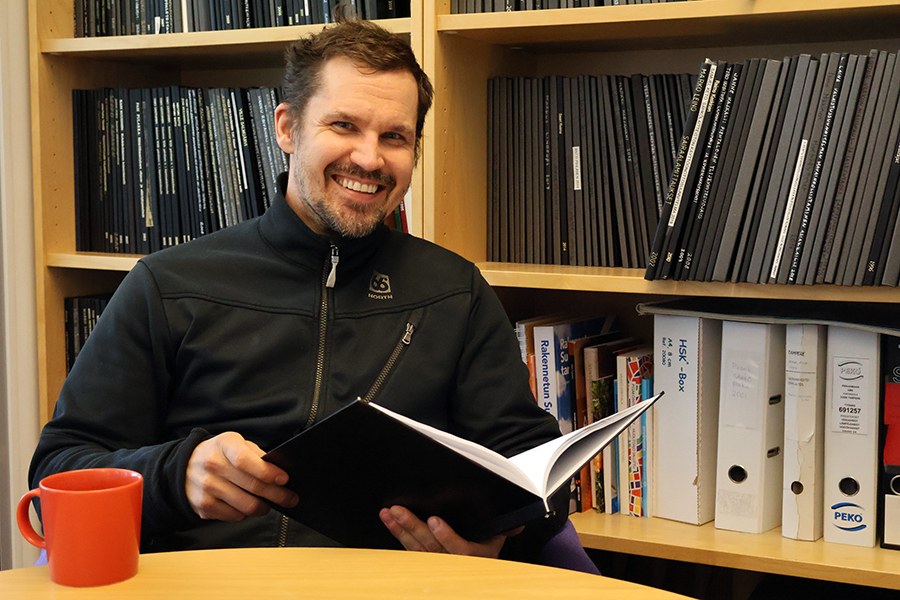
Buildings function both as consumers and producers in the energy system
Finnish energy system is becoming increasingly electrified, while at the same time its production is becoming more dispersed, and its reliability is declining. Power management is an integral part of the big picture, and it involves improving local production and energy efficiency. Wind and solar power cause fluctuations, but the same applies to consumption: heating is becoming more electric and increasing number of electric cars are being charged. Heat pumps behave more unpredictably than traditional heating systems: they cause more consumption peaks and fluctuations.
Previous studies and projects have focused largely on industry, and service buildings have been studied only to a limited extent. Kallioharju's focus is on residential buildings, which are the most numerous.
“I am focusing on the electrical energy consumption of residential buildings equipped with heat pumps. The reason why is that heat pump systems are a bit tricky compared to electric heating. They operate when hot water and heat are needed, for example. As individual devices, they also consume a lot of electricity. And if we, at the same time, cook dinner and use the sauna, the building's electrical load becomes very high. That is why I am looking at the property's connection point rather than just the heat pump system.”
In his dissertation, Kallioharju excludes single-family homes and focuses only on apartment buildings.
"Single-family homes are too complex a field to make a coherent dissertation. Apartment buildings do not have as much noise-causing electrical load, and as similar buildings, it is possible to make some generalizations about them”, Kallioharju describes.
There is plenty to study during the energy transition – companies also benefit
One of the key objectives of Kallioharju's research is to develop tools for electricity companies to identify the impact of heat pumps in apartment buildings on the electricity grid.
"Electricity companies do not currently know exactly where heat pumps are located. This research will help them assess their impact and power flexibility and manage them better.”
Local distribution system operator, Tampereen Energia Sähköverkko, is also interested in Kallioharju’s research topic. A thesis on the electrical power impacts of geothermal apartment buildings has just been published. Tampereen Energia Sähköverkko suggested that Kallioharju conduct further research on the flexibility of apartment buildings, and he naturally agreed.
The topic of the dissertation is also of interest from the perspective of cost management and supply security.
Residents are interested in costs, while electricity network operators are interested in network usage and sustainability. Improving the safety and reliability of the electricity grid is essential, which is why forecasting the peaks and improving resilience are also part of national security.
Kari Kallioharju
There are still many interesting issues to be explored. The power transmission fee adds another dimension to the picture.
“We have made some individual calculations, for example, on how exchange-traded electricity control can generate savings and how it affects power surfing. This is also affected by how transmission power charges and electricity prices are optimized.”
Many electricity contracts include spot price–based elements. It is therefore important to investigate how spot-price electricity can be optimized within the system. According to Kallioharju, this will become an interesting mix. The charging of electric cars will add complicity: when to charge and when to heat, what kind of peak will occur, and at what price.
"It's a difficult issue, and no one has dared to tackle it yet. In Helsinki, some separate centers have been set up exclusively for electric cars, but the transfer fee still affects everyone through their monthly housing company fees. Not everyone has an electric car, though. The effects of electric cars and heat pumps can still be specified on the electricity bill, but if controls and charging are implemented between heat pumps to avoid spikes, who will pay for it? We certainly have plenty of things to figure out here.”
Electronic building technology experts are specialists in the built environment
There is a clear continuum in electronic building technology and HVAC building technology projects, which are constantly underway in collaboration with companies, universities, and research institutes.
Kallioharju has been involved in national and international projects since 2012. In the same year, Finland's first demand response project for electrical systems was launched in collaboration with then Tampere University of Technology and LUT University.
"We are constantly conducting research with universities on topics related to the changing energy system, improving energy efficiency, and the energy transition. Our role is to be an expert on the built environment, as it is an integral part of the changing energy system. This theme also encompasses electrical building technology projects and research.”
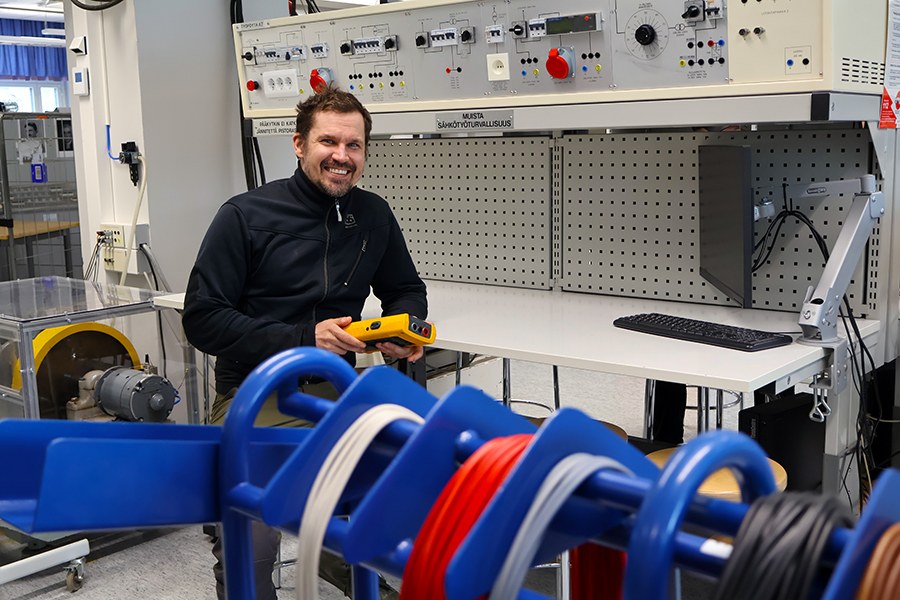
Kallioharju notes that there has been a lot of good luck and coincidences along the way. In 2012, there was no research on electrical building technology at Finnish universities, and, in practice, there still isn't, except for a couple of industry-funded half-time professorships at Aalto University.
The universities noticed that we at TAMK have expertise, and that's how the research collaboration started. In the field of energy transition, the ECADEC project, which develops energy communities and carbon-neutral city concepts, is currently underway with Tampere University. Several projects have recently been completed, and new ones are in pipeline all the time.
Kari Kallioharju
However, the expertise of built environment specialists is not limited to energy solutions, as exemplified by the large-scale E3 Pandemic Response project. It sought answers to the question of how society can be kept functioning during pandemics. In the E3 project, TAMK's expertise in aerosol physics and built environment was utilized in many ways to achieve clean and healthy indoor air. According to Kallioharju, TAMK is also a valued partner in these areas of expertise.
Kallioharju enjoys teaching, but he spends his working hours almost exclusively on projects and energy transition related research. Kallioharju gives individual lectures at both TAMK and Tampere University, and lighting design has long been part of his course tray. This expertise is not widely available in Tampere.
The doctoral reseacher also leads the energy transition research team in TAMK’s Faculty of Built Environment and Bioeconomy. A large part of the work involves maintaining networks and applying for new projects.
Kallioharju is glad that the Research Support Foundation in Tampere has deemed the topic of his dissertation worthy of the research grant. The grant will enable him to continue and deepen his research.
Contact person
Kari Kallioharju
Senior Lecturer Kari Kallioharju
Author: Hanna Ylli


