The DEMOCREATE project invites thousands of students to help build democracy in everyday life

In many European countries, democracy is being weakened by the rise of authoritarianism, the spread of disinformation, and polarised public debate. At the same time, many young people have become distanced from traditional forms of participation, such as voting.
In education policy, there is growing interest in participatory and community-based methods that support democracy and civic education. The international DEMOCREATE project creates democratic learning and activity environments where young people can practice influence, dialogue, and co-creation within safe structures that are genuinely connected to society.
The Horizon Europe-funded project develops participatory methods and highlights young people’s agency in a way that combines education, research, and community action.
“We aim to combine formal and non-formal learning so that education better responds to young people’s everyday lives and societal challenges. The project involves stakeholders from higher education, upper-secondary vocational education, adult education, and the NGO sector", explains Project Manager and Principal Lecturer Sanna Ruhalahti from Tampere University of Applied Sciences (TAMK).
The CLRA method makes young people’s agency visible
Young people crave genuine opportunities for participation, a sense of community, being heard, and the chance to make a difference as active members of society and not just as passive subjects of decision-making. That is why there is a clear and urgent need for this kind of pedagogically bold and socially impactful development work.
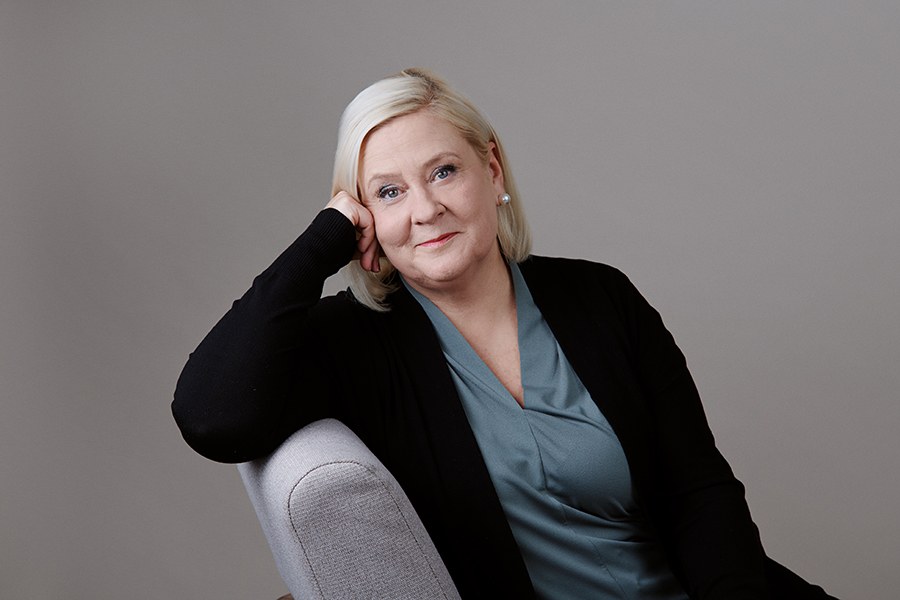
Sanna Ruhalahti, Principal Lecturer, Project Manager
The project’s most important promise relates to the experience of being heard and working together. At its core is the Community-Led Research and Action (CLRA) model: young people define issues that matter to them, explore the issues together, and put solutions into practice in their own communities. Researchers and institutions act as facilitators.
In the CLRA method, dialogue skills and presence are central.
“Young people are co-researchers and change agents. When a young person realises that his or her own question is taken seriously and that solutions are being sought together, a sense of agency and hope can emerge. Dialogue is a way to engage with others respectfully, to listen and to build shared understanding so that young people can explore, dream, and act more openly together. Our task is to facilitate this space and provide support,” says Ruhalahti.
The method was piloted in several countries as part of the previous YOUROPE project. The new project builds on these results and expands the work so that the model can be integrated more systematically into curricula and teacher professional development.
Thousands of students will become community researchers
Over the course of the three-year project, the goal is to implement a total of 220 CLRA cycles in five countries and to engage thousands of students as community researchers.
In this phased model, dozens of educational institutions will develop democratic spaces, both physical and digital, where students, teachers, and community actors work together to generate solutions for local needs, living environments, and policy.
Practical implementations of the method range from campaigns to community development projects. In a project currently underway, students have, among other things, designed a social media campaign aimed at breaking down the polarisation of political views and strengthening dialogue with decision-makers.
In another implementation, Romani women served as co-researchers, working with students to examine how the media portrays minorities. In addition, this method has been applied in groups addressing youth online safety, as well as in community work with young people who are not in education, employment, or training.
For students, the project promises advocacy and interaction
Students can practice advocacy, critical thinking, and interaction. They also gain a sense of research-based work and co-development.
For teachers and education professionals, the project produces new educational resources and models for continuing education: micro-credentials, such as digital open badges. These support participatory pedagogy and democracy education.
The project develops policy recommendations and advocacy models based on knowledge generated by young people. For communities and stakeholders, the project offers a channel to utilise young people’s suggestions in local decision-making and the reform of operations.
Community-based work has its challenges
CLRA is a cyclical, trust-building, and time-consuming process. For this reason, it may clash with the scheduled structures of education. Another challenge is reaching underrepresented young people and engaging them in a long-term process. Genuinely community-based work also requires sharing power and responsibility: teachers and organisations must act as facilitators and make space for students and communities to take the lead.
Ruhalahti explains that thanks to an extensive partner network, the method can be tested in various contexts. The partners represent various levels of education from countries including Finland, the Netherlands, the United Kingdom, Malta, Poland, the Czech Republic, and Kenya.
Professor of Practice Arja Halkoaho notes that the goal is a lasting change in learning environments. Traditional forms of democracy education are no longer sufficient; instead, methods are needed that make democracy a part of everyday life.
When the method is integrated into curricula and teachers’ professional development, democratic skills are not just practiced in ceremonial speeches. They are made visible in everyday encounters, communities, and choices.
Arja Halkoaho, Professor of Practice, Tampere University of Applied Sciences
For Ruhalahti and Halkoaho, DEMOCREATE is more than just a project:
“For us, it’s an opportunity to build lasting change at the intersection of education and democracy. The scope of the project is exceptional: it involves eight countries, dozens of educational institutions, and thousands of young people. But above all, it is about giving young people the space, support, and tools to make a difference here and now.”
DEMOCREATE
The Horizon Europe-funded DEMOCREATE project creates democratic learning and action environments. The core idea is that young people act as co-researchers and change agents. The goal is to organize 220 Community-Led Research and Action (CLRA) cycles in five countries and engage thousands of students. The project aims to create partnerships between educational institutions and communities, as well as to develop educational resources and continuing education for teachers.
TAMK’s role involves applying the CLRA method, developing democracy education, and co-developing educational resources and micro-credentials. Operationally, the project is based within the PRECISE research group led by Professor of Practice Arja Halkoaho, as well as Faculty of Pedagogical Innovations and Culture and Faculty of Social Services and Health Care. The three-year project, which began in October 2025, is coordinated by Coventry University in the UK.
Contact person
Sanna Ruhalahti
Principal LecturerAuthor: Hanna Ylli


