Pushing the boundaries of reality – Näty’s course explores the human-technology relationship

The intensive Cyborg, Avatar, Virtual course was held in May 2026. During the course, acting students examined the potential impact of technology on theatre and performance.
The course was a collaborative effort between students from Näty and Tampere University of Applied Sciences (TAMK).
According to University Lecturer Davide Giovanzana, the course encouraged students to be curious. Throughout, they explored the opportunities that digital technologies offer to theatre from a variety of perspectives.
Special emphasis was placed on how technologies challenge traditional understandings of reality.
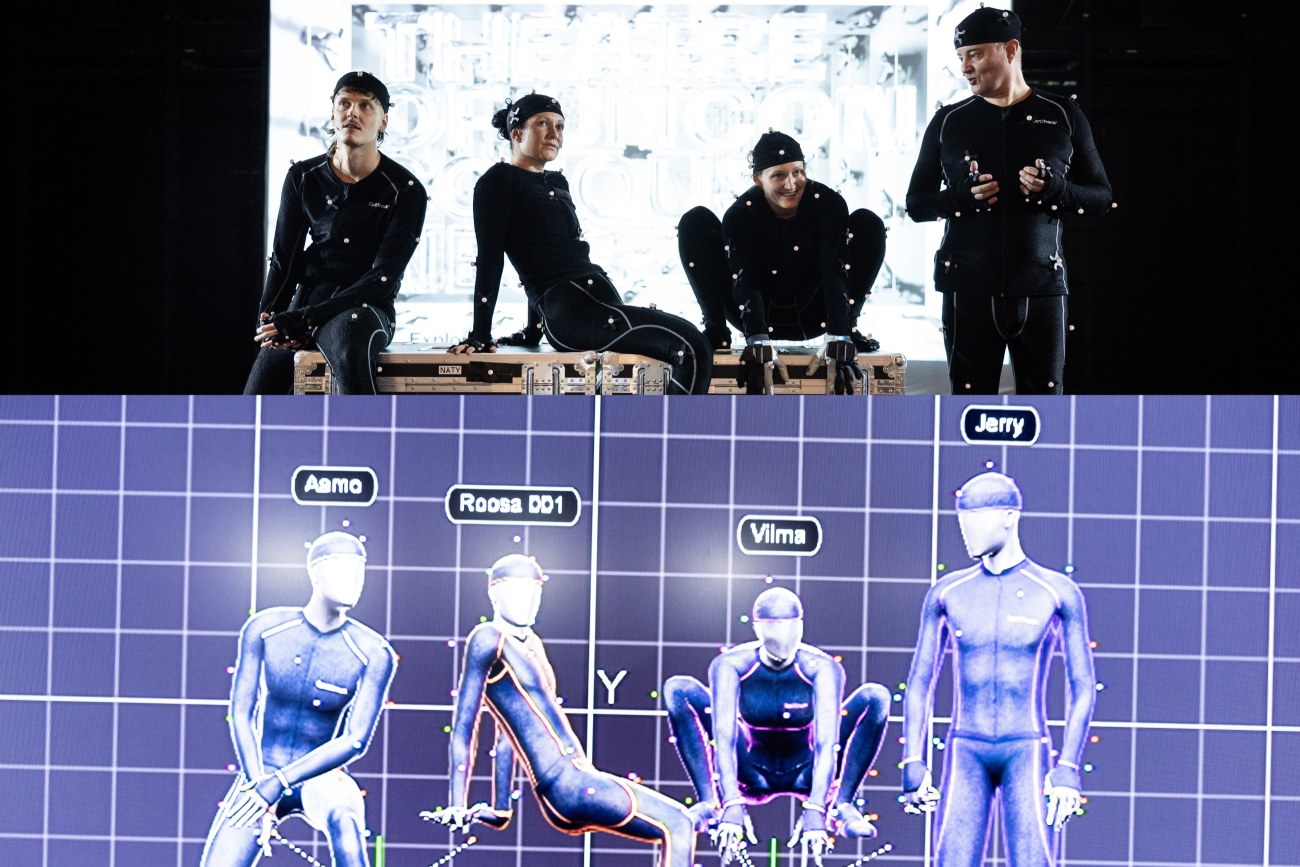
The course utilised motion capture technology, which converts an actor’s movements into data that can be used to control digital characters. Cameras track markers attached to a motion capture suit, enabling them to recognise movement.
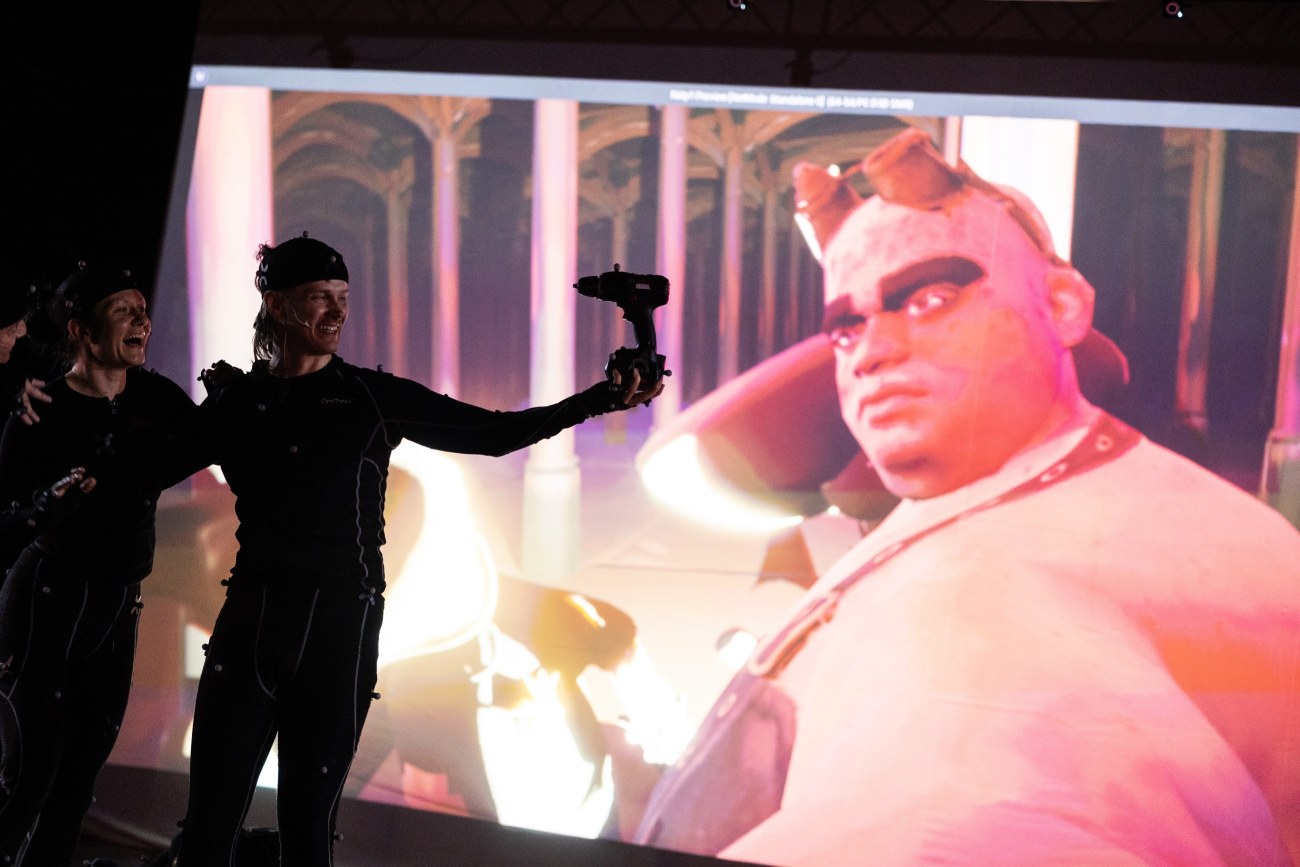
The data from the actors’ movements was combined with avatars created by TAMK students, resulting in digital avatars that either replicated or mirrored the actor’s movements. These could then be displayed on screens surrounding the stage.
During the course, the actors explored different ways of interacting with the avatars.
“We are not so much interested in using technology as an instrument but using technology to express our relationship with technology,” Giovanzana says.
New perspectives on making theatre
The collaboration with TAMK that formed part of the course created opportunities to approach theatre from a fresh perspective.
According to Giovanzana, the aim was to explore different approaches and insights that enable theatre to be made in new ways.
It was hoped that both the use of technology and collaboration between students from different fields would generate new ideas and help avoid getting stuck in established ways of working.
“I think the best way to kill theatre is to say, ‘Oh, these are the truths about theatre,’” Giovanzana notes.
Bringing avatars to life
Otso Jämbäck, Emilia Karjalainen and Pham Tuan Minh, students of interactive media at TAMK, found the combination of technology and theatre particularly engaging. They became involved in the project as part of a client-based course in their studies.
The interactive media students created the avatars the actors worked with.
“We were told not to touch the story, just create the visual elements after which the actors would see how those visual elements could form a story,” the students explain.
Some of the avatars were humanoid, while others bore hardly any resemblance to humans. The actors’ task was to build stories around these avatars and bring them to life.
Sulo Rahman, a student at Näty, found the course rewarding and felt that the technology blurred the boundaries of his acting. Rahman explains that working with an avatar allowed him to think in new, more unconventional ways.
The limits of his own body seemed to fall away when the movement was reproduced by an avatar that looked entirely different.
He also appreciated the opportunity afforded by motion capture technology to observe his own performance as if from an outside perspective.
“It is incredibly enjoyable to see your own movements and to experience something moving with you. It is a bit like looking into a mirror,” Rahman says of working with an avatar.
Technology is transforming theatre
Näty student Asko “Aamo” Halonen praises Tampere University for offering students the opportunity to combine technology with theatre art. They see this as a valuable chance to engage with theatre from a new angle.
According to Halonen, it is by no means self-evident that theatre education also encompasses technology.
“I am very grateful to Näty for having staff who are so forward-looking. It is also quite exceptional to have both technological resources and high-quality arts education at the same university,” they say.
Halonen believes that the course has prepared acting students for future work methods and suggests that technologies will reshape the relationships of meaning in theatre.
However, Halonen does not expect motion capture technology itself to become widespread in theatre, largely due to costs.
“Motion capture may inform the way we work with other technologies, which could then go on to transform the mainstream,” they point out.
Cyborg, Avatar, Virtual
- The course was held in May as part of the Master’s Degree Programme in Theatre Arts after being implemented once before in autumn 2024.
- The course involved students from Näty and the fields of sound technology and interactive media in TAMK’s Media and Arts Programme. One doctoral student from Sibelius Academy also participated.
- The course drew inspiration from Donna Haraway’s essay A Cyborg Manifesto.
- The aim of the course was to explore what technology can offer to theatre arts and how technology can be used to express the relationship between humans and technology.
- To conclude the course, the students presented the outcomes in the Monttu Auki evening on 13 May 2026.


