ARISE Project Continues with Second Training Week at Tampere University

The ARISE project, launched on 1 August 2024 and funded by the Finnish National Agency for Education (EDUFI) under the Team Finland Knowledge (TFK) Programme, continues its work to support Ukraine’s higher education sector during wartime. Coordinated by the Higher Education Group (HEG) at Tampere University’s Faculty of Management and Business, the project aims to strengthen human capital and prepare a new generation of higher education professionals capable of leading recovery and reconstruction efforts.
In the first week of June, Tampere University hosted eight students and two staff members from Ukrainian partner institutions – Taras Shevchenko National University of Kyiv and the National Academy of Sciences of Ukraine. Together with participants joining online from Kyiv, they took part in the intensive course “Higher Education Policy and Management in Emergencies.”
The course built on last year’s successful format while introducing a stronger hybrid component. Students participated both on-site and remotely, working in mixed hybrid groups that combined online and on-site participants. This ensured active engagement across formats while maintaining inclusivity and accessibility.
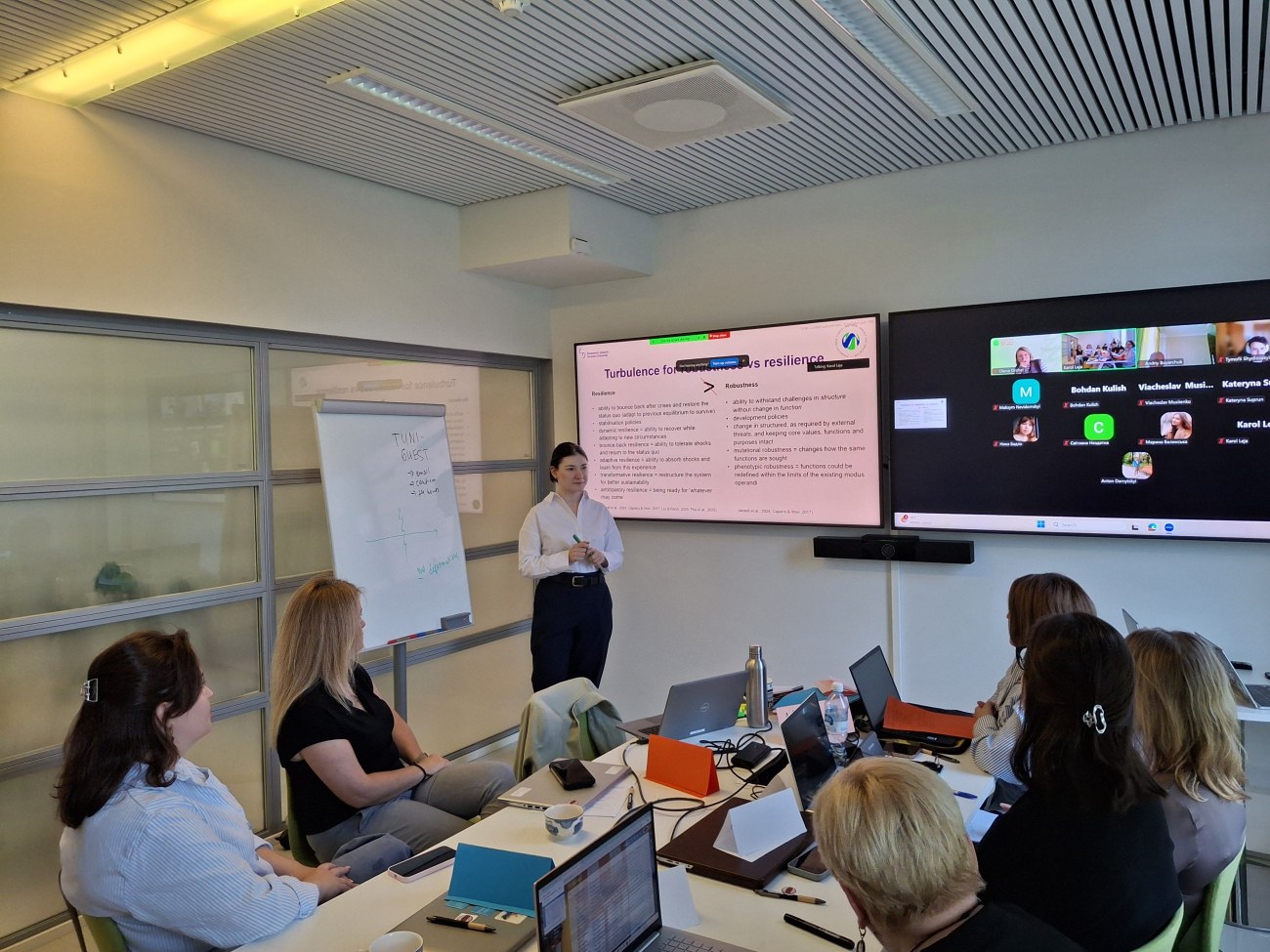
Preparation for the training began even before the mobility period. Online participants took part in an ice-breaking session and completed a pre-assignment, which helped create an interactive and well-prepared learning environment from the very beginning.
Throughout the week, participants explored key challenges facing higher education systems in crisis contexts. They examined policy responses, discussed issues related to well-being and the social dimension of higher education, and took part in interactive exercises that placed them in the role of policymakers operating under emergency conditions. A central component of the course involved group work in which participants developed and presented proposals for humanitarian aid within a simulated multinational trust fund framework.
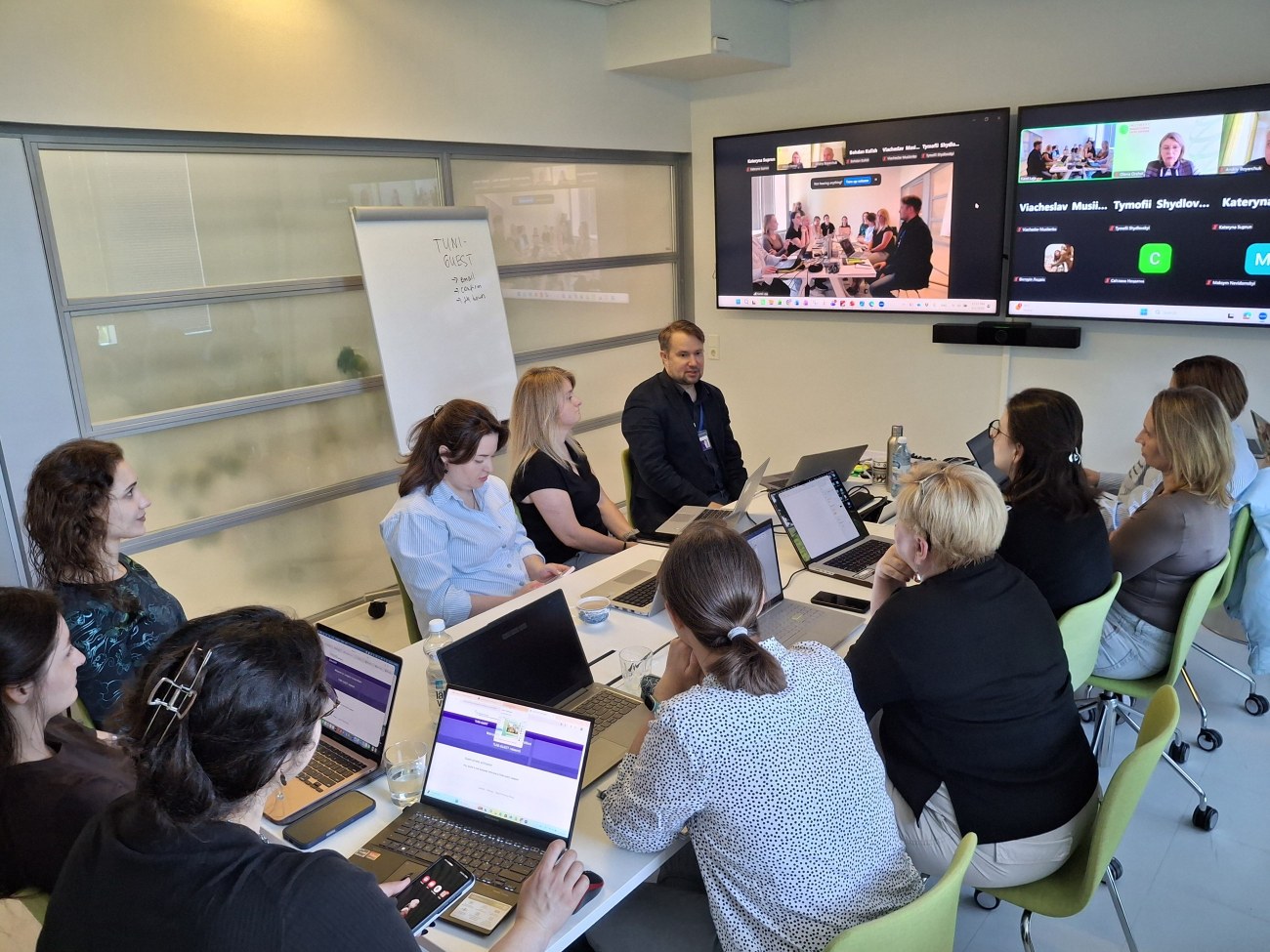
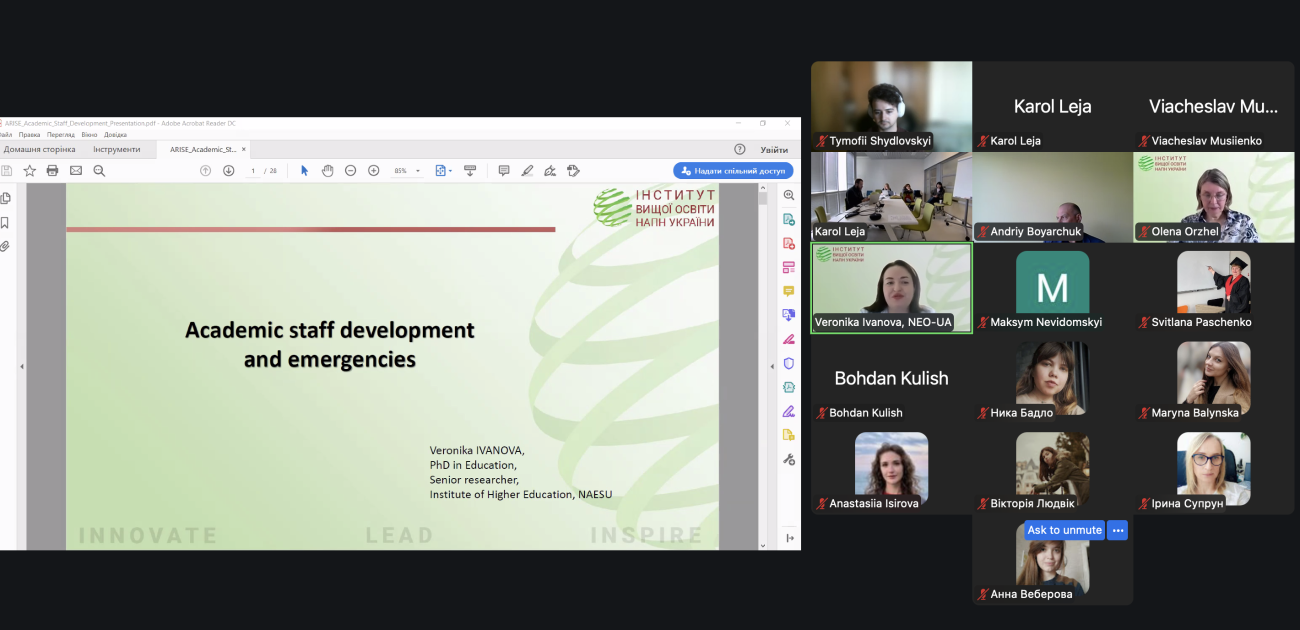
The teaching was delivered collaboratively by Professor Jussi Kivistö and Doctoral Researcher Kateryna Suprun (TAU), Senior Researchers Olena Orzhel and Veronika Ivanova (IHED), and Associate Professor Svitlana Paschenko (TSNUK). Technical and logistical support for the hybrid implementation was provided by Researcher Karol Leja (TAU).
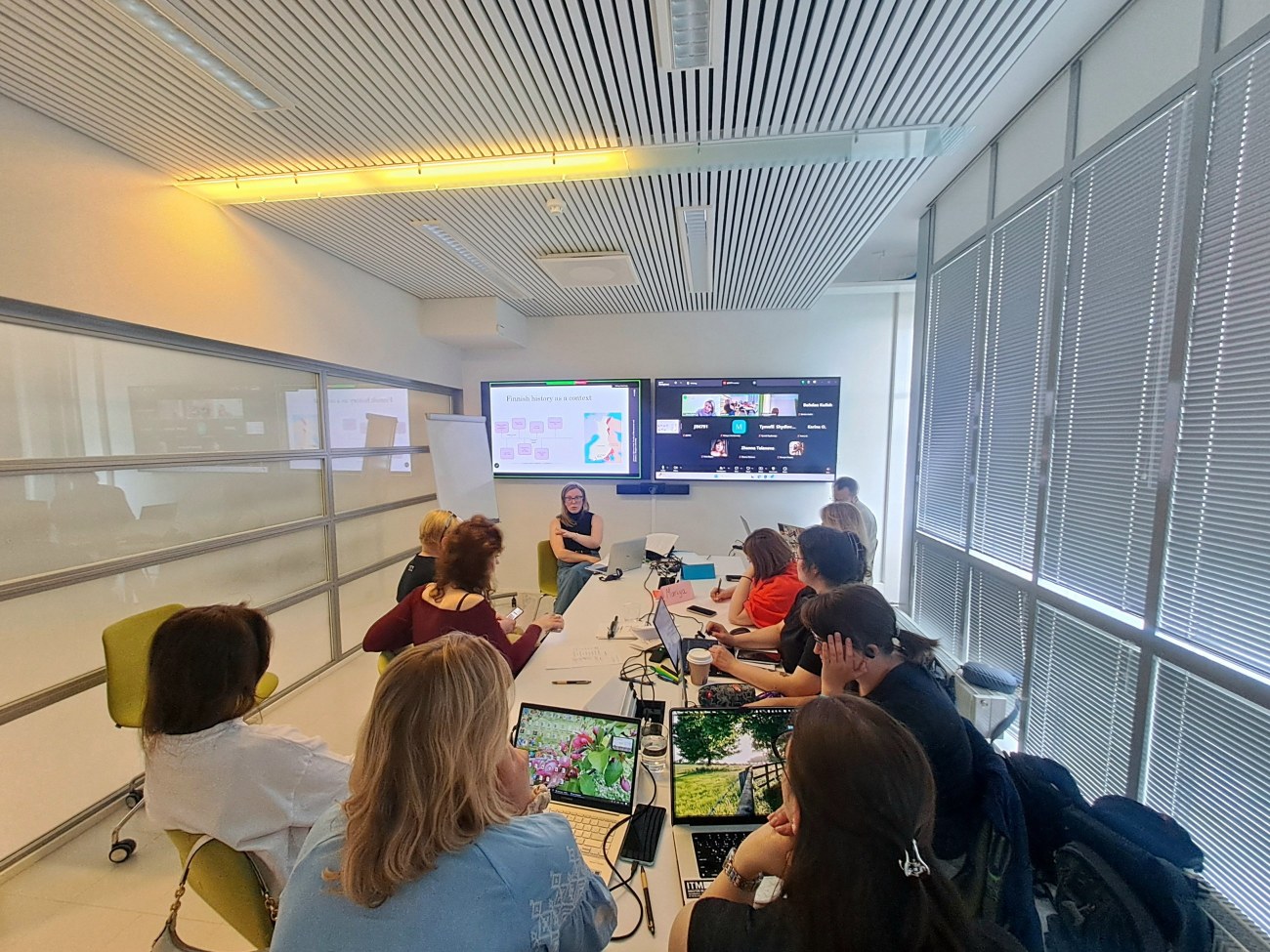
The programme also featured guest lectures from Finnish experts. Kirsi Lindroos, Director at the Finnish Ministry of Education and Culture, delivered an online session on Finland’s support for Ukrainian education, offering valuable insights into current cooperation efforts. Johanna Liljeroos-Cork, University Instructor and Doctoral Researcher, presented the Finnish comprehensive security model in her lecture “Comprehensive Security as Governance: The Finnish Model in Perspective.” The session included analytical insights into the model as well as engaging group work.

Throughout the week, participants were highly active both on-site and online, contributing to discussions and collaborative tasks. In addition to academic activities, the programme included opportunities to explore Tampere and experience Finnish society and culture, further strengthening connections among participants.
The training week also unfolded against a difficult backdrop. During the programme, Kyiv experienced another large-scale Russian night attack, which directly or indirectly affected many of the students and teachers and their loved ones. This served as a powerful reminder that crisis is not theoretical, but a lived reality shaping higher education on a daily basis.
The second training week marks an important milestone in the ARISE project’s implementation. Beyond its academic goals, ARISE continues to grow as a meaningful partnership between Finnish and Ukrainian institutions, grounded in shared expertise, mutual support, and long-term collaboration.
By combining academic knowledge, policy insight, and innovative hybrid learning approaches, the project contributes to strengthening Ukraine’s higher education sector while deepening cooperation with the Finnish academic community.


