Dresden and Tampere Strengthen European Semiconductor Cooperation

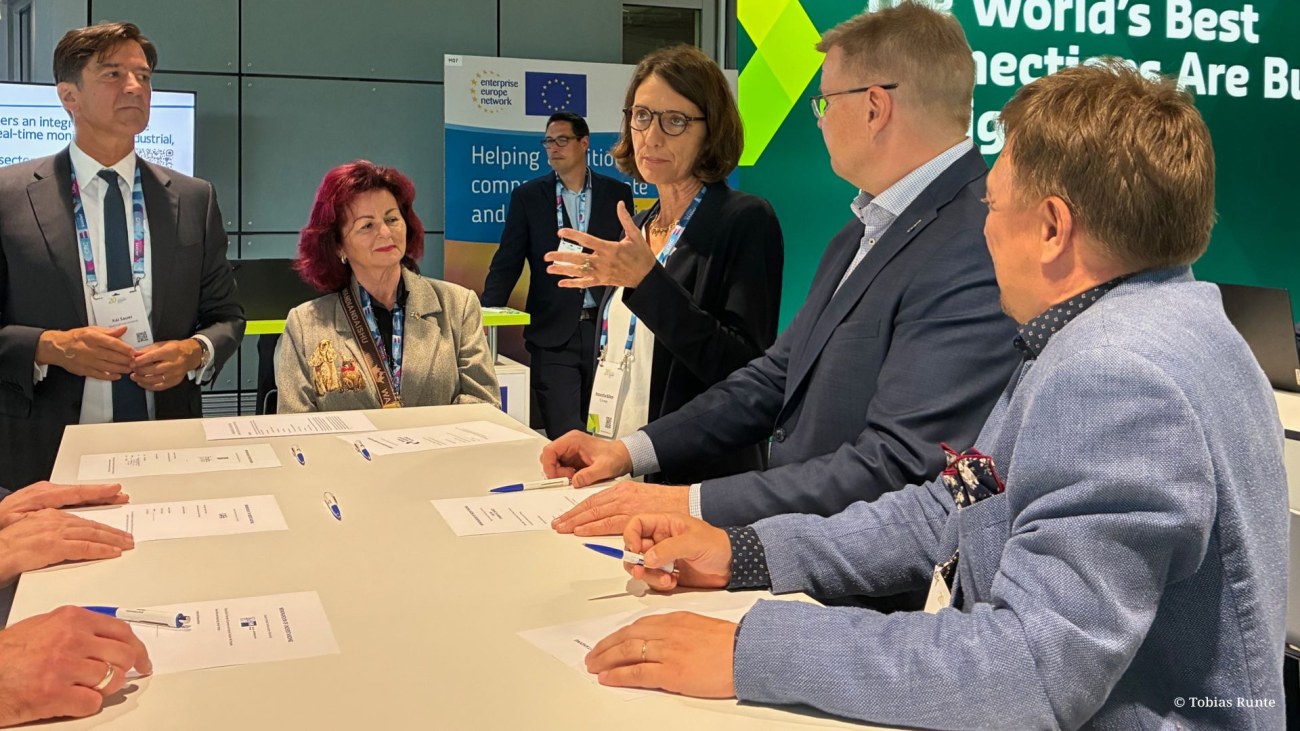
Leading institutions from the semiconductor ecosystems of Dresden and Tampere have signed a Memorandum of Understanding (MoU) during Silicon Saxony Days 2026, marking a significant step towards deeper European cooperation in semiconductor technologies.
The agreement brings together Business Tampere, the Tampere Chamber of Commerce and Tampere University from Finland, as well as the Dresden Chamber of Commerce and Industry (IHK Dresden), Saxony Trade & Invest, the City of Dresden and TU Dresden from Germany.
The MoU aims to strengthen collaboration between industry, academia and public institutions, and to establish a sustainable framework for joint activities in microelectronics and semiconductor technologies. The cooperation focuses on fostering innovation, developing talent, advancing research collaboration and facilitating the exchange of expertise across the European semiconductor value chain.
At the signing ceremony, Tampere University was represented by Director of Research and Innovation Services Pauli Kuosmanen, while Business Tampere was represented by Director Petri Räsänen and the Tampere Chamber of Commerce by CEO Antti Eskelinen.. The event was also attended by H.E. Kai Sauer, Ambassador of Finland to Germany, underlining the strategic importance of the partnership for Europe’s innovation capacity and industrial competitiveness.
Tampere University plays a key role in advancing semiconductor research and education in Finland. Through this partnership, the university will further strengthen its international networks and contribute to building a more resilient and competitive European semiconductor ecosystem.
Today, one third of the chips used in Europe are manufactured in the German state of Saxony. For Tampere University, maintaining close connections with leading actors in the field is important, and this agreement further strengthens that goal.
Pauli Kuosmanen
As a first step, Tampere University and TU Dresden have particularly refined opportunities for cooperation in advanced chip packaging and system-level testing of semiconductor devices. The University of Tampere’s FutureChips programme, a 60-month Horizon Europe co-funded postdoctoral initiative offering 36-month research placements for 20 top-level researchers in next-generation semiconductor technologies, attracted significant interest in Dresden.
"Tampere’s SiPFAB pilot line and TU Dresden’s testing expertise complement each other,” says Petri Räsänen, Director of the Chips from Tampere programme.
“Through postdoctoral researchers, we can build concrete cooperation between top-level infrastructures and make the R&D services needed by companies in the sector easily accessible,” Räsänen adds.
The cooperation reflects a shared ambition between Dresden and Tampere to support Europe's technological sovereignty and long-term competitiveness in one of the world's most strategic industries.
Research in chip and semiconductor technologies at Tampere University
Tampere University is home to a multidisciplinary hub for research in chip and semiconductor technologies, covering the full spectrum of activities from research and design to practical applications.
We collaborate with a wide range of partners to enhance Europe’s technological resilience and self-sufficiency within the semiconductor ecosystem.
Through world-leading research, education and innovation activities, we strengthen Finland’s global competitiveness.
More information on our website


