The Producer Center Living Lab project has built a permanent producer network for the creative industries

The potential of the creative industries is being recognized more widely but harnessing that potential requires strong production expertise and effective networks.
“Content creators can focus on high-quality, professionally produced content when the production structures are in place,” says Project Manager Susanna Ihanus.
The producer’s role is central: they turn creative work into tangible services and productions and bring together creators, funders, and other stakeholders. In independent productions, the work is fragmented. Funding and job security are often uncertain.
“Producers usually work alone, even though they are part of various teams and productions. There has been a clear need to make producer networks visible and to share common, and often problematic, experiences. Our goal has been to secure the operating conditions for culture and the arts nationwide and to ensure sustainable employment for producers”, Ihanus explains.
According to her, the “intellectual infrastructure” of the creative sector is built on expertise, networks, and a belief in the future, not just on funding or physical spaces. In practice, however, production structures and operating models have been fragmented, which has weakened the sector’s visibility and impact.
The issue has also gained increased relevance due to municipalities’ growing interest in leveraging the creative economy as part of efforts to boost vitality and employment.
Strong impact: “A gem” from the municipalities’ perspective
The Producer Center Living Lab project has addressed the need identified in the field to strengthen the producer network.
The nationwide, EU-co-funded project has been implemented by Tampere University of Applied Sciences (as coordinator), the live music advocacy organization LiveFIN, Seinäjoki University of Applied Sciences, Metropolia University of Applied Sciences, and Humak University of Applied Sciences.
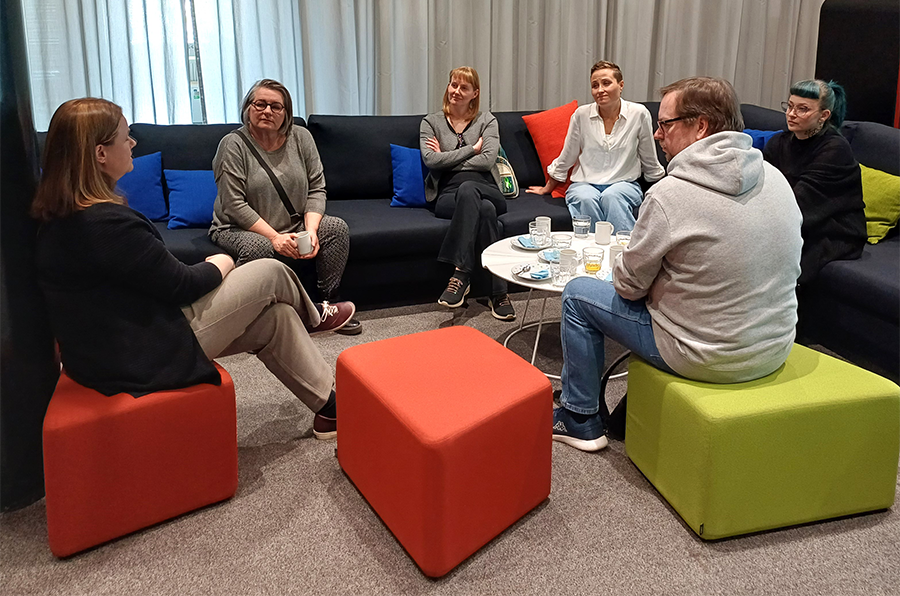
The project has involved producers in the creative sector or those working in producer-like roles from across Finland. Based on the information gathered from them, a national network of producer centers and an operating model have been established to support producers’ work and strengthen collaboration between the sector and municipalities and regions.
The results have been presented on a tour across Finland. The project, which exceeded its performance targets, has received a great deal of positive feedback from various stakeholders regarding its impact.
Creative sector producers have had a clear need and readiness to participate. We have reached out to a wide range of actors and built lasting partnerships. According to feedback from municipalities, the project has been “top-notch.” The creative economy should indeed be linked to the development of municipal vitality.
Susanna Ihanus
Concrete outputs and tools
The project has produced several concrete tools to support the work of producers. These tools will facilitate the future development of producer networks and the enhancement of producers’ skills. The Tuottajaverkosto.fi website brings together professionals and experts. A workbook supports the building of regional networks, and impact briefs summarize key messages for decision-makers.
“The goal has been to listen to those in the field and build practical models to assist them, rather than simply producing material,” Ihanus emphasizes.
Permanent structures ensure continuity
One of the project’s key achievements is the creation of new permanent structures within the intermediary sector of the creative industries.
The project was preceded by the Tuottajapankki (Producer Bank) initiative, which developed regional producer expertise and networking; based on this, the Pirkanmaa Creative Producers Association was founded in 2023. The association now serves as the coordinator of a nationwide producer network.
Taputeltu ry was established this spring in Uusimaa area to strengthen regional activities. In addition, various regional coordination models have emerged across Finland: Central Finland now operates a contract-based model, while South Ostrobothnia uses a model centered around universities of applied sciences.
“We have created structures that will remain in place after the project ends. That is one of our most important achievements. The Tuottajaverkosto.fi website will continue to bring together experts and information, regional networks will continue their work, and the developed operating models will provide support for building new networks,” Ihanus notes with satisfaction.
The project’s results demonstrate that long-term development work can build a sustainable infrastructure that supports the creative sectors, employment, and regional development.

Contact person
Susanna Ihanus
RDI Expert
Results in numbers
• 22 training programs, 1,456 participants • 107 networking events, 1,660 participants • EURA indicators: goal/actual outcome 217/424. Official participant targets and networking event participant targets doubled; number of training participants five times higher than targets. • 17 work supervision groups, 86 participants • 22 mentors, 46 mentees • 110 project presentations, approximately 2,100 attendees • Opening tour in 11 locations, 315 participants • A total of approximately 5,220 participations
Author: Hanna Ylli


