Tampere is set to welcome a record number of educational researchers at ECER 2026

Organised in Tampere from 18 to 21 August, ECER 2026 is expected to attract close to 4,000 participants. More than 4,400 abstracts have been submitted for the conference, representing the highest number in the history of the conference. The annual conference has been held since 1992.
“ECER stands out for the breadth of perspectives it brings to educational research. We received more than 1,000 registrations within the first few weeks, which is unusual for conferences,” says Professor Nelli Piattoeva, Head of the Local Organising Committee at the Faculty of Education and Culture at Tampere University.
Piattoeva believes that the appeal of Tampere as a conference location lies in the excellent reputation of both the Finnish education system and local researchers in the field.
“We are bringing ECER to Tampere in collaboration with the European Educational Research Association (EERA). Organising this conference at Tampere University is a well-deserved recognition from EERA and demonstrates that the University has the broad expertise required to deliver a conference of this scale,” she says.
A timely and interdisciplinary theme
The theme of this year’s ECER is “Knowing and Acting: The changing conditions and potentials of education research.” The theme addresses the practices and political contexts of educational research in a world characterised, for example, by growing global inequality, democratic backsliding and distrust of scientific knowledge.
“This theme is highlighting the key role of educational institutions in times of societal transformation: education has always been shaped by different interest groups and prevailing ideologies,” says Piattoeva.
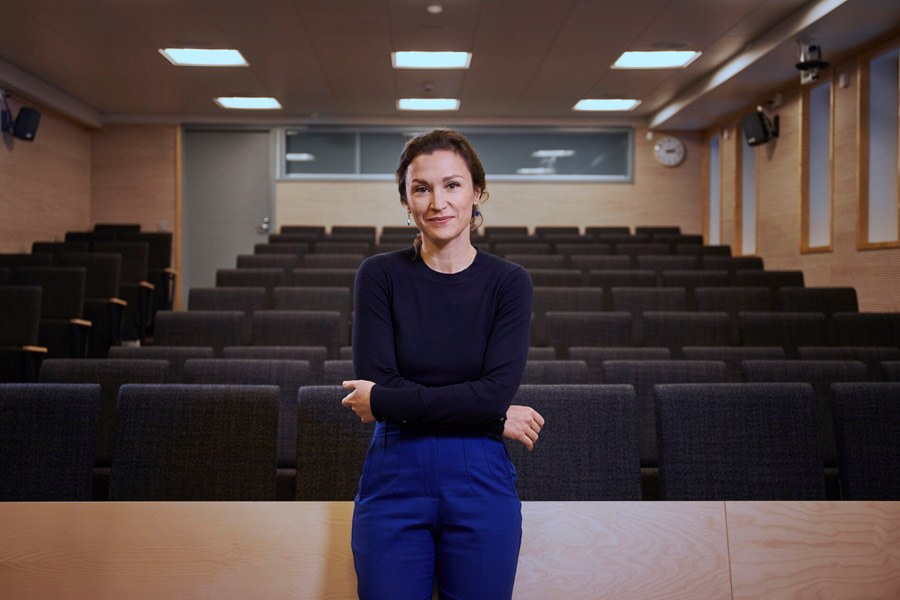
Piattoeva notes that the present moment is no exception, even though the importance of scientific knowledge in decision-making is often emphasised in an attempt to obscure the inherently political nature of education.
“An intense debate is currently underway in Finland on the introduction of a national school-leaving examination at the end of comprehensive school. In this debate, the knowledge base, power and values of experts from different disciplines, as well as political and economic interest groups, are being weighed,” says Piattoeva.
The keynote speeches and special sessions at the conference will examine the role of education and educational research, for example, from the perspective of indigenous peoples.
“In other words, these sessions will explore knowledge and experiences that have been marginalised in Finland and, more broadly, across Europe,” says Piattoeva.
A superweek for educational research, with the City of Tampere prominently on display
Tampere will be at the epicentre of educational research in August, when the FERA Conference on Education 2026 and the Emerging Researchers’ Conference (ERC) take place in the same week as ECER 2026. A vast number of educational researchers will gather in the city during this period.

According to Laila Walldén and Pia Helminen from Tampere Convention Bureau, a conference of this scale has a significant impact on the regional economy.
“Compared to regular tourists, international conference participants are estimated to contribute approximately five times more to the regional economy through accommodation and the use of restaurants and other services,” say Walldén and Helminen.
They note that hosting international conferences is always an honour for the host city.
“Hosting these events enhances Tampere’s profile as an international centre for science and conferences. In addition, conferences provide local researchers with networking opportunities and offer students in the field a window into the international scientific community,” they add.
A team of 110 student assistants helping to organise ECER
Students have been actively involved in supporting the delivery of ECER. In total, 110 student assistants from Tampere University and Tampere University of Applied Sciences are taking part in organising the event. These assistants represent a wide range of disciplines and include a significant number of international students and doctoral researchers.
Student assistants play an important role in ensuring the smooth running of the event. They are often responsible for creating the first impression for participants.
“We are grateful to have such a large group of enthusiastic assistants helping us with the arrangements. It is especially delightful to see such a broad representation of students from across Tampere Universities contributing to the event. We hope that the shared experience of organising ECER will strengthen connections between students and reinforce our sense of community as a whole,” says Piattoeva.
Discussion events as a prelude to ECER
Educational research and research-informed approaches can help us to understand and reshape societies in a time of polycrisis at local, national and global levels.
In the spring of 2026, the Faculty of Education and Culture organised a series of discussion events and workshops on education as part of ECER’s outreach theme.
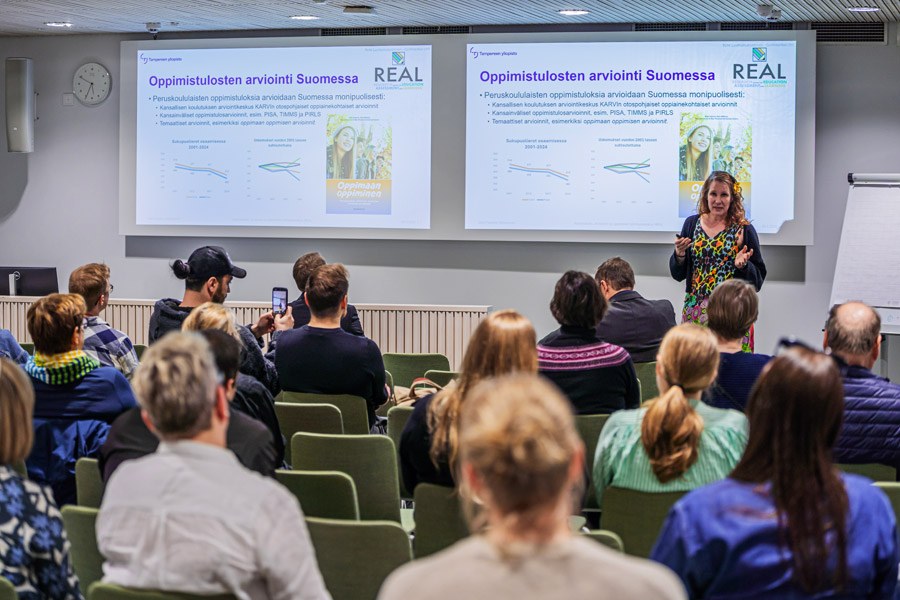
The topics covered included early childhood education standards, workplace learning, pressures for reform in schools, crises experienced by children, and the evaluation of education.
“It was wonderful to see so many people taking time out of their busy everyday lives to pause and engage in discussions on educational issues that concern us all. These discussions brought together the latest research, everyday experiences and broader societal themes. They were lively and wide-ranging, indicating a clear demand for events of this kind now and in the future,” says Joni Forsell, a doctoral researcher who coordinated the events.
ECER is organised by the European Educational Research Association (EERA) in collaboration with the Faculty of Education and Culture at Tampere University and the City of Tampere.


