Partnership programme promotes solutions to social problems in Europe by benchmarking best examples

As part of the THCS programme, Tampere University is seeking ambitious models for delivering health and social services based on partnerships between different stakeholders, which may serve as examples across Europe.
Special emphasis is placed on identifying transformative ecosystems that bring together various organisations and processes.
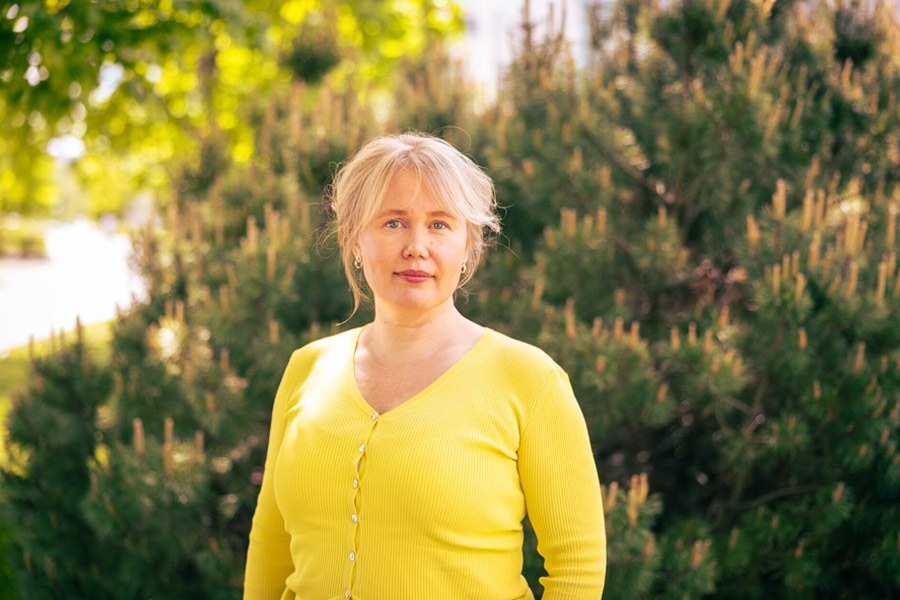
Tampere University’s contribution to the partnership programme is led by Director Sanna Tuurnas.
“It has been recognised at EU level that the challenges facing national health and care systems are shared across Europe, which is why tackling them together is both constructive and important,” Tuurnas says.
Tampere University has a distinctive role within the partnership programme since only a small number of universities are involved. The programme partners largely come from ministries, funding organisations and research institutes. In addition to Tampere University, the Finnish Institute for Health and Welfare (THL) and Research Council of Finland are representing Finland in the programme.
The THCS partnership programme is one of the largest EU programmes in the field of health and social services.
“The programme has close connections with the European Commission, which supports its impact and accountability,” Tuurnas notes.
A catalogue of 40 examples including Finnish innovations
The THCS programme was launched in January 2023. Together with their European colleagues, Tuurnas and Postdoctoral Research Fellows Sofi Perikangas and Kaisu Sahamies have focused on identifying well-functioning health and care services, delivery models and analysing and learning from them.
As part of the work, the researchers have also conducted field visits to various sites. In collaboration with the THCS programme partners, a catalogue of 40 ecosystem examples has been compiled to showcase effective models. More examples of different types of transformative ecosystems in health and care services continue to be collected.
The project has also highlighted successful Finnish models and things that work well here which other European countries could learn from.

Examples from Finland include new partnership-based funding models, such as the Tesoma alliance model in Tampere, Harju Health Joint Venture Company in Päijät-Häme, and the Children & Youth SIB societal impact investment model by the Central Union for Child Welfare. Finland’s eHealth strategy has also been presented at international events arranged by the programme.
Highlighting Finnish ecosystems also enhances the project’s impact at the national level. Tuurnas cites digitalisation as an example, noting that Finland is already well advanced in this area.
“In reflection with the European context, we have invested significantly in digital solutions. It has not only been about individual innovations as digitalisation has been broadly integrated into social and health services,” Tuurnas explains.
Analytical work shapes future research and strengthens dialogue in the programme
The researchers in the THCS team have also coordinated ecosystem approaches and contributed analytical expertise to the partnership programme. This analytical work has been applied, for example, to mapping research needs.
“Through the programme, we can help to steer the development of the research field. Analytical expertise plays an important role in that kind of work,” Sofi Perikangas points out.
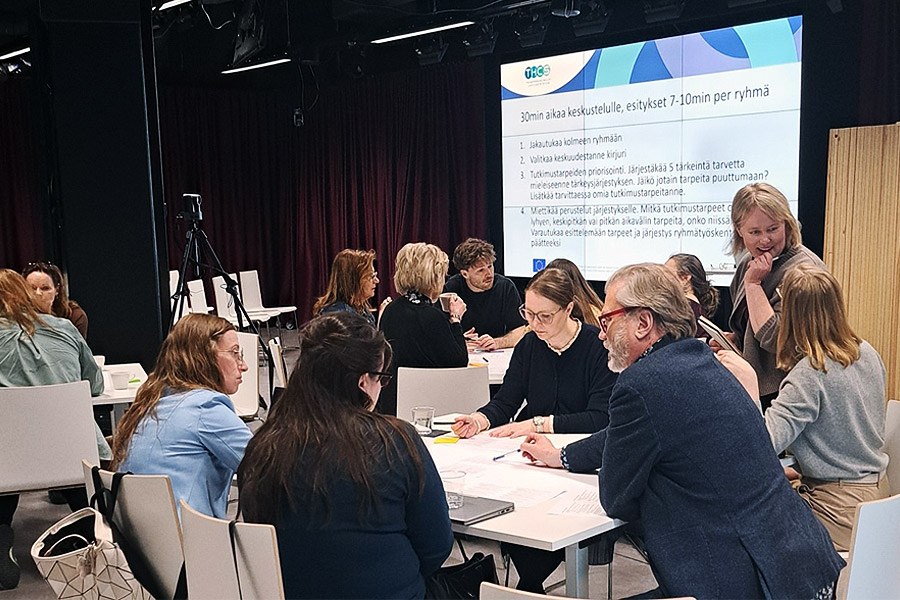
Researchers, experts and professionals from Tampere have also been invited to contribute to this work. In spring 2026, Tampere University’s THCS team organised a workshop to identify research needs.
Analytical work has also supported discussions within the programme, for example, on key concepts.
“Some of the concepts in this field are highly complex, while others are loose or imprecisely defined. There has been a clear need for conceptual clarification, as the programme brings together such a wide range of actors from researchers to public officials,” Perikangas explains.
Strengthening ecosystem thinking
The THCS programme is now at its halfway point and will continue until 2029. According to Tuurnas, the programme has significantly deepened understanding of what ecosystem thinking in health and care can encompass.
“It is not limited to medical services alone as it extends to holistic wellbeing, prevention, and even to other sectors, such as employment and culture services. For example, the Mooi Maasvallei network in the Netherlands brings together stakeholders ranging from local businesses and volunteer residents to different levels of government and sectors to promote residents’ wellbeing, with a strong emphasis on prevention,” Tuurnas and Sahamies note.
“The programme provides valuable insights into new and impactful partnership types that can be developed when services are viewed through the ecosystem lens,” Tuurnas adds.
Tuurnas also notes that one of the aims of the programme is to increase ecosystem thinking more broadly across Europe. A dedicated work package is currently exploring how the good practices identified in the project can be implemented across Europe after the programme ends.
One strand of the programme focuses on designing and delivering a masterclass training programme for decision-makers, the first of which will take place in Paris in summer 2026.
“Regional and national decision-makers from Finland will also participate,” says Sahamies.
Transforming Health and Care Systems (THCS) partnership programme
- Launched in 2023, the THCS partnership programme is part of the EU’s Horizon Europe framework programme bringing together more than 60 organisations from 26 countries.
- The programme consists of ten work packages where research organisations, research funders and ministry representatives collaborate to advance and support the implementation of innovative health care and social welfare solutions and the benchmarking of good practices.
- The partnership programme runs for seven years and allocates more than €300 million to research, innovations and the implementation of outcomes.
- Tampere University’s share of the THCS partnership programme funding amounts to €2.5 million.
Other representatives from Tampere University involved in the programme include Director Juha Teperi and Researcher Matias Heikkilä.


