Material properties can now be studied in a realistic hydrogen environment

The rapid deployment of green hydrogen is essential for achieving global climate targets. However, the effects of hydrogen on key materials, such as steel, remain poorly understood. Improving our understanding of how exposure to hydrogen affects materials is pivotal not only for developing safe and reliable hydrogen technologies that support security of supply, but also for preventing the embrittlement of steel structures caused by hydrogen entering the material.
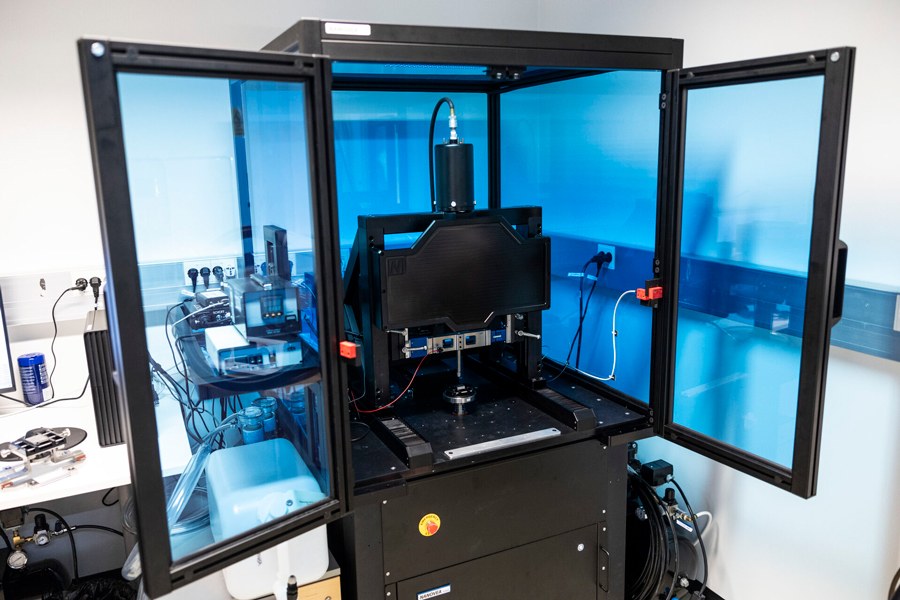
Housed within the Faculty of Engineering and Natural Sciences (ENS) at Tampere University and launched in February 2025, the OperaRI research infrastructure enables the effective investigation of material properties under genuine in-situ conditions as well as the simultaneous measurement of changes in the structural or chemical properties and performance of materials.
According to Professor of Materials Science Mikko Hokka, OperaRI opens up interesting opportunities for collaboration, especially with companies that manufacture components and equipment for the hydrogen economy and energy technologies. Other universities and research organisations worldwide can also benefit from OperaRI’s world-class expertise in material-hydrogen interactions.
“Our aim is to provide testing and evaluation capabilities for determining, for instance, how a component behaves when it comes into contact with hydrogen under specific temperature or pressure conditions,” says Hokka.
From electrons to energy systems
The OperaRI environment, which has been included in the Research Council of Finland’s national roadmap for research infrastructures for the years 2025–2028, is a joint undertaking between Tampere University, the University of Oulu and the VTT Technical Research Centre of Finland. The exceptionally comprehensive range of materials science testing services offered by OperaRI sets it apart both in Finland and internationally. By bringing together three research institutions, OperaRI enables the investigation of materials across multiple length scales, ranging from atomic-level specimens to the micro- and macro-scale and ultimately up to the component level.
OperaRI houses equipment that enables researchers to analyse and observe, for example, a welded metal pipe under load. A scanning electron microscope (SEM) reveals the microstructure of the weld seams, while the mechanical properties of different regions of the welded joint can be further analysed using a nanoindentation system, which applies minuscule, nanoscale indentations to the surface of the material.
“Additional instrumentation integrated with the SEM enables the monitoring of crack propagation at the microstructural scale. Capabilities are also being developed for the mechanical testing of macroscopic specimens, with a special focus on understanding material behaviour under mechanical stress in high-pressure hydrogen environments. These facilities will be added to OperaRI’s infrastructure later this year,” says Staff Scientist Kati Valtonen.”
One-stop shop for a broad range of measurement services
Hokka and Valtonen emphasise that the comprehensive research infrastructure provides a strong foundation for a wide range of collaborative research activities with diverse organisations. To further support collaboration, the development of a digital platform for external stakeholders is currently underway. This platform will integrate expertise and training opportunities as well as connect stakeholders with relevant specialists.
In addition to providing access to data and a pool of experts, the digital platform will include a specimen tracking system, enabling customers to follow the progress of their specimens throughout the entire chain of custody.
“Customers gain visibility into the full scope of our operations. For example, a single sample may first be analysed at the nanoscale at the University of Oulu, then vacuum-sealed and transported to Tampere University for microscopic characterisation and finally transferred to the VTT Technical Research Centre for larger-scale testing,” says Hokka.
On 19 May 2026, Tampere University will host a webinar showcasing the latest operando and in-situ research infrastructures related to the development of hydrogen technologies. The English-language webinar is open to researchers and industry stakeholders.
Author: Anna Aatinen


