Ukrainian UNBROKEN Hospital and TAMK build long-term research and development cooperation in healthcare

The consequences of Russia’s war of aggression are evident throughout Ukrainian healthcare and society. At UNBROKEN in Lviv, adults and children injured in the war receive comprehensive care. The centre provides services including reconstructive surgery, orthopedic care, prosthetics and emergency care.
Mariana Svirchuk, Director of Development and Investment Attraction of the First Lviv Territorial Medical Union, described the current situation in Ukrainian healthcare as exceptional. The number of patients requiring care has increased dramatically because of the war, while treatment practices, education and research have had to adapt rapidly.
“Our biggest challenge is the number of patients. They come from all over Ukraine. We treat trauma, infections and complex injuries, but at the same time we need to build new expertise and strengthen research. We want our hospital to be an environment where patients can receive care, professionals can be trained and research can be conducted.”
According to Svirchuk, UNBROKEN is actively seeking international partners to develop new solutions that support patient rehabilitation. There is also a need to develop the expertise of local educators.
We need a partner university that can help us find new solutions for our patients to recover as quickly as possible. Finland is very good at developing practical solutions and even small improvements that can have a significant impact. Your expertise and experience are extremely valuable to us.
Mariana Svirchuk
Trauma also affects those who provide care
Oleh Berezyuk, Head of the Department of Psychiatry at UNBROKEN, highlighted the less visible consequences of the war. Patients are not the only ones exposed to trauma: doctors, nurses and other healthcare professionals are also affected.
“The mental health of healthcare professionals is a growing challenge. Secondary trauma and burnout are becoming increasingly evident in the daily lives of doctors and nurses. We need to train professionals to recognise these phenomena and provide support at an early stage.”
According to Berezyuk, war has also changed the understanding of trauma.
“Before the war, there was relatively little need for trauma-oriented education. Now trauma affects almost everyone, physically or psychologically. This is why psychoeducation, providing patients and their families with information and guidance on mental health, has become one of our most important tools. It is important to explain what trauma does to the body, mind and behaviour and to give people ways to cope.”
Berezyuk says they initially underestimated the importance of psychoeducation.
“Now we know that it is one of the most important things we can do. When people understand what is happening to them, their anxiety decreases and recovery becomes possible.”
A shared interest in research and development
The Ukrainian visitors emphasised that their aim is not simply to be recipients of international support. The war has generated an exceptional amount of knowledge and data on trauma care, rehabilitation and healthcare in times of crisis, but more research partners are needed to analyse the data.
The expertise accumulated in trauma care, rehabilitation and healthcare in crisis conditions can also provide valuable knowledge to international partners. Through cooperation, this knowledge can be analysed and applied more widely in Ukraine and elsewhere in Europe.
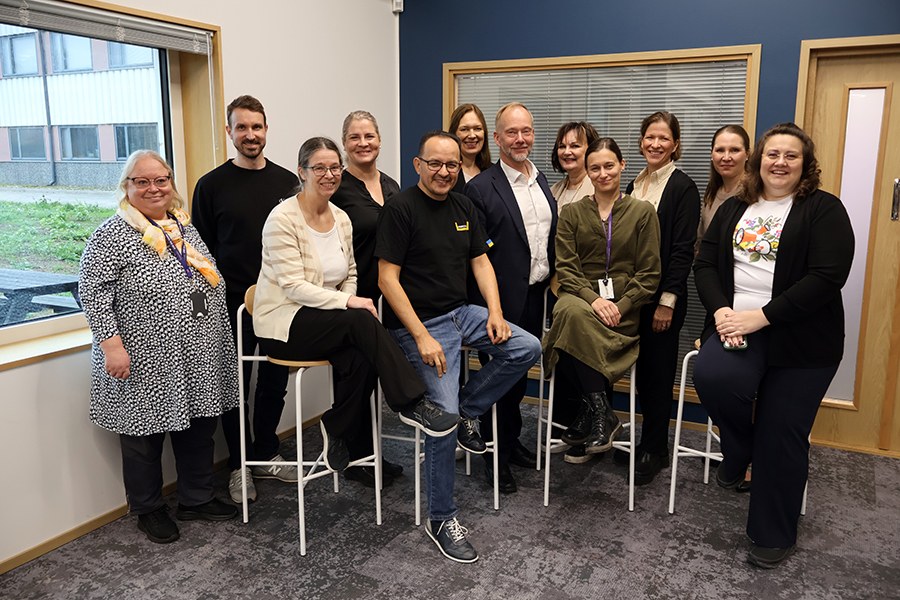
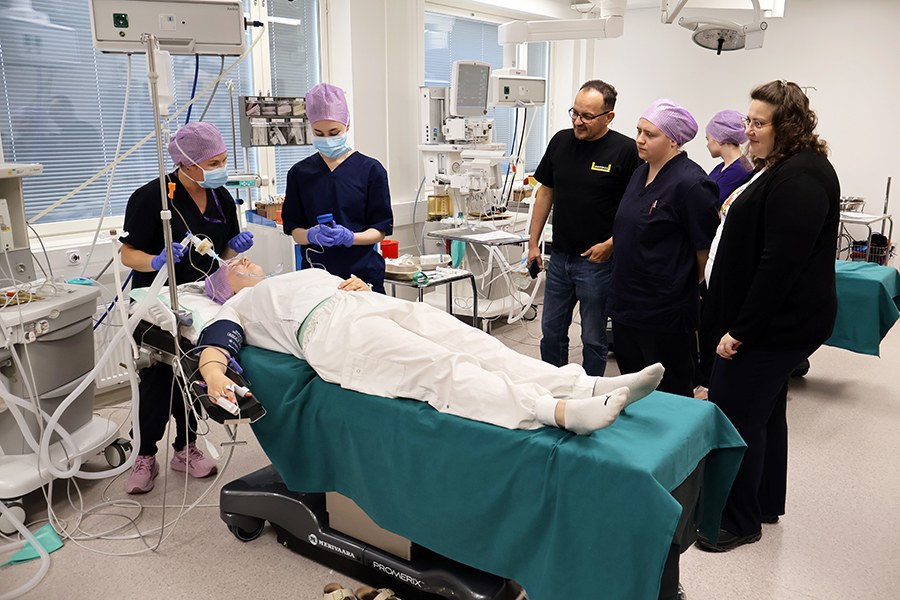
During the visit, the Ukrainian delegation learned about TAMK’s social services and healthcare research groups working in areas such as health promotion, trauma-sensitive approaches, safety and security, mental health and preventive healthcare. The visitors were particularly interested in the way TAMK integrates research, education, and practical development in working life.
They also explored TAMK’s versatile learning environments and ongoing research and development projects.
Johanna Vilppola, Principal Researcher at TAMK’s SAFE research group and Partnerships Manager for Ukraine Cooperation, sees significant potential for cooperation. Among other themes, her research group works on resilience, crisis and trauma expertise, and trauma-informed approaches that recognise the impacts of trauma and take them into account in interactions with people and in the design of services.
Vilppola recently visited Lviv.
“A vast amount of knowledge about trauma, rehabilitation and crises is currently being accumulated in Ukraine. The Ukrainians told us that the challenge is not a lack of data, but insufficient resources for research and analysis. International cooperation is practically essential.”
The planned multifaceted cooperation can also benefit Finland.
Together, we can produce research-based knowledge that helps develop rehabilitation, mental health services and trauma-informed approaches. This knowledge is important not only in wartime. It can also be applied in many other situations where the aim is to strengthen people’s physical, psychological and social functioning.
Johanna Vilppola
Many opportunities for cooperation
Higher education institutions can contribute their expertise to addressing major societal challenges. President and CEO, Professor Mika Hannula emphasised the reciprocal nature of the cooperation.
“We want to learn from you. I hope that this day is one step towards a long-term partnership in which we can cooperate in practical ways, learn from each other and share our expertise. At TAMK, research, development and innovation activities are not separate from education. They connect teaching with the real needs of society. This is precisely why international partnerships are so important to us,” Hannula said.
The Ukrainian visitors identified mental health support, infection prevention, professional education and strengthening research capacity as key areas for cooperation. Other areas of interest included research on trauma-related strain among healthcare professionals, the challenges of antimicrobial resistance, and the development of rehabilitation and mental health services.
The shared goal is to build long-term cooperation in which expertise and knowledge flow in both directions, creating new solutions to support wellbeing and professional competence in both Ukraine and Finland.
Contact
Johanna Vilppola
Principal Researcher, Doctor of Education, SAFE research group
Partnerships Manager, Ukraine Cooperation
Tampere University of Applied Sciences
johanna.vilppola [at] tuni.fi (johanna[dot]vilppola[at]tuni[dot]fi), +358 50 4389 456
Read more about TAMK’s research groups related to social services and healthcare
Safety and Security, Resilience, Crises and Trauma (SAFE) | TAMK
Predictive, Preventive, Personalised and Participatory Health (PRECISE) | TAMK
Family Growth and Wellbeing (GrowWell) | TAMK
Author: Hanna Ylli


