Doctoral researcher Aki Kortetmäki’s research is already shaping electrical engineering guidelines

Buildings, heating systems, housing and electricity use have changed considerably over the past few decades. Yet some of the principles used in electrical system design are still based on data from the 1980s.
“Research-based knowledge is essential for the energy transition, so there is a clear need for this kind of research. In today’s operating environment, we need to update the estimates used to determine peak power requirements for electrical connections,” says Aki Kortetmäki, Senior Lecturer and Head of Degree Programme in Building Services Engineering, Electrical Systems at Tampere University of Applied Sciences (TAMK).
Kortetmäki is pursuing his doctorate at Tampere University under the supervision of Pertti Järventausta, Professor of Electrical Engineering at Faculty of Information Technology and Communication Sciences. At the same time, Kortetmäki is actively involved in TAMK’s research and development activities related to the energy transition.
In his doctoral research, Kortetmäki studies electrical energy systems in residential properties in a changing operating environment. The research focuses on two areas: estimating peak power demand for electrical connections and optimising the sizing of solar photovoltaic (PV) systems.
Both research areas aim to reduce unnecessary costs, improve the profitability of energy investments and help electrical engineering professionals size systems more accurately. The findings benefit electrical designers, property owners, housing companies and distribution system operators, among others.
Ultimately, the impact can also reach ordinary electricity users. Avoiding unnecessarily oversized electrical systems and sizing energy investments appropriately can save both money and resources.
The old sizing guidelines are no longer enough
One of the key findings concerns the oversizing of electrical connections in residential properties. In practice, this means installing connections and electrical systems with significantly more capacity than is needed. The consequences extend beyond individual properties.
“The main fuses and electrical distribution boards can be sized too large. This increases the cost of the electrical connection and its components considerably. If electricity networks are also built with excess capacity just to be on the safe side, those additional costs are ultimately passed on to all customers.”
Kortetmäki’s research has made use of extensive measurement data obtained in collaboration with Tampereen Energia Sähköverkko Oy and Tampereen Vuokratalosäätiö. The research has generated new knowledge that has already been used to update professional guidelines in the sector.
Based on our research results, we were able to develop new sizing practices. We combined our findings with research data from Helen Ltd and worked with organisations responsible for professional electrical engineering guidelines. As a result, the guidelines were updated to reflect the latest research.
Aki Kortetmäki
Energy community credit calculation affects the profitability of solar power
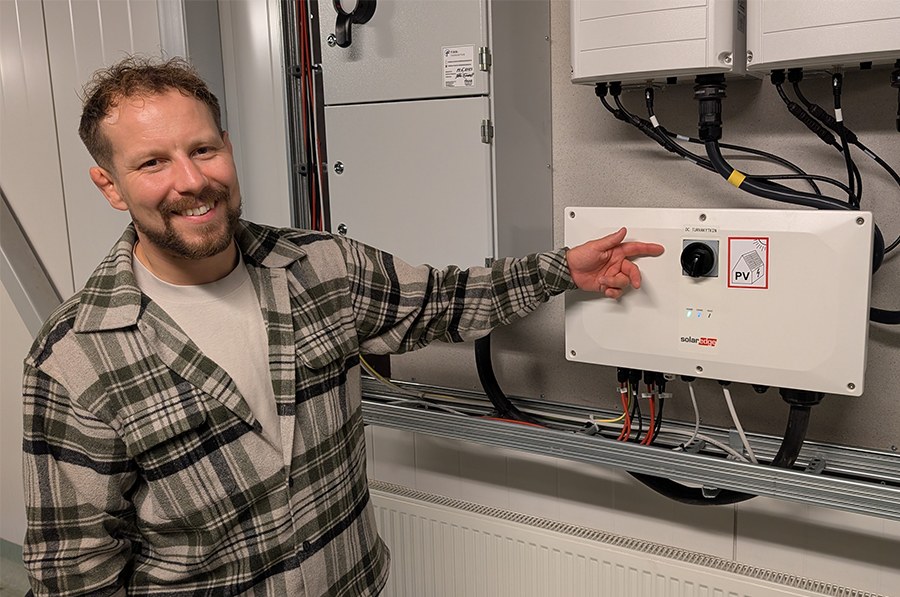
The second research question in Kortetmäki’s doctoral dissertation concerns solar PV systems. Solar power has been studied extensively in Finland, but recent legislative changes have significantly changed the situation, particularly for apartment buildings and terraced houses.
One important development is the introduction of credit calculation for energy communities. According to Kortetmäki, this has created new opportunities.
“Credit calculation makes it possible to allocate the electricity generated by a solar PV system to individual apartments according to a chosen distribution ratio. This can significantly increase the proportion of electricity that is used within the property and make larger solar PV systems more economically viable.”
Kortetmäki is investigating how changes in regulation, new metering practices and different allocation methods affect the profitability of solar PV systems. The research provides up-to-date information for solar PV system designers, housing companies, property managers and property owners.
Research starts with real needs from working life
According to Kortetmäki, one of the strengths of research conducted at a university of applied sciences is that research questions emerge from close connections with working life, development projects and the need to solve real-world problems. The results can also be put into practice quickly.
“We have a concrete and practical understanding of how buildings have been constructed, what kinds of requirements they need to meet and what challenges arise in practice. Our active working-life connections help us identify exactly the kinds of problems that should be investigated,” he says.
These extensive networks have also made it possible to obtain research data that would otherwise be difficult to access.
The unit of Building Services Engineering has a long tradition of research
Kortetmäki’s own path to becoming a researcher has not been a conventional one. He began his studies in vocational education, qualifying as both an electrician and an automation technician. He then continued to study engineering at TAMK before completing a Master of Science in Technology degree at Tampere University.
Today, he is pursuing his doctorate alongside teaching and research and development work. He formally began his doctoral studies in 2022 but had already gained practical research experience through RDI projects.
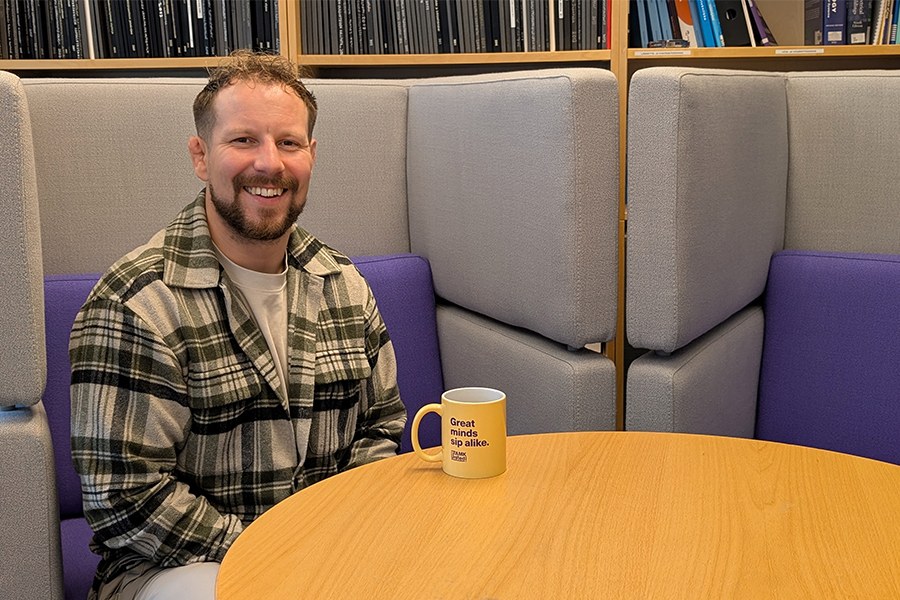
Research in Building Services Engineering is a collaborative effort. Several members of Kortetmäki’s team are currently pursuing doctoral degrees, and scientific publishing is part of many RDI projects. Kortetmäki values the long-standing research culture in the field as well as the support of his colleagues.
“Our team has a long tradition of research, development and innovation. We have always been interested in exploring questions and finding out how things work,” he says.
A strong research environment is built above all on people, collaboration and long-term networking.
Every research project generates new research questions and new networks. Once you have worked successfully with someone, taking the next step together is always easier.
Aki Kortetmäki
TAMK’s doctoral pathway programme has also provided peer support and opportunities to network with researchers working in other units. According to Kortetmäki, the programme has brought together people in similar situations and lowered the threshold for future collaboration.
Towards a doctorate and new research questions
Kortetmäki’s doctoral research has progressed rapidly. Over the past two years, it has resulted in several peer-reviewed publications and conference presentations. The work has also demonstrated how quickly the energy system is changing and how many new research questions are emerging along the way.
“We don’t have to come up with research questions out of thin air. You get to choose a topic that genuinely interests you, while constantly learning something new.”
For Kortetmäki, an important source of motivation is the tangible impact of the research. When findings are incorporated into design guidelines, teaching and practical decision-making, research becomes part of the solutions needed for the energy transition.
“Changes in society are constantly creating new research gaps that we can help address. That is exactly what makes the work so engaging.”
Contact person
Aki Kortetmäki
Senior Lecturer Aki Kortetmäki
Author: Hanna Ylli


