New experimental research hub brings together research expertise from across Tampere University

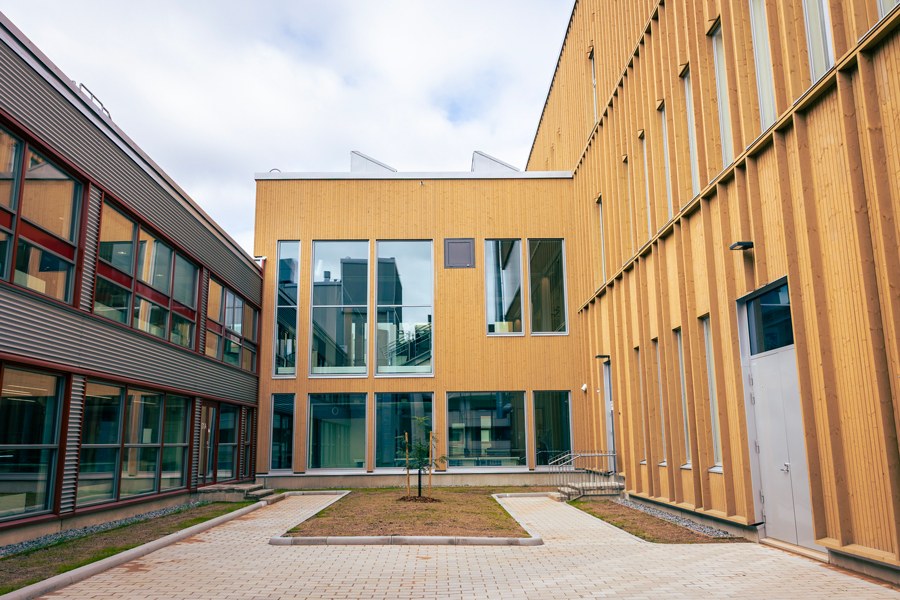
The experimental research hub, with the working title Sähkötalo Research Hub, is part of the first phase of the Facilities Programme at Tampere University. It brings together laboratories from three faculties that have previously been spread across the University’s campuses. The Sähkötalo building was completed in the late 1970s and has since evolved into a centre for experimental research owing to substantial investments made over the years, making it a natural location for the new hub.
Planning for the refurbishment of Sähkötalo and the construction of Noodi, which replaced sections of the building that were demolished, began in 2021 as a collaborative effort between Tampere University, University Properties of Finland Ltd (SYK) and the architectural firm Helamaa & Heiskanen Oy.
All the parties were committed to ensuring that the views of future users were reflected in the design process. The early co-creation process is estimated to have involved hundreds of members of research, teaching and technical staff from the Faculty of Engineering and Natural Sciences (ENS), the Faculty of Information Technology and Communication Sciences (ITC) and the Faculty of Medicine and Health Technology (MET) in addition to their senior leadership.
A user-centred approach is particularly important when designing laboratory facilities. The construction of Noodi required the needs and goals of three different faculties to be integrated within a single framework. Achieving this was by no means straightforward.
“The laboratories have been designed around the equipment configurations they will house and the needs of our researchers. All this has required careful planning. Compromises had to be made, as not every wish could be accommodated. The process was not always easy, but the result is spectacular,” says Minnamari Vippola, Vice Dean of ENS.
Three for all
One of the most important and widely praised decisions made during the construction project was the appointment of coordinators, a step that researchers themselves had advocated for. One coordinator was appointed from each of the three faculties to act as a liaison between the project team and future users throughout the project. The coordinators were Laboratory Chief Antti Nuottajärvi (ENS), University Instructor Jari Väliaho (MET) and Staff Scientist Poika Isokoski (ITC).
The coordinators kept both faculty leadership and staff scientists informed of the latest developments, with the latter relaying updates to their research groups. Their responsibilities were clearly defined, and communication flowed effectively in both directions.
Antti Nuottajärvi has calculated that he attended at least two meetings a day during the busiest phase of the project. At times, he felt as though his phone was permanently attached to his ear and there were simply not enough hours in the day.
“If all the planned functions are operating as intended a year from now, I will be satisfied,” he says.
Poika Isokoski compares the project to a major spring clean, involving the construction, refurbishment and relocation of numerous laboratories, some of which were moved all the way from the City Centre campus. Equipment and materials accumulated over decades were reviewed as part of the process to determine whether they would still be needed in the future. Modularity and adaptability were prioritised from the outset instead of striving for perfection.
“As the world of science is continuously evolving, compromises are inevitable. A space designed for one purpose may soon be needed for another. However, a fully adaptable building would come with an astronomical price tag,” notes Isokoski.
Jari Väliaho admits that the project took its toll. The pace was relentless, especially during the data collection phase, and the support of colleagues was invaluable.
“Thank you to all those who participated in the project! We set out to create facilities that would serve the needs of the entire faculty as effectively as possible. They also indirectly support research groups based on the Kauppi campus. We hope that researchers are pleased with the outcome,” he says.
Aiming for mutual benefits
The state-of-the-art facilities represent a significant improvement for all the research groups based in the new premises. Mutual benefits will also be sought through collaborative practices. Vippola believes that bringing researchers together under one roof will foster collaboration among the faculties and research groups.
The primary focus of the project was on the laboratories, with everything else taking a back seat. As a result, no floor space was allocated to storage rooms or communal spaces. Noodi includes toilet facilities but only a single coffee room, and supplies are stored in cupboards lining the wide corridors.
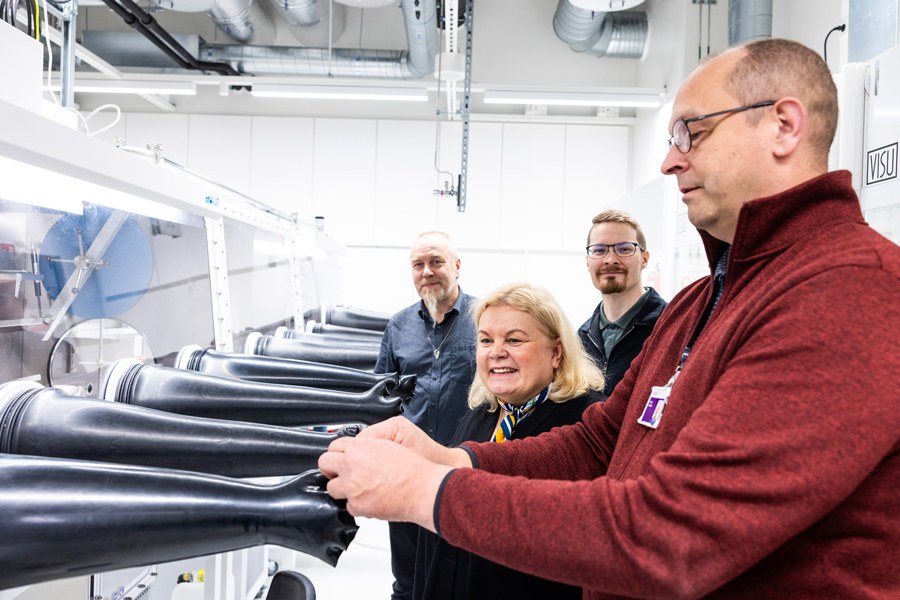
A major logistical operation is currently underway to relocate laboratory equipment from the existing facilities on the Hervanta campus to Noodi and the refurbished Sähkötalo building. Once the equipment has been installed and researchers have settled into their new surroundings, the next step will be to identify synergies and get to know colleagues in neighbouring research groups.
“Our aim is to establish shared working practices for all users. All researchers, teachers and technical staff who work in the new facilities will complete a common orientation programme through Moodle, while laboratory-specific training will be provided separately. Procurement activities and laboratory waste management will also be carried out collaboratively. For example, joint orders will be placed for commonly used laboratory supplies, such as nitrile gloves,” the coordinators say.
Experimental research hub in numbers
- Gross floor area: Noodi: 8,733 m2 / Sähkötalo: 18,500 m2.
- Laboratories and support spaces: close to 200 laboratories and support spaces, covering approximately 4,800 m2.
- Equipment and instruments: hundreds.
- Research groups: Noodi: approximately 55 / Sähkötalo: approximately 15.
- Costs: Noodi: €46 million, Sähkötalo €43 million, equipment €11 million.
Contact
Author: Anna Aatinen


