
Our research group focuses on developing and applying a systems pharmacology approach for rational combinatorial therapy in cancer treatment. A wide range of both dry-lab and wet-lab experiments are conducted in order to address issues like how to prioritize drug combinations based on single drug response data, how to develop the strategy of combinatorial therapy based on synergy, efficacy, and toxicity, and how to explain the molecular basis for drug combinations using target deconvolution and functional omics methods.

Impact
New analytical method reveals how drug combinations act in leukemia – study opens the door to precision designed combinatorial therapies
Funding

|  | 
|
 | 
| 
|
Principle Investigator

Mohieddin Jafari
Mohieddin Jafari earned a Ph.D. in Applied Proteomics in 2013 from the Beheshti University of Medical Sciences under the supervision of Professor Mehdi Sadeghi. During his predoctoral studies (2011) at the Proteomics Resource at the Harvard School of Public Health (HSPH), he concentrated on protein fractionation in mass spectrometry-based proteome profiling under the supervision of Professor Alexander Ivanov. In 2015, he graduated from the Systems Biology Specialization Certificate program at the Icahn School of Medicine at Mount Sinai, where he focused on network biology applications employing high-throughput data mining and network analysis tools. In 2018, he began working as a senior researcher at the University of Helsinki, following 1+3 years as a postdoc and PI at the Pasteur Institute of Iran. He began his career at FIMM for one year before joining the ONCOSYS Research Program Unit, Dept. of Pharmacology, and Clinical Proteomics Core Facility, for more than three years. In 2020, he obtained his Docentship in Bioinformatics from Helsinki University. In 2023, Dr. Jafari launched his independent career as a principal investigator (PI) in the Systems Pharmacology Research Group, Department of Biochemistry and Developmental Biology. Mohieddin believes that research should be a lot of fun! That means digging into cool experiments in a laid-back work environment. When it comes to crunch time, we buckle down, but we also believe in maintaining a healthy work-life balance. Every member of the team is crucial, and we're on a mission to learn something new every day! email: mohieddin.jafari@tuni.fi tel: +358 40 545 8989

Uladzislau Vadadokhau
Uladzislau earned his M.Sc. in Molecular Biology at the University of Debrecen (Hungary) in 2019. Besides academic experience, Uladzislau contributed to the preclinical studies of gene therapies at Biocad from 2019 to 2022. Having worked at the proteomics core facility, he has developed a strong interest in proteomics and bioinformatics. Within his doctoral researcher position in the Doctoral Education Pilot in Precision Cancer Medicine (iCANDOC Opens in a new tab), he will apply his experience in wet lab and dry lab biology to find safer drug combinations for acute lymphoblastic leukemia. Particularly, he is interested in understanding the mechanism of the drug combination effect by utilizing proteomics and systems pharmacology for target deconvolution. Email: uladzislau.vadadokhau@helsinki.fi
Group Member at Tampere University

Guoqing (Henry) Cheng
Henry is a PhD student in the Jafari Lab. He received an M.Sc. in Bioinformatics from Johns Hopkins University in 2024 and then spent a year as a research specialist at the Johns Hopkins School of Medicine, where he investigated proteins associated with antibiotic resistance. During this time, he also developed practical skills in microbiology and animal models. His research interests center on identifying therapeutic targets for combinatorial treatment of acute myeloid leukemia (AML) and constructing drug-effect models in zebrafish to link proteomic changes to treatment response. Research keywords: cancer biology, proteomics, LC-MS, multi-omics, drug combinations, and zebrafish model. Email: henry.cheng@tuni.fi
Doctoral Researcher

Elizabeth Figueroa Valencia
Elizabeth is a doctoral researcher with a background in biological sciences and biotechnology. She earned her bachelor's degree and professional title in biology from the National University of San Agustín (Peru), graduating with honors. From 2018 to 2025, she conducted her doctoral research at the Center Algatech, Institute of Microbiology of the Czech Academy of Sciences, where she investigated cyanobacteria and microalgae for the production of high-value bioactive compounds. Her work focused on the isolation, purification, and characterization of pigments and carotenoids using chromatographic and mass spectrometry techniques, as well as experimental design, data analysis, and scientific writing. She also contributed to several Horizon 2020 research projects in sustainable microalgae biotechnology. Her current research interests include natural products, metabolomics, analytical chemistry, and biotechnology. Research keywords: microalgae biotechnology, cyanobacteria, analytical chemistry, natural products, metabolomics, HPLC-MS, bioactive compounds. Email: elizabethfigval@gmail.com
Lab Alumini
- 1
Ehsan Zangene, Ph.D. (3 yrs)
Ehsan, a former postdoctoral researcher in my lab, contributed to our research in computational proteomics and drug combination prediction, with a focus on bioinformatics, data analysis, and computational methods.
- 2
Elham Gholizadeh, Ph.D. (4 yrs 4 mos)
Elham is a former doctoral researcher in the lab who focused on developing approaches for studying drug mechanisms and combinatorial therapies in acute myeloid leukemia.
- 3
Fatemeh Jamshidi-Adegani, Ph.D. (1 mo)
Fatemeh Jamshidi-Adegani, a visiting scientist from the University of Nizwa, Oman, with a background in molecular medicine and biomaterials, visited our lab to initiate collaboration in proteomics data analysis and systems pharmacology, with a focus on identifying therapeutic targets in metabolic and inflammatory diseases.
- 4
Salma Ibourki, MSc student. (5 mos)
Salma, an exchange student from the University of Lille with a cellular biology and physiology background, completed her Erasmus internship from April to August. She contributed to the DORSSAA project and AML drug target discovery during this time.
- 5
Nicole Sundell, Medical student. (2 mos)
Nicole, a former summer intern in my lab, contributed to zebrafish xenograft modeling and imaging in AML and literature reviews during her internship, enhancing her research and pharmacology expertise.
- 6
Rashwita Gyanwali, MSc. (2 mos)
Rashwita, a former summer intern in my lab, made contributions to projects related to drug response analysis and protein-based experiments, further enhancing her understanding of computational models in research.
- 7
Mehdi Mirzaie, Ph.D. (1 yrs 11 mos)
Mehdi, a former senior postdoctoral researcher in my lab, played a key role in advancing our research on drug combination prediction, showcasing his expertise in computational models within the field.
Assumptions

A randomized study of precision medicine that was based on genomic profiles found no improvement in survival rates, and fewer than 10% of patients who had advanced cancer had mutations that could be treated. This is the case despite the fact that next-generation sequencing has made it feasible to identify a diverse collection of mutations in a variety of cancer types. The current limitation of genomics-based personalized medicine is that there are not many effective and long-term treatment options available. This is due to the significant heterogeneity that exists at higher molecular biology information levels as well as the unknown intricate interactions that occur at those levels.
We made the assumption that most cancers, in particular, ought to be primarily regarded as signaling disorders rather than genetic diseases. This simplified ternary plot of the central dogma in molecular biology illustrates the amount of noise, the distance to the phenotypic level, and the availability of data. The technical or inherent (i.e., caused by the biological stochastic process) noise of the data has a cumulative impact on the accuracy of our predictions related to the next level up to the phenotype level in each level of molecular information.
As a result, in the paradigm of systems biomedicine, we place a greater emphasis on data that is available and is closer to the phenotype level.
Subject
In particular, for the purpose of rationally designing drug combinations, we develop an approach based on systems pharmacology. The specific goals are to (i) first predict the best drug combination regimens for related patient subclasses using network modeling (dry-lab experiments), (ii) evaluate and prioritize them in wet-lab experiments based on in vitro synergy, toxicity, and efficacy analysis, (iii) explore the molecular targets of the potent drug combinations based on PTM-centric thermal proteomics and metabolomics, and (iv) translate the findings of drug combinations into treatments.
In other words, our goal is to provide answers to major unmet needs in both society and the healthcare system by developing (i) treatments for cancer patients that are more effective and cause fewer side effects, and (ii) a molecular explanation of effective combinatorial therapy.
The primary domains of our investigation can be categorized into the following sections:
Software

BORNA
BORNA (BOolean network two-node dynamics via state-tRansition graph aNalysis) is an interactive web application and computational framework that enables systematic exploration, visualization, and classification of two-node signed Boolean networks and their state-transition graph dynamics under synchronous and asynchronous updating.

CoPISA
CoPISA Shiny App is an R-based analysis framework and interactive Shiny application that enables reproducible normalization, statistical modeling, logical gate classification (AND/OR patterns), visualization, and exploration of proteome solubility data. The complete analysis pipeline, scripts, and documentation are available through the GitLab repository (https://version.helsinki.fi/ehzange/Max_RULS Opens in a new tab), while the Shiny interface provides organized access to scripts, figures, processed outputs, and documentation.

SOORENA
SOORENA (Self-lOOp containing or autoREgulatory Nodes in biological network Analysis) is a two-stage, PubMedBERT-based transformer model coupled with an interactive Shiny web application and searchable database that enables automated identification, classification, and exploration of protein autoregulatory mechanisms within PubMed abstracts.

DORSSAA
DORSSAA accelerates drug discovery by studying drug-target interactions through Thermal Proteome Profiling (TPP) methods. This user-friendly platform enhances understanding of protein behavior, identifying interactions, determining target specificity across cell lines, and exploring drug repurposing opportunities.

PEIMAN2
The PEIMAN2 R package provides functions and mined database from UniProt for single enrichment analysis (SEA) and protein set enrichment analysis (PSEA) in a list of proteins. The database is updated regularly with monthly changes in UniProt/SwissProt repository.

NIMMA
The NIMAA R package provides a comprehensive set of methods for performing nominal data mining. It employs bipartite networks to demonstrate how two nominal variables are linked and then places them in the incidence matrix to proceed with network analysis.

CINNA
CINNA is an R package that has been written for centrality analysis in network science. It can be useful for assembling, comparing, evaluating, and visualizing several types of centrality measures.

IMMAN
IMMAN R package provides a way to overlay different PPINs to mine conserved common networks between diverse species. This approach is useful to reconstruct Interolog Protein Network (IPN) integrated from several Protein-Protein Interaction Networks (PPINs).

UNaProd
UNaProd 1.2 is a systematic collection of information concerning natural products used in Iranian traditional medicine (ITM). To generate this database, one of the most authentic resources in this school of medicine, Makhzan-al-Advieh, has been used. Compiled by Mohammad Hossein Aghili Khorasani (Shirazi) in 1769 A.D., this encyclopedia of materia medica is a semi-structural resource in the Persian language. UnaProd was created using both text mining and manual editing methods and is currently host to 3411 monographs in 16 attributes of remarks, identity, Mizaj, actions and medicinal uses, adverse effects, refinement, substitute, dosage, pronunciation, synonyms, origin, common name, and scientific name. This database has been linked to the CMAUP database for molecular features, and to IrGO (Iranian traditional medicine General Ontology) for Mizaj.

IrGO
Iranian traditional medicine (also called Persian Medicine), is an elaborate holistic system of healing grounded in a philosophical basis. The numerous concepts and their intricate relationships are described in numerous textbooks by scholars. However, embracing the totality of this rich school of thought is challenging due to the large amount of data in various time periods and ambiguities resulting from a lack of consensus or semantic change and the evolution of word usage. In order to arrange for an explicit, shared, and common understanding of Iranian traditional medicine concepts and facilitate connection with contemporary medicine to offer the potential for future research, the ontology of the key concepts mentioned in descriptions of materia medica is extracted. Subontologies include Mizaj, actions, disease, organ, and weight unit based on the 3411 monographs described in Makhzan-al-Adviah, an encyclopedia of materia medica compiled by Mohammad Hossein Aghili Khorasani in the 18th century. Iranian traditional medicine general ontology (IrGO) will enable the reuse of the knowledge in this field, make the assumptions explicit, and finally gain new knowledge by analyzing the concepts and their relationships.
Unveiling Our Latest findings
- Cheng, G., et al. Conjunctive Targeting Links Drug Synergy to Emergent Proteome Structural States. bioRxiv (2026): 2026.09. https://doi.org/10.64898/2026.09.24.7523Opens in a new tab
- Gholizadeh, E., et al. Chemical Proteomics of Residual Acute Myeloid Leukemia Cells Reveals Therapeutic Vulnerabilities. bioRxiv (2026): 2026.09. https://doi.org/10.64898/2026.09.22.752285Opens in a new tab
- Arar, Hala, et al. SOORENA: Self-lOOp containing or autoREgulatory Nodes in biological network Analysis. bioRxiv (2025): 2025-11. https://doi.org/10.1101/2025.11.03.685842
- Zangene, E., et al. (2025). Missing Values Are Valuable: Shifting Focus from Amount to Form of Missing Data. bioRxiv 2025.08.22.670516; doi: https://doi.org/10.1101/2025.08.22.670516Opens in a new tab
- Gholizadeh, E., et al. (2025). Shifting Beyond Classical Drug Synergy in Combinatorial Therapy through Solubility Alterations. bioRxiv, 2024.11.08.618644. https://doi.org/10.1101/2024.11.08.618644Opens in a new tab
- Zangene, E., et al. (2023). DORSSAA: Drug-target interactOmics Resource based on Stability/Solubility Alteration Assay. bioRxiv, 2023.12.29.573639. https://doi.org/10.1101/2023.12.29.573639
Selected publications
- Vadadokhau, U., Soliman, M., Castillon, L. et al. Preventing Proteomics Data Tombs Through Collective Responsibility and Community EngagementOpens in a new tab. Sci Data (2026).
- Gholizadeh, E., et al. 2025. Targeting acute myeloid leukemia resistance with two novel combinations demonstrate superior efficacy in TP53, HLA-B, MUC4 and FLT3 mutationsOpens in a new tab, Biomedicine & Pharmacotherapy, Volume 192, 2025, 118647.
- Nickchi, P., et al. 2025. Monitoring Functional Posttranslational Modifications Using a Data-Driven Proteome Informatic PipelineOpens in a new tab. Proteomics, e202400238.
- Mirzaie, M., et al. 2024. Designing patient-oriented combination therapies for acute myeloid leukemia based on efficacy/toxicity integration and bipartite network modeling.Opens in a new tab Oncogenesis 13(1):11.
- Jafari, M., et al. 2022. Bipartite Network Models to Design Combination Therapies in Acute Myeloid LeukaemiaOpens in a new tab. Nature Communications 13 (1): 2128.
- Jafari, M., et al. 2021. Re-Evaluating Experimental Validation in the Big Data Era: A Conceptual Argument. Genome Biology 22 (1): 71.
- Gholizadeh, E., et al. 2021. Identification of Celecoxib-Targeted Proteins Using Label-Free Thermal Proteome Profiling on Rat HippocampusOpens in a new tab. Molecular Pharmacology 99 (5): 308–18.
- Barneh, F., et al. 2019. Integrated Use of Bioinformatic Resources Reveals That Co-Targeting of Histone Deacetylases, IKBK and SRC Inhibits Epithelial-Mesenchymal Transition in CancerOpens in a new tab. Briefings in Bioinformatics 20 (2): 717–31.
- Wang, Z., et al. 2016.Extraction and Analysis of Signatures from the Gene Expression Omnibus by the CrowdOpens in a new tab. Nature Communications 7 (1): 12846.
View All
Street Address
Arvo Ylpön katu 34,
33520 Tampere
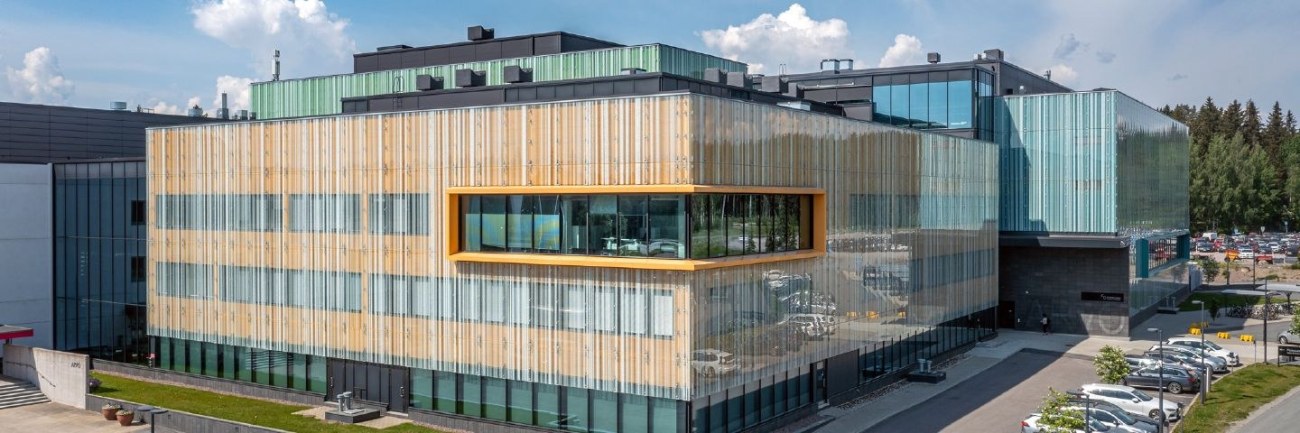
Building: Arvo Building C232
Faculty of Medicine and Health Technology
Tampere University
Email: mohieddin.jafari [at] tuni.fi (mohieddin[dot]jafari[at]tuni[dot]fi)
Tel: +358 40 545 8989