
The Doctoral Education Pilot in Precision Cancer Medicine (iCANDOC)
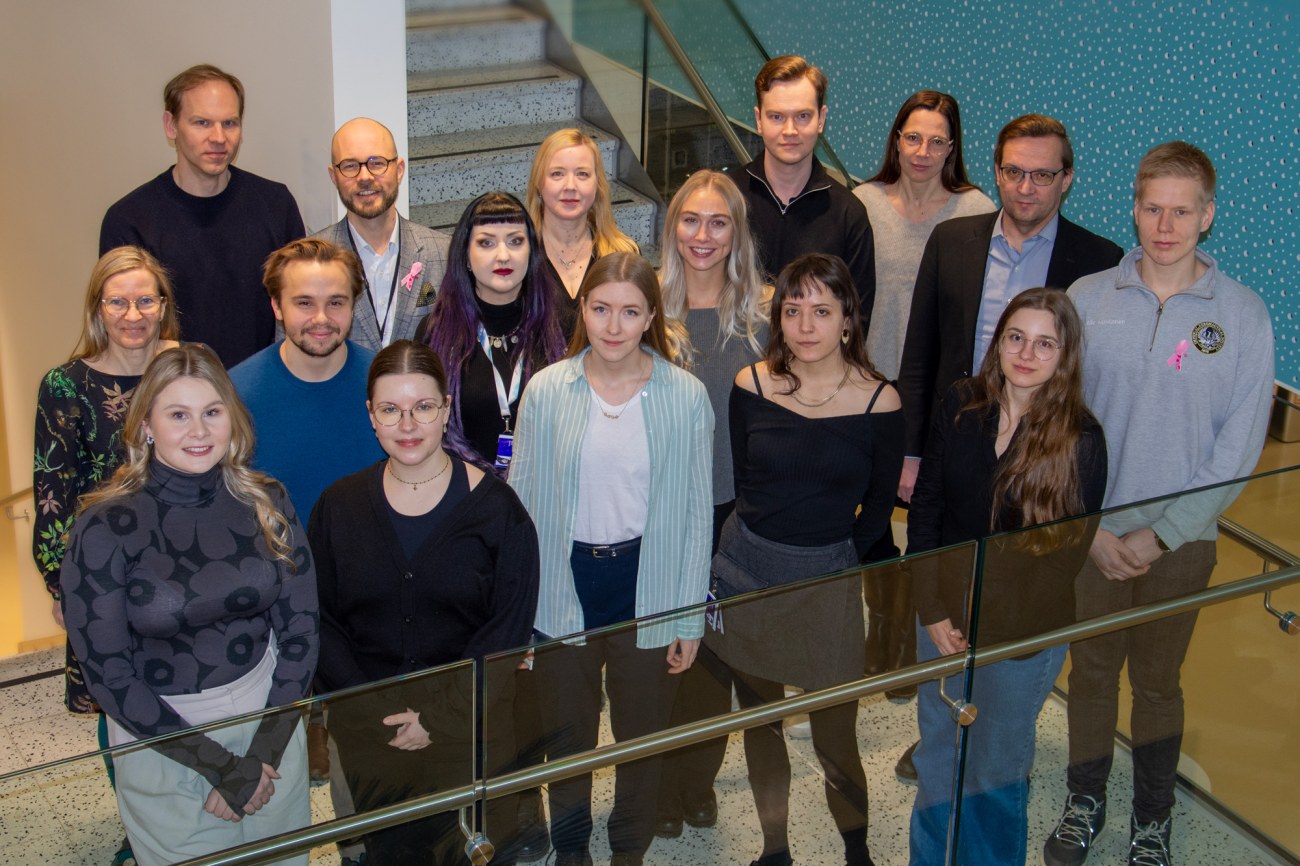
While significant advancements have been made in diagnosis and treatment of cancer, it still remains as a major societal and economical challenge with increasing prevalence. To raise for the challenge the Ministry of Education and Culture doctoral education pilot awarded nationally 152 doctoral education positions out of the 1000 in total for iCANDOC Precision Cancer Medicine (PCM) pilot. Ten of the students have been recruited to Tampere University and they have started their doctoral research as a part of the research groups to advance the field of precision cancer medicine.
More information about the iCANDOC doctoral pilot can be found from the University of Helsinki web pages https://ican.fi/icandoc/
The iCANDOC doctoral education pilot is a collaborative effort of the University of Helsinki (coordinator), University of Eastern Finland, University of Oulu, Tampere University, and University of Turku, along with HUS Helsinki University Hospital and the Wellbeing services counties of North Savo, North Ostrobothnia, Pirkanmaa, and Southwest Finland. Industry and third sector partners include Pharma Industry Finland, Healthtech Finland, Finnish Bioindustries, and Finnish Cancer Institute.
Development of computational approaches help to improve diagnosis and shed light on oncogenic processes
In her dissertation, Iida Salonen is utilizing computational approaches to investigate the tumour microenvironment of high-grade brain cancers. Salonen works as a researcher in Adjunct Professor Kirsi Rautajoki's Cancer Regulation and Immunology research group. The goal is to better understand the immunosuppression in the tumour, especially the insufficient activation of T cells, as well as the evolution of the tumour microenvironment in the context of tumour progression.
Preliminary research has shown that the brain-resident microglia and blood-derived macrophages react differently to the shortage of oxygen in the tumour tissue. Both cell types are highly abundant in the tumor tissue and they affect the function of other immune cells. We have also discovered that certain immune cell types co-accumulate to the tumour tissue. The next step is to investigate whether these cells interact with each other and how this interaction influences their behaviour.
Lauri Ryyppö is investigating liquid biopsies in his Doctoral studies in Professor Matti Nykter’s Computational Biology group. Liquid biopsies enable the analysis of mutations in DNA, providing insights into the mutational landscape of cancer cells. This information can be used for diagnosis and for monitoring patients after treatment. Compared to traditional biopsies, liquid biopsies can be easily collected at different timepoints. In addition, liquid biopsies are less invasive. The study uses patients' blood and urine samples, which are collected in cooperation with Tampere University Hospital (TAYS).
In an earlier study the group developed the UroScout gene panel which detected 96% of bladder cancers in the diagnostic setting. These results hold promise that urine samples could be used to diagnose and surveil urothelial cancers in the future.
Iina Koivisto is studying treatment resistance in prostate cancer using computational approaches in Professor Matti Nykter’s research group. By analyzing gene expression, chromatin accessibility, and spatial organization, the research characterizes cellular responses at multiple molecular levels. Through comparative studies of prostate cancer cell lines with diverse genetic profiles and patient samples, the project aims to understand how distinct types of prostate cancers respond to treatment. This research could contribute to the development of treatment strategies that better account for patients' individual genetic and non-genetic profiles. New treatment strategies are needed as now there is no effective treatment for prostate cancers that develop treatment resistance.
New experimental models enable studying tumor cells in realistic biological environments
In his research project conducted in Prof. Teemu Murtola research group, Alvar Saarinen studies the effects of the mechanical and biochemical microenvironment of prostate cancer. By combining cell models which simulate different stages of the disease with a customizable and controlled three dimensional growing environment, he aims to better understand how the surrounding tissue and changes in it impact the progression of prostate cancer. This can lead to the identification of novel mechanisms to be utilized in future therapies and diagnostic methods.
In her doctoral research, Jenni Keränen studies the spreading of colorectal cancer by focusing on the interaction between tumours and their microenvironment in Professor Vesa Hytönen's Protein Dynamics research group. Cancer tumours are surrounded by a dynamic microenvironment, at the core of which lies the extracellular matrix—a protein network that serves both as structural support and a signaling mediator for cancer cells. Changes in the extracellular matrix can create a favourable environment for the tumour, promoting its growth and spread into surrounding tissues. Understanding these changes is key to developing new treatment strategies. Our research utilises organoid models derived from patient tissue samples in combination with experimental, tunable hydrogels. These hydrogels allow us to replicate the changes occurring in the tumour microenvironment. By integrating the hydrogels with organoid models, we gain a unique opportunity to study the effects of the occurring changes directly in patient-derived samples.
Unraveling molecular mechanisms underlying the cancer development and treatment resistance
In her project, Implemented in the research group of Prof. Minni Änkö, Jenni Rapakko aims to identify cellular RNA structures that are specific to colorectal tumours and determine the role of RNA-protein interactions in RNA folding. We study the relationship between RNA structures and oncogenic gene expression in cancer cells. Using this information, we can design RNA structure targeting molecules to regulate the gene expression in colorectal cancer. This project helps to uncover the potential of RNA structure targeting therapeutics in cancer treatment with applications in colorectal cancer and beyond.
Kia Vaalavirta investigates molecular-level treatment resistance mechanisms in prostate cancer as a part of Prof. Tapio Visakorpi’s research group. Vaalavirta’s research examines how mutations in the androgen receptor (AR) contribute to the development of treatment resistance. Androgen receptor is a transcription factor that has a central role in the development and progression of prostate cancer. Androgen deprivation therapy (ADT) is a standard treatment for advanced disease, but it is not curative and eventually leads to castration resistant prostate cancer. In depth understanding of castration resistance at molecular level could enable optimized treatments using current clinical tools and potentially open up possibilities for the development of new drugs.
Tiaa Nikupaavola is completing her doctoral research in the research group of Prof. Toni Seppälä. In her research, she is focusing on unraveling the state of microsatelite instability (MSI) and mismatch - repair (MMR) processes as well as immune profiles in lynch syndrome related and sporadic colorectal cancers. As a part of the project goal is to develop imaging based methods for identification of MSI/MRR status from different lynch syndrome associated cancers based on H&E staining.
Understand the treatment responses paves way for more effective targeted therapies
Your 27-year-old son is recovering from recent colon cancer surgery, and your sister and cousin have both had their uterus removed due to endometrial cancer before the age of 40. You yourself have undergone more than ten colonoscopies by the age of 57.
“This is the reality for patients with Lynch syndrome, who have mutations in certain genes essential for maintaining genomic integrity, such as MLH1, which plays a key role in DNA repair,” explains doctoral candidate Kalle Hokkanen. “However, in colon cancer, the prognosis for Lynch patients is generally better than for other patients.”
His research, conducted in the research group led by Professor and Surgeon Toni Seppälä, aims to investigate the development and progression of colorectal cancers in detail. The study has already shed light on differences in cancer formation between MLH1, which is prevalent in Finland, and MSH2 and MSH6, genes that are more common in mainland Europe.
“Finland is a leader not only in genomics but also in Lynch syndrome research,” says Hokkanen, who is already looking forward to the next stages of his project, focusing on gene expression and drug responses in tumors.
MSc Maria Annala is doing her dissertation on malignant brain tumors in adjunct professor Kirsi Rautajoki's Cancer regulation and immunology research group. The study investigates the epigenetics of aggressive AT/RT-type brain tumors and their aberrant gene regulation, especially in relation to differentiation and immune regulation. Inactivation of the SMARCB1 gene, which regulates chromatin structure, leads to the formation of these tumors, and the study seeks to find new therapies that would target the aberrant gene regulation caused by the gene activation, thus leading to either the normal progression of cell differentiation, or cell death. In addition, the dissertation examines glioblastoma brain tumors and personalized medicine-based opportunities for their care. Patient-derived organoids are grown on a culture dish and investigated to determine treatment responses to selected drugs.