Research infrastructure
Full-Scale Wheel-Rail Lab
Tampere University
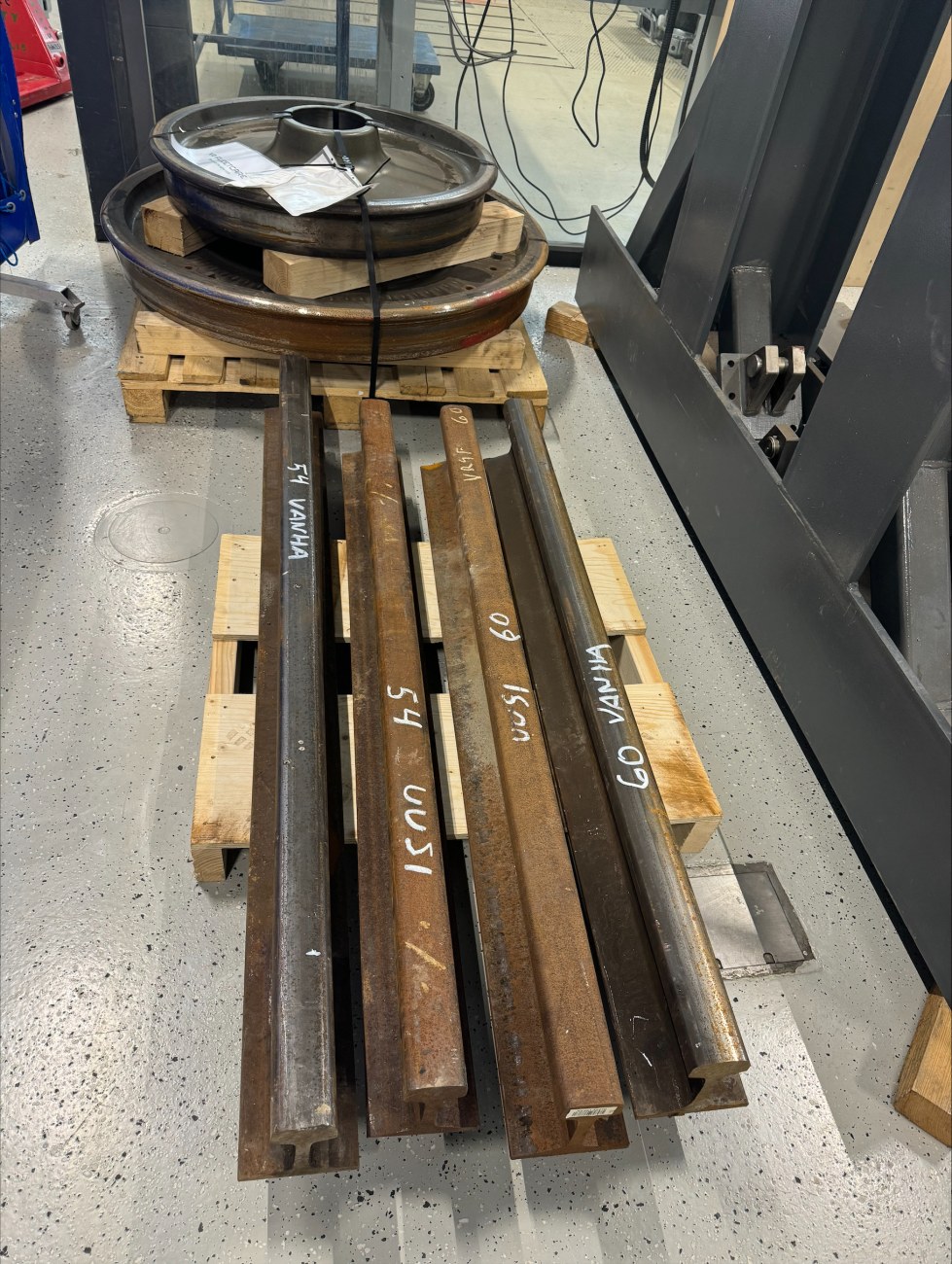
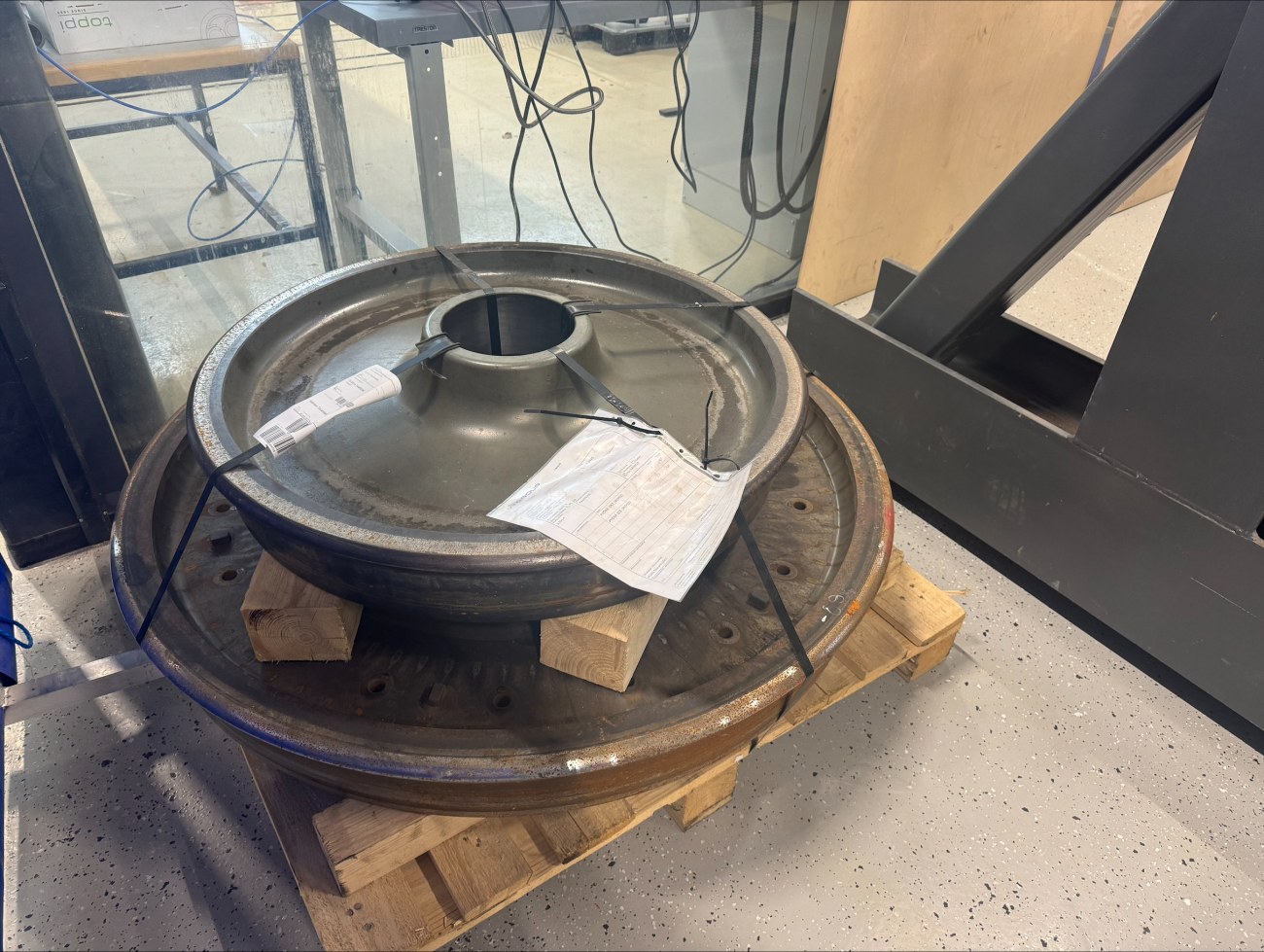
The wheel-rail rig is used to study wheel-rail interaction (contact location, force, patch, etc), wear, rolling contact fatigue, lubrication, adhesion and friction modifiers.
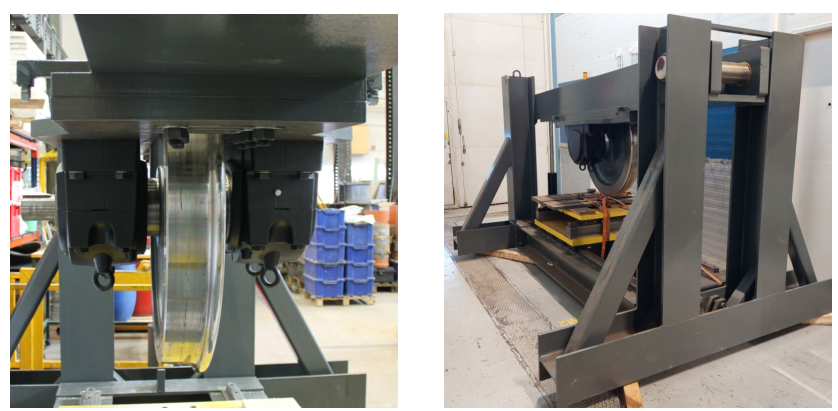
The rig was built by Pekka Salmenperä from TerraRail Group (now working at VR Fleetcare) 10 years ago, designed to analyze the rail wear. However, the rig was not completed and has since been stored in the warehouse. In June 2024, the head of TerraRail, Prof. Heikki Luomala, gave it to Prof. Xinxin Yu to support railway research at Machine Dynamic Group.
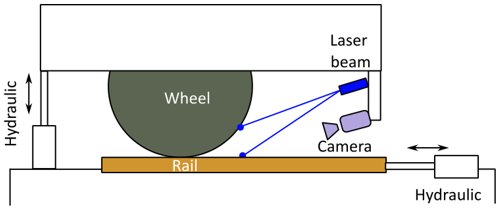
- It includes a frame, a full-sized wheel, and a carriage designed to hold the rail, with 3.5 meters in length, 2.5 meters in width, and 2.3 meters in height, a weight of 7,000 kilograms.
- Vertical wheel loading up to 50 t. -> for heavy freight
- Longitudinal rail translation with the loading up to 3.5 t. -> accelerate & decelerate the wheel
- Lateral rail translation with loading up to 10 t. -> change wheel-rail lateral contact location and exert the wheel flange contact force to generate the wear and rolling contact fatigue
- Change of wheel angle of attach (yaw rotation) -> simulate the curve
- Wheel rotation control-> combine with 2 to control wheel creepages
- The working cycle is designed with maximum 20 000 wheel pass per 24h. -> Simulate different traffic densities.
- The wheel-rail frictional contact forces (vertical, longitudinal and lateral) will be measured using hydraulic force sensors (load cell) in the cylinder and calibrate with the strain gauge mounted on the rail.
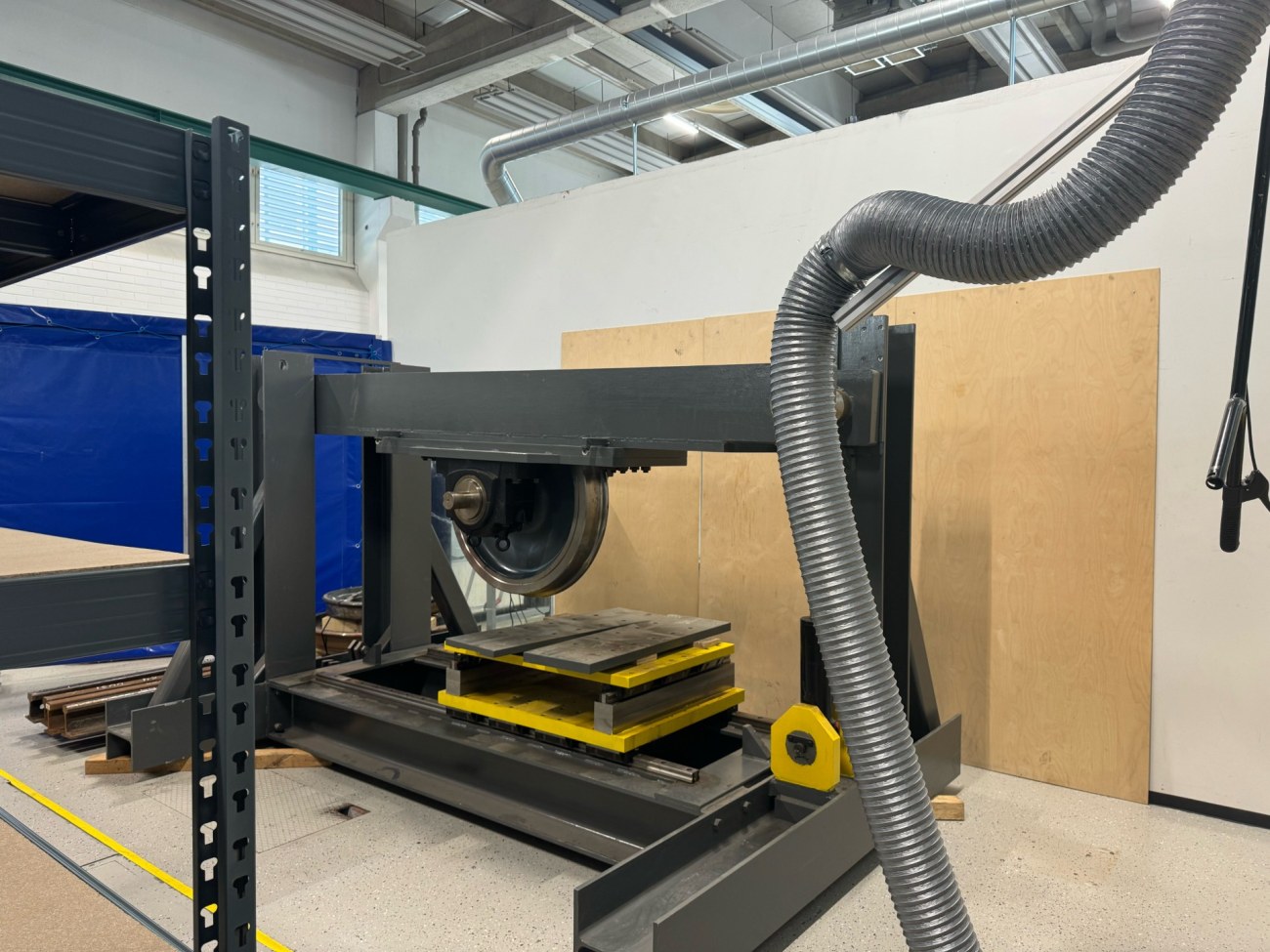
Figure: Rig in June 2024, photo is owned by Xinxin Yu.
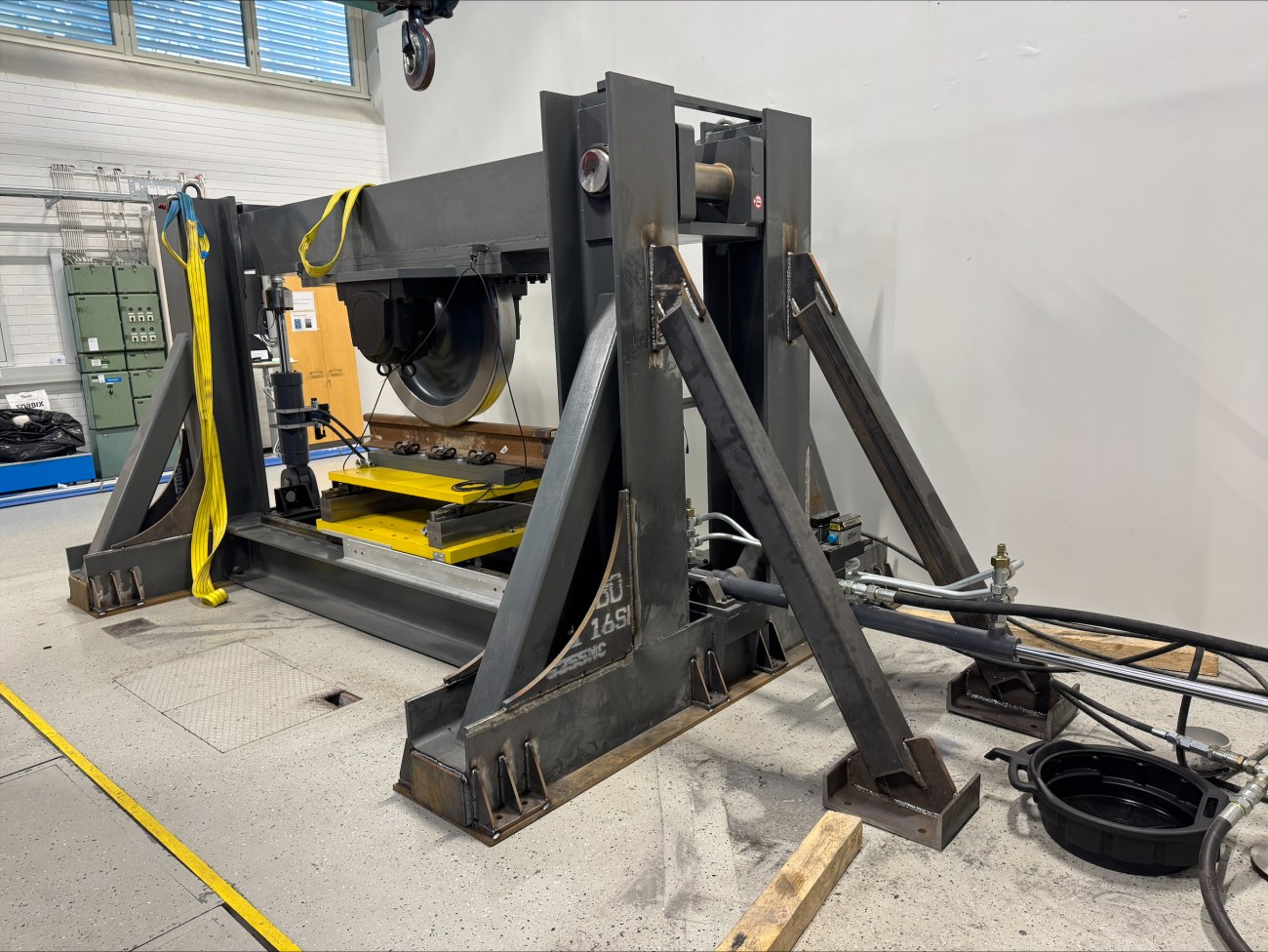
Figure: Rig in August 2026, photo is owned by Xinxin Yu.