Tero Järvinen is Tampere University’s Inventor of the Year 2025

Epidermolysis bullosa is a rare incurable hereditary skin disease. For EB patients, even minimal mechanical stress can cause painful blisters on the skin and mucous membranes. The blisters do not heal but lead to the development of ulcers on the skin. Depending on the type of the disease, blisters may form either in the outermost layer of the skin, the epidermis, or in the deeper layer called dermis.
In its most severe forms, the disease leads to death at a young age. At worst, affected newborns may die in a few months. In Finland, only one or two children are born with the most severe forms of the disease annually. Altogether, an estimated 200 people in Finland have epidermolysis bullosa, and some 500,000 suffer from it globally.
Tampere University’s Inventor of the Year, professor Tero Järvinen, has brought hope to EB patients. Thanks to the work of Järvinen’s research group, more effective treatments may become available for the disease in the future. The drug molecule he and his research group developed helps to treat the disease.
“In EB, blisters cause bleeding, infections and extensive scar tissue. Ultimately, patients may die due to the widespread blistering, and in milder forms, aggressive skin cancer develop. The drug molecule we developed prevents inflammation and reduces scarring and cancer progression. Compared to other treatments in preclinical trials, it also lengthened the lifespan of laboratory animals with the lethal form of EB” Järvinen explains.
The new drug molecule is a recombinant fusion protein consisting of two complementary components. One is decorin, a therapeutic agent that prevents scarring, and the other is a small protein fragment called peptide whose role is to transport the drug through the bloodstream precisely to the diseased tissue where the drug is needed.
In 2025, the licence for the drug molecule was sold to the French company Theravia, which was later acquired by Norgine. Further development and clinical trials of the drug will continue under their lead.
A solution to challenges in drug delivery
A second innovation by Järvinen’s research group, a novel drug molecule screening method, also contributed to his nomination as Inventor of the Year. The new method enables identifying macrocyclic peptides that can cross through blood vessel walls and travel through the bloodstream to the target tissue from among billions of molecules.
Medicines may have significant side effects, or the body may not always absorb a drug in the intended way. For example, the blood-brain barrier protects the brain from harmful substances but can also block effective drug delivery for treating neurological diseases. A similar problem is caused by the high density of cancer tissue. Drug efficacy can be improved by making the treatments disease specific.
When a drug molecule is linked to a peptide that seeks out the disease via the bloodstream and opens an intracellular transport route at the target site, such barriers can be bypassed, and the molecule can be delivered to the tissue where the disease is active.
The screening method used to identify macrocyclic peptides that home into target tissues and penetrate cells in the target organ is based on screening billions of potential drug molecules in laboratory animals. The process combines so called biopanning with microdialysis and modern DNA sequencing techniques. Tampere University has patented the screening method with two separate patents.
And this was by no means an isolated achievement for Järvinen as he now holds an impressive total of 8 international patents!
Keeping focus despite the huge workload
Developing a drug molecule is a project that takes several years. Järvinen’s research group screened billions of molecules before finding the suitable one. This was followed by long cell culture characterisation of the best candidate, carried out in collaboration with two international laboratories. Finally, treatment trials were performed in an animal model of EB.
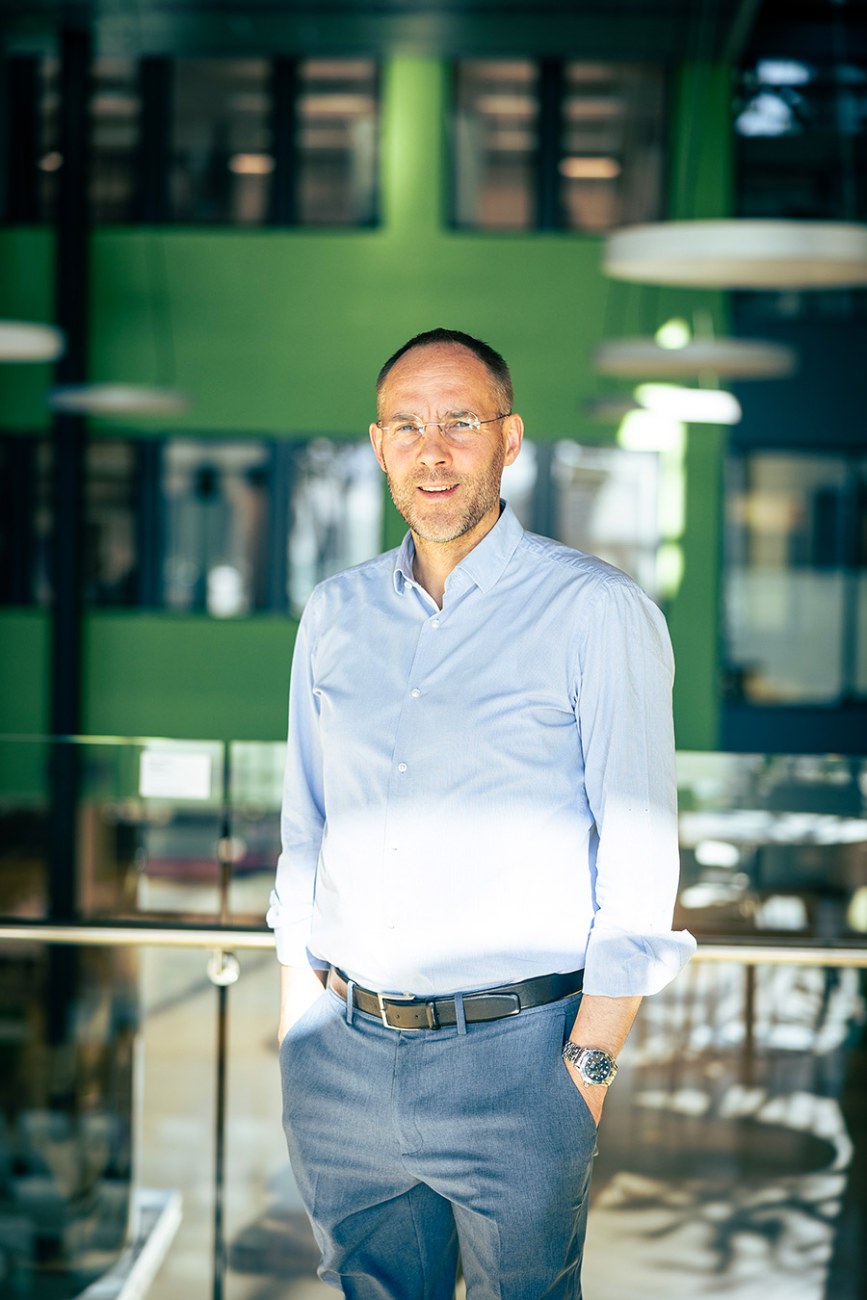
“The methodology is so demanding that it cannot be done by just one research group alone. As it has taken ten years of rigorous work by many dedicated people, the focus stays firmly on reaching the goal,” Järvinen notes. The academic research phase is followed by the actual commercialisation process. Järvinen explains that pharmaceutical companies do not just come knocking at your door. Instead, one must be proactive and transfer from the academic world into the unfamiliar world of biotechnology.
“The commercialisation process comes on top of all other daily work. Managing different drug development budgets, drug testing, regulatory discussions and commercialisation plans easily also takes up holidays, weekends and nights, because the basic work still must be done as well,” Järvinen explains. The drug molecule has now been licensed to the Theravia/Norgine, and the FDA in the United States and EMA in Europe have granted it both orphan drug and paediatric orphan drug designations, enabling the fastest possible regulatory processes. Even so, it will still take years before the molecule can become a finished medicine on the market.
Joy of discovery cannot be bought
But how did an orthopaedist end up developing drug molecules? The story begins more than twenty years ago.
Järvinen was interested in sports and traumatic injuries where blood supply to the tissues is inhibited, such as in fractures and injured muscles. Getting blood to the injured area is at the core of healing, so Järvinen became interested in the formation of new blood vessels, a process called angiogenesis.
In 2003, Järvinen became a postdoctoral researcher in professor Erkki Ruoslahti’s laboratory in La Jolla, California. Dr. Erkki Ruoslahti, M.D., Ph.D. and his group had described a phenomenon resembling the postal code system used in mail delivery: human blood vessels also have tissue and disease specific “postal codes” known as “vascular zip codes”.
“Ruoslahti’s group had succeeded in finding and developing peptides that utilised these zip codes. They target and bind to the new blood vessels growing in tumors, enabling drugs to be directed precisely into the tumor. Dr. Ruoslahti offered me the opportunity to apply screening technology to identify molecules that home into a desired tissue in surgery. I found it a fantastic opportunity! I thought I would get to do something no other surgeon in the world was doing because the traditional assumption in surgery is that the surgeon places any drug compound in the desired location manually,” Järvinen says.
“A funny coincidence was that while I was working in Dr. Ruoslahti’s group in La Jolla, Nobel laureate Roger Tsien was studying the same topic at the University of California at San Diego. So, there were only the two of us in the world interested in this idea, and we were working just a few kilometres apart,” Järvinen notes.
As the process advanced, a peptide was found that used the bloodstream to home into vessels in both skin and skin wounds and penetrated all skin tissue from there. With this discovery, it was natural that interest shifted toward the severe skin disease EB where the condition leads to wound formation as well as to treatment options.
The passion for basic research that galvanised Järvinen more than 20 years ago has not faded.
“My father used to tell both his own PhD students and me that the “pure joy of discovery cannot be bought in a store”. That is what still pushes me forward. Whenever I see under the microscope that the cells are finally doing something we have long hoped for, the joy of discovery is a feeling you cannot get anywhere else,” Järvinen points out.
Nor has the passion faded from Dr. Ruoslahti who first ignited the spark.
“Even though Dr. Ruoslahti is officially retired, we still go through research results every week. Just this morning, I got his opinion on our research findings from California,” Järvinen says.
Criteria for the 2025 Inventor of the Year Award
- Number and quality of inventions
In 2025, two new inventions were made, aimed at improving treatment for severe EB and enabling more efficient screening of drug molecules. - Impact on the field and society
Järvinen’s inventions are expected to pave the way for new, more effective treatments for EB and thus generate significant benefits for medicine, society and the University. - Awareness raising and the promotion of innovation culture
Järvinen’s inventions include collaborators from international networks. Collaboration with people outside the University strengthens the interdisciplinary innovation culture and increases Tampere University’s international visibility and impact. - Commitment and dedication
Järvinen plays a central role in taking the inventions from idea to practical implementation. His strong motivation for commercialisation and active development of collaborative networks demonstrate exceptional commitment and a sustained effort to ensure the practical use of the results.
Tampere University’s Inventor of the Year award is granted annually in recognition of significant and innovative research work. The purpose of the award is to encourage researchers to develop new solutions and promote scientific and technological progress. The award has been presented since 2020.
Read the scientific articles where the inventions were described:


