Mataleena Parikka aims to employ disinformation tactics to outsmart bacteria

What are your main research interests?
My work focuses on the disease mechanisms of tuberculosis (TB) and other difficult-to-treat mycobacterial infections. In addition, I develop new types of drugs that are more effective against TB and other persistent infections as well as reduce the need for antimicrobials.
I am especially interested in how bacteria adapt to their environment and alter their behaviour at different stages of infection. In chronic infections, bacteria develop complex strategies to evade the host’s immune defences, and these same mechanisms also help them to tolerate antimicrobial drugs.
The dynamics of bacterial adaptation during infection remain poorly understood, and there are currently few suitable models for studying these processes. My research group and I have developed a range of new methods to address this gap. We have also identified drug molecules that disrupt mycobacterial adaptation mechanisms and make them more susceptible to attacks from the host’s immune system and to antimicrobial drugs.
What makes your research significant?
The invention of antimicrobial drugs is one of the most significant breakthroughs in human history. They are estimated to have increased average life expectancy by a decade, but now the era of effective antimicrobials is coming to an end. Antimicrobial resistance is not only a serious threat but also an ongoing health crisis worldwide, including in Europe and Finland. There is an urgent need for new approaches to treating infectious diseases. Meeting this challenge requires new scientific knowledge and an in‑depth understanding of pathogen behaviour during infection. The new therapies we are developing may serve as examples of the types of treatments that will be needed in the post‑antimicrobial era.
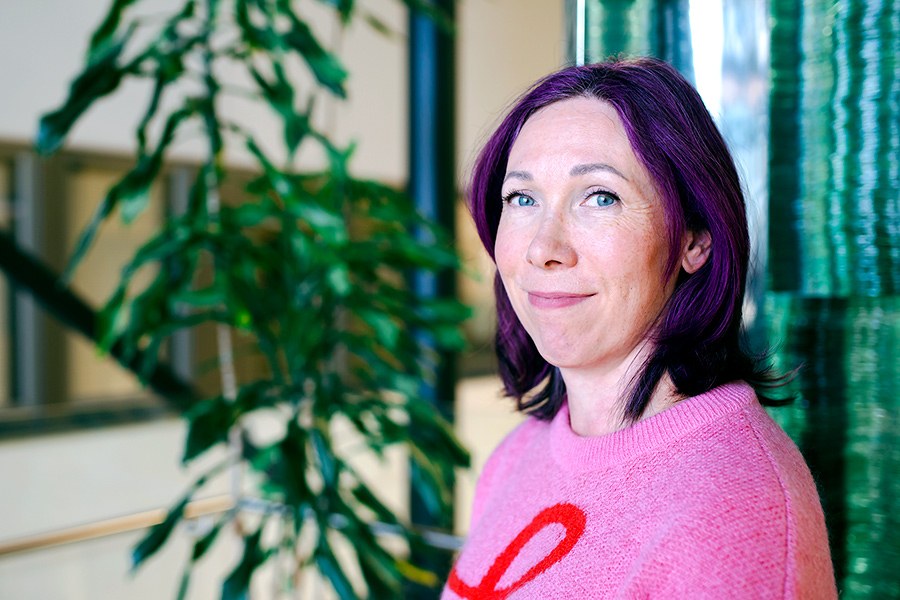
Where do you draw inspiration for your work as a professor?
From the wonders of nature! The co-evolution of host and pathogen has resulted in some remarkably sophisticated mechanisms. For example, humans and the bacterium that causes TB share a history stretching back tens of thousands of years. Over this time, the pathomechanisms have evolved to an extraordinary level of intricacy and perfection. In chronic infections, a state of equilibrium – or truce – can persist between host and pathogen for several decades, and it can even be difficult to determine which party benefits more from a particular infection process, as both appear to gain. A well‑known example of such a state is the granulomas formed in TB, in which the host’s immune cells encapsulate the bacteria to contain the infection. While granulomas effectively prevent the bacteria from spreading throughout the body, they also shield the bacteria from the host’s immune attacks. It is extremely exciting to conduct research that advances our understanding of the biology of infectious diseases.
What would you want to study next and why?
I would be interested in exploring how mycobacteria communicate, as these mechanisms remain largely unknown. Such communication enables an entire bacterial population to change its behaviour simultaneously. It would be fascinating to investigate whether a form of disinformation could be spread through bacterial communication to prompt the bacteria to adapt in a desired direction, thereby making them more susceptible to the host immune responses and antimicrobial drugs.
What do you do in your free time?
I spend time with my family and friends, and I like to unwind by getting out into nature and doing sports. My free-time companions also include two white Miniature Schnauzers, Milli and Myy.
Welcome to the inaugural lectures of the new professors on 11 May 2026
Mataleena Parikka
- Received her Licentiate of Dentistry degree from the University of Oulu in 1998.
- Completed a doctoral degree at the University of Oulu in 2004.
- Worked as a postdoctoral researcher at the Karolinska Institute, Sweden, in 2005–2007.
- Appointed as Docent of Experimental Immunology at the former University of Tampere in 2013.
- Served as Visiting Professor at the University of Technology Sydney in 2024–2025.
- Appointed as Professor of Immunobiology at Tampere University on 1 August 2025.


