Treatment for menopausal symptoms should not depend on how much money you have – VAITO project strengthens expertise and care pathway

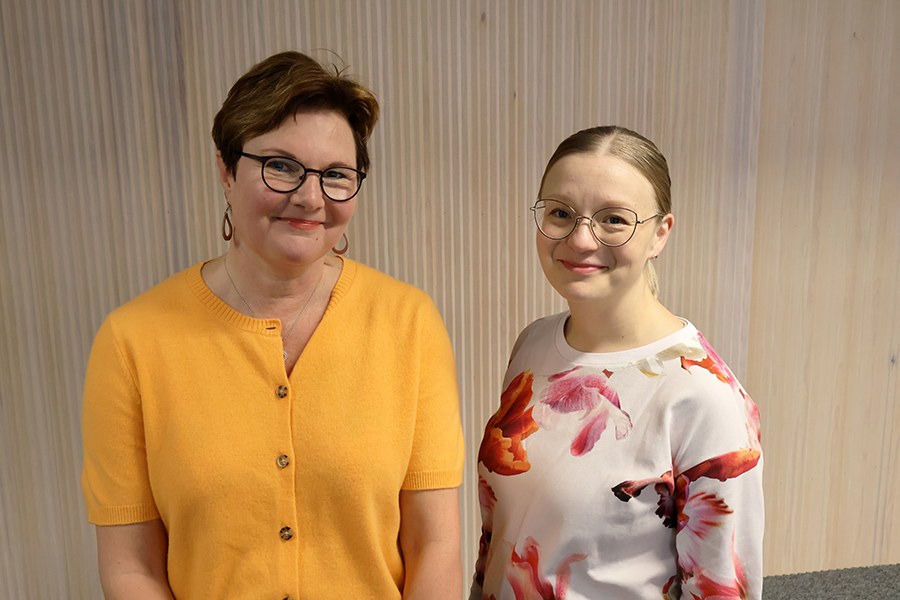
“It’s frustrating that we have a pool of people who are currently left untreated and struggling alone with their symptoms. Declining estrogen levels affect the entire body, as well as work capacity, coping ability, and quality of life. Menopausal symptoms also affect their loved ones, supervisors, and work communities,” says Maija Koivunen, Senior Lecturer, midwife, and Project Manager for the VAITO – Development of a Framework for Menopause Competence project at TAMK.
She emphasizes that women aged 45–65 are often the most experienced and skilled employees in their careers. That is why it is important that treatable symptoms are not left unrecognized or untreated.
Current Care Guidelines for menopause have finally been issued
A nationally standardized care pathway had been lacking until 2025, when the Current Care Guidelines for menopause was published. Drafted by experts, these treatment guidelines cover all of Finland and are based on reliable and up-to-date research data.
“The Current Care Guidelines make treatment practices transparent for the public as well. People can use them to check what their own treatment entails,” says Koivunen.
Senior Lecturer and midwife Milla Hiitti points out that basic care for menopause generally does not require a gynecologist.
“That is why the Current Care Guidelines represent a significant change: basic care for menopause falls under primary health care and occupational health care. In most cases, starting treatment does not require a specialist. Treatment can also be initiated through occupational health services. Of course, in special cases, a consultation with a gynecologist is needed,” Hiitti notes.
The VAITO model strengthens expertise throughout the entire care pathway
The VAITO project, co-funded by the European Union, is developing an operational model in collaboration with the Wellbeing Services County of Pirkanmaa and two occupational health service providers: Työelämäpalvelut, Mehiläinen Oy and Tullinkulman Työterveys Pirte Oy. The model helps professionals recognize menopause symptoms and guide clients in self-care.
Coordinated by TAMK, the project specifically strengthens the expertise of professionals in primary health care and occupational health care. Hiitti explains that nurses, doctors, physical therapists, and occupational psychologists are involved in the development work.
A public version of the model will later be published for everyone’s use on the website of Korento ry, a gynecological patient organization.
“When professionals know how to recognize and treat menopausal symptoms, their work feels more manageable and their workload is reduced. We provide them with the tools to do that,” Koivunen explains.
Even professionals’ expertise varies
If menopausal symptoms go unrecognized, they may be treated as isolated problems. For example, insomnia or fatigue may be viewed as unrelated symptoms without anyone realizing their connection to menopause.
Expertise varies widely, ranging from the in-depth knowledge of a gynecological nurse to a situation where healthcare providers are not yet able to provide basic guidance on managing menopausal symptoms. Nurses also often assume that menopausal symptoms are automatically a doctor’s concern.
Milla Hiitti
Koivunen emphasizes the pursuit of equality.
“Clients are in unequal positions. Some may be told by occupational health services that gynecological issues are not covered by their contract, while a health center may, in turn, say that they are unable to treat these conditions. In that case, the only option left is a private gynecologist who charges hundreds of euros. We also need to raise public awareness that helps and up-to-date information are available.”
According to Hiitti, there are still significant differences in employers’ occupational health care agreements.
“For some, menopause treatment is covered by occupational health care, while for others it has been completely excluded from the agreements, in some cases for groundless reasons.”
A silent phenomenon affects millions
The low visibility of menopause is partly because women’s health has historically been studied less than men’s, and the standard has always been the male body. At the same time, menopause has been stigmatized, which has slowed the topic’s visibility in public discourse.
Menopause has even been downplayed as a research topic. Therefore, increasing knowledge about menopause also promotes equality.
“Women’s health has not previously been considered a topic of societal interest. Now, however, there are even large-scale projects underway on the subject,” notes Hiitti.
Koivunen points out that women’s hormones have posed a challenge for researchers.
However, we live in 2026, so it’s interesting to consider why research in this area has remained relatively limited. Perhaps it has been assumed that gynecological challenges such as menstrual problems, endometriosis, and menopause are simply part of a woman’s life.
Maija Koivunen
Menopause has been associated with shame and negative perceptions of aging. Recently, this shame has been reduced by women experiencing menopausal symptoms who have come forward publicly.
“Women don’t always want to talk about menopause themselves, because menopause means that I’m getting older and am no longer fertile. This can lead to all sorts of reflections on one’s place and value as part of society,” Koivunen notes.
From a workplace perspective, the importance of treating menopausal symptoms is growing
The population is aging, efforts are being made to extend working lives, and an increasing number of people are actively working during the very stage of life when menopausal symptoms occur.
“Studies show that absences from work and even the need to take disability retirement increase during menopause. This is a major issue for the national economy, because these are mostly treatable conditions,” Koivunen emphasizes.
She points out that some men may experience menopausal symptoms, known as andropause, but this does not affect a large portion of the population. That is why the project focuses on women’s menopause.
Hiitti also sees room for improvement in the healthcare system. In primary care, there are still doctors who refuse to treat gynecological patients, even though basic gynecological knowledge should be part of a general practitioner’s expertise in the same way as, for example, the treatment of urological conditions and pediatric illnesses.
“It has been assumed that this issue falls under the purview of specialists and requires out-of-pocket payment, even though no other specialty does.”
Professionals from various fields have participated in training
The project has organized training for doctors, nurses, physical therapists, occupational health psychologists, and nutritionists. Hundreds of professionals have participated in the four training sessions already held, and the feedback has been extremely positive. Five more sessions offering practical and scientific information will be held.
The training sessions cover topics such as recognizing symptoms, treatment, guidance on self-care, coping at work, and supporting well-being. The goal is that professionals would be able to recognize potential menopausal symptoms, actively ask about them, and provide appropriate care.
Treatment should not depend on the expertise of a single employee or on whether the right professional happens to be on duty at the time.
Milla Hiitti
New information portal brings reliable information together in one place
The project recently launched an open menopause information portal in collaboration with Korento ry. The portal provides the public with reliable information about menopause, its symptoms, treatment options, and coping with daily life. The portal’s content is being expanded, with articles and other materials being added.
TAMK’s experts aim to assist healthcare professionals and the public. Information is also being provided to students. The nursing, public health nursing, midwifery, and emergency medical technician programs include a component on reproductive health and gynecological nursing, which covers menopause as part of the curriculum. Koivunen nevertheless emphasizes the need for additional training.
The goal is a standard care pathway
The project will conclude in April 2028. The long-term goal is simple: menopause should be viewed as part of routine healthcare rather than a special issue whose treatment depends on where you live, your occupational health agreement, or the size of your wallet.
“In the ideal scenario, it would be clear to everyone that help for menopausal symptoms is available through primary care and occupational health services in the same way as for other common health issues,” says Hiitti.
Koivunen also hopes that everyone aged 40–45 would receive a health checkup.
“Ideally, menopause would be discussed even before symptoms begin. Then information, support, and treatment would be equally accessible to everyone.”
Read more
Visit the VAITO project's website
Menopause Information Portal on Korento's website (in Finnish)
Current Care Guidelines for menopause (in Finnish)
Contact person
Maija Koivunen
Senior Lecturer Maija Koivunen
Author: Hanna Ylli


