Building physical research equipment
Building physical research equipment can be used to study the building physical properties of materials and structures in a test laboratory, or the behavior of structures in the open air, either through test building experiments or field measurements.
Building physical material properties
The Laboratory of Building Physics mainly studies the transfer of mass and energy in materials. In practice this means material properties related to heat, airflow and moisture.
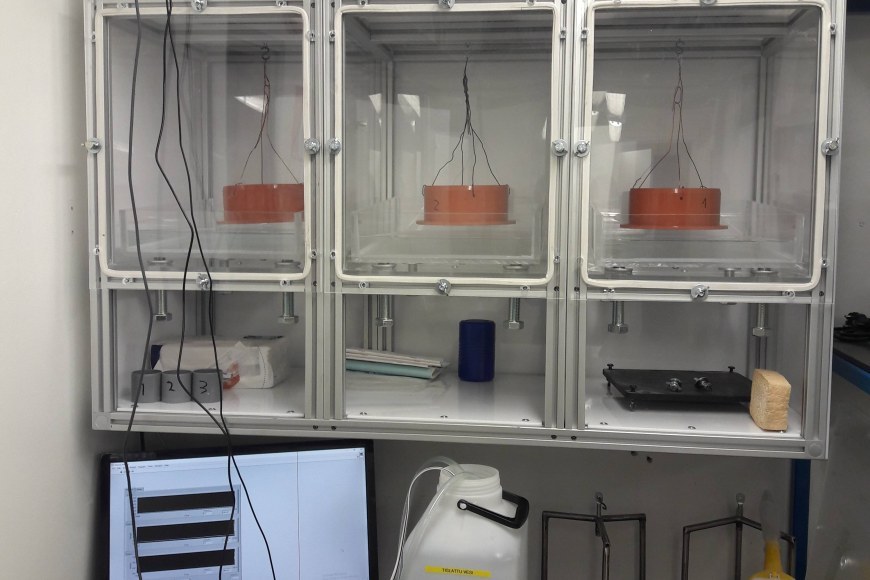
Different types of studies and tests can be carried out on materials to examine their behaviour under different temperature and humidity conditions. For example, the studies can examine durability, mould, deformation, heat and moisture permeability, moisture binding properties or capillarity properties of the material or its surface. The experiments can be in accordance with standards or separate new methods developed for the subject to be examined.
Test buildings
Test buildings and long-term measurements of experimental structures in real outdoor conditions.
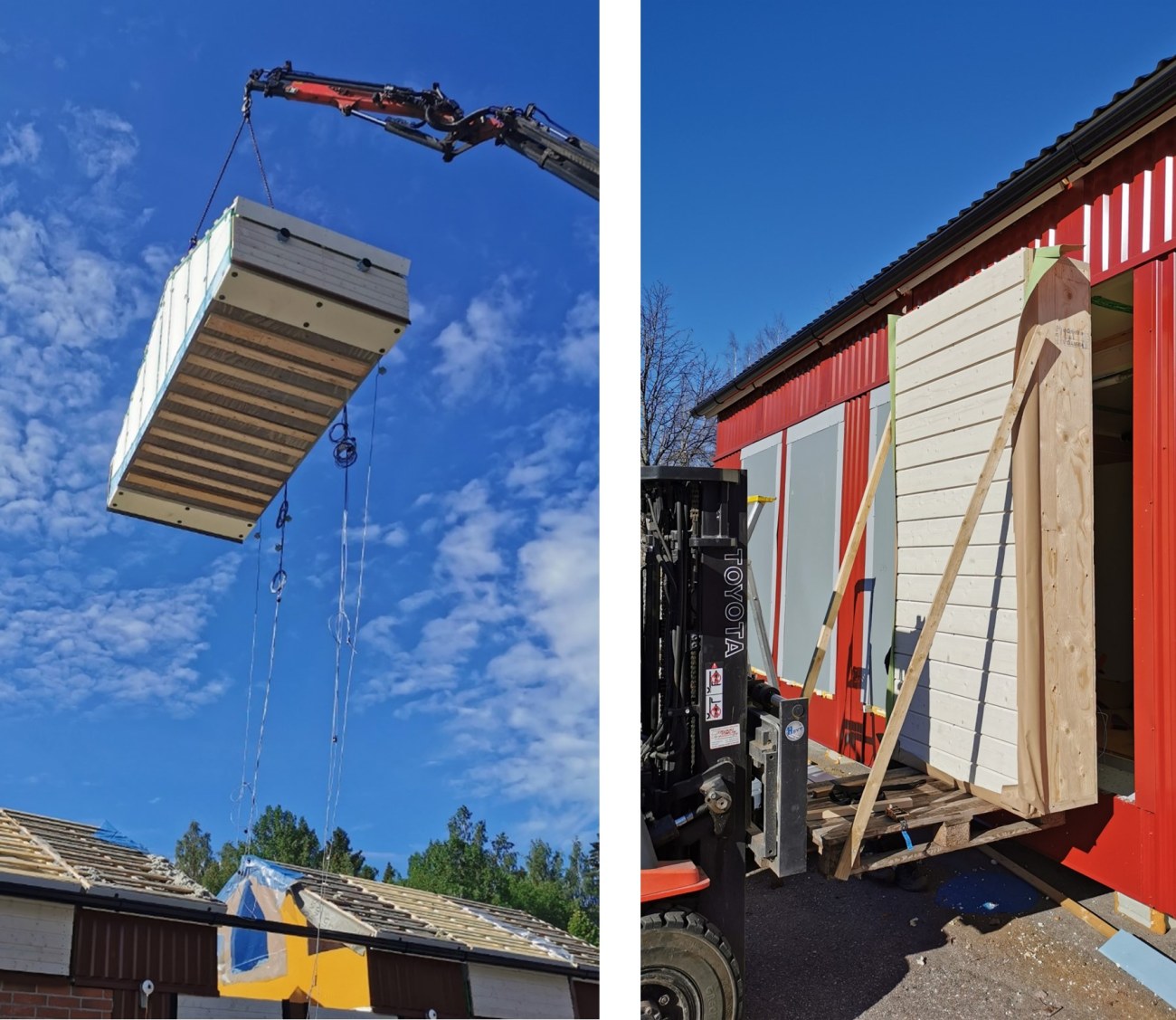
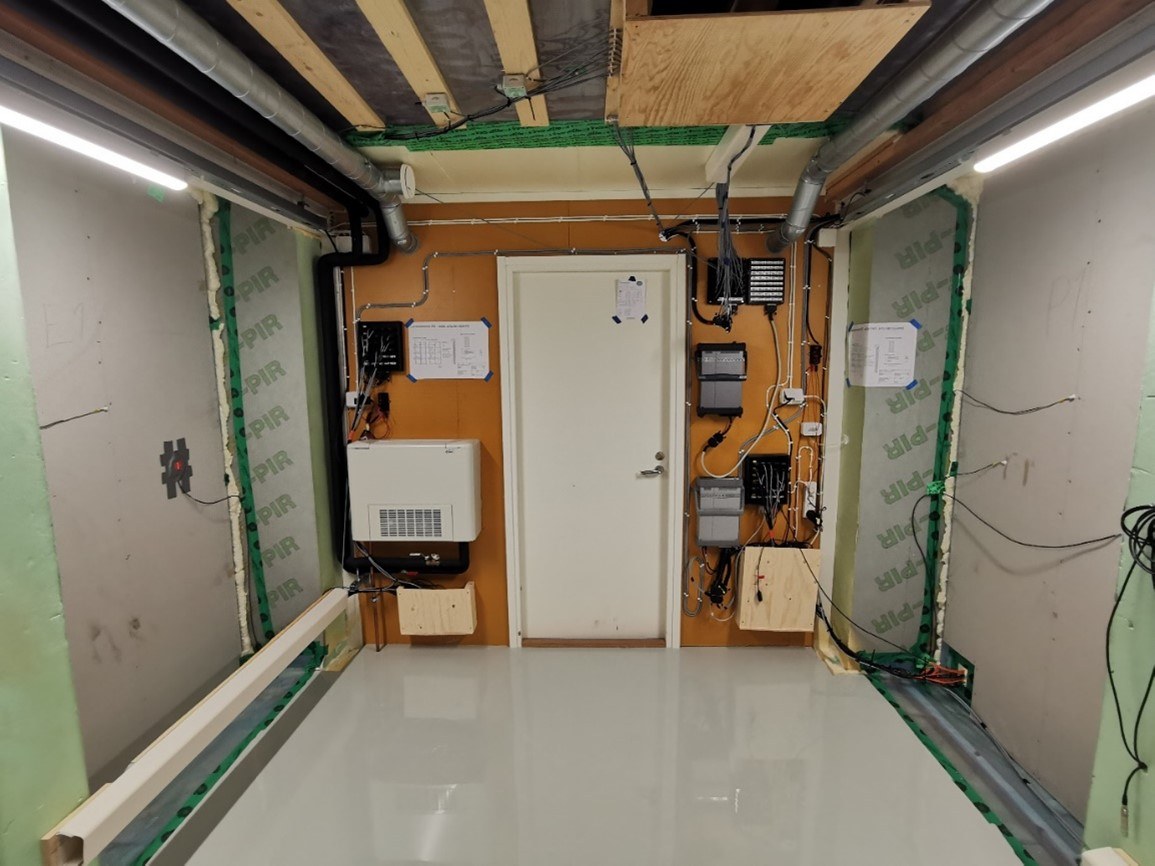
The test buildings are used to monitor the building physical behaviour of different exterior wall and roof structures in real outdoor air conditions. The indoor air temperature and relative humidity of test buildings can be controlled, as well as the pressure difference between indoor and outdoor air. Indoor and outdoor air conditions and the conditions of the interfaces between the different structural layers of the test structures are monitored by continuous measurements using extensive sensors.
The Building Physics research group has two test buildings. The test buildings are mirror images of each other. A total of 12 exterior wall structures and 3 roof structures can be installed in each test building. The test buildings are positioned in the cardinal directions so that the long façades on which the test structures are installed face north and south. Typically, two identical test elements are installed for each type of wall structure to be studied: one on the north façade and one on the south façade.
The test structures will provide comparable measurement data for several years. The data can be used to compare different structures. The data obtained also enables comparisons with simulation models and thus the development of models in a better and more accurate direction.
Field measurements and structural tests
The conditions and indoor air quality of buildings can be assessed during the construction and use of the building with the help of various monitoring measurements.
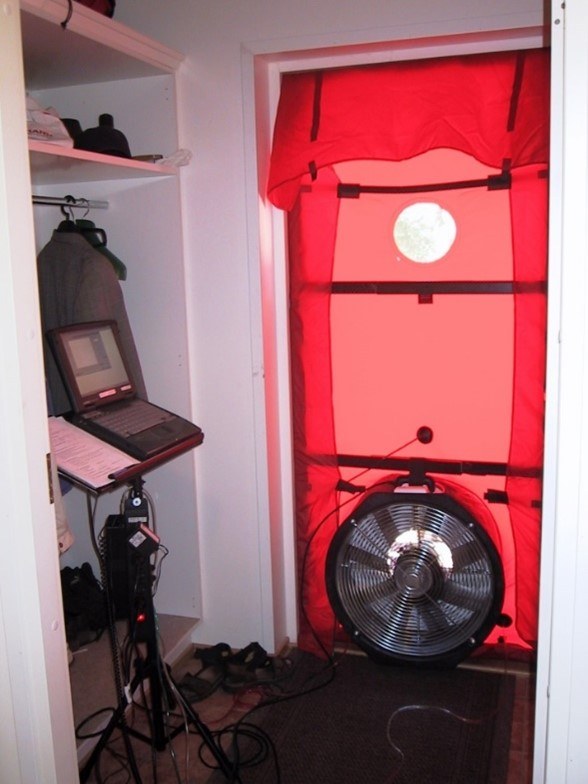
The most typical building physical measurements are the measurements of temperature, relative humidity, moisture content of materials, air pressure differences and heat flow. The Building Physics research group can measure various indoor air pollutant concentrations (CO2, VOC, radon, microbes), either directly or through partners. Different types of data collection systems are utilised as needed, and the measurement arrangement can consist of small battery-powered data loggers, a unit of several measuring devices and measuring points built around a computer, or a data collection system operating via the Internet where the measurement results are automatically collected on a server.
The airtightness of buildings is measured with a pressure test. Airtightness is assessed with the help of the air leakage number q50 obtained as a result of the experiment. In connection with the pressure test, air leaks in the external envelope can also be searched for with the help of thermal imaging.
Building physical tests of wall and roof structures are carried out using research equipment intended for them.
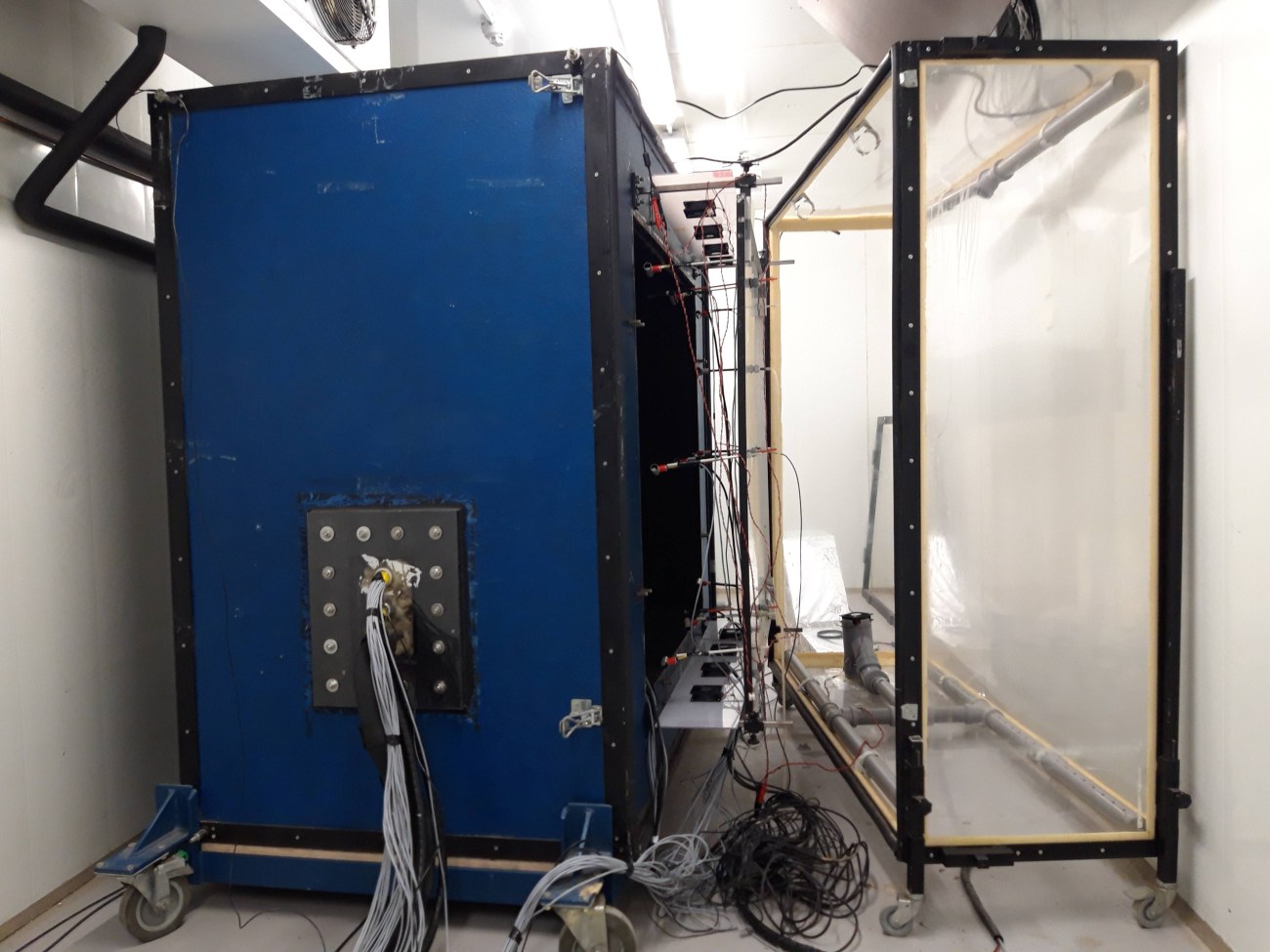
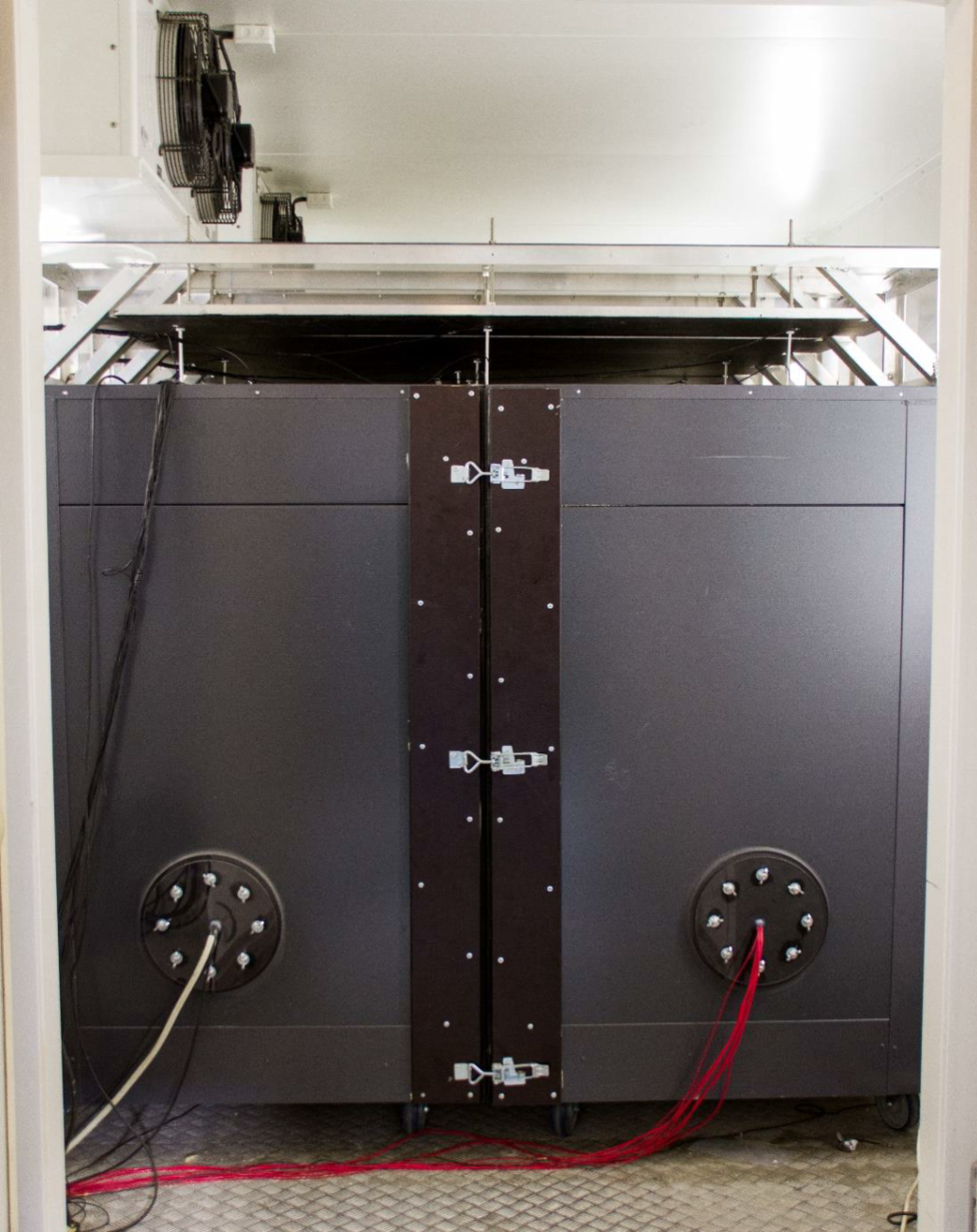
The research equipment for wall and roof structures can continuously monitor the building physical behaviour of different structures during condition tests. The equipment can automatically adjust the indoor and outdoor air conditions on different sides of the test structure. The conditions to be monitored and adjusted are the temperature and relative humidity of the interior and exterior, the pressure difference over the test structure, and the air flow rate near the exterior surface of the structure.
In addition, it is possible to adjust the thermal radiation directed at the exterior surface of the wall structure, which describes the warming effect of the sun.
Condition adjustments and measurements are automatically controlled by a computer.