Professor Mervi Kaukko wins prestigious ERC Starting Grant for research on learning in times of polycrisis

Professor Mervi Kaukko has been awarded a prestigious ERC Starting Grant by the European Research Council (ERC) for a five-year research project titled LearnInCrises. The project will begin in January 2027.
The project will explore learning in the context of a polycrisis and has a total budget of €2 million, with the ERC contributing €1.5 million and Tampere University €500,000.
Learning in times of crises has received relatively little academic attention due to the challenges of conducting research in crisis settings. As Kaukko says, acute crises have often passed before researchers are able to reach the affected areas, and research in such settings raises both ethical and safety concerns.
Kaukko’s ERC-funded project will provide researchers with a unique opportunity to study this topic in real time and on site.
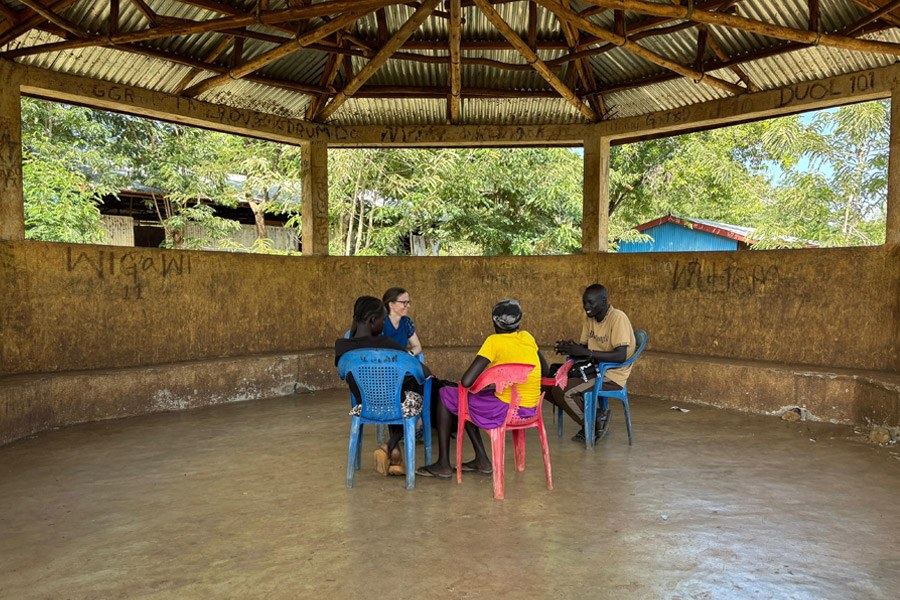
“We will study learning during crises in real time and in collaboration with the true experts: young refugees. The project will take us to refugee camps where young people have lived many years or their entire lives. Spending extended periods in each location is both a prerequisite for and one of the most rewarding aspects of a participatory research approach,” says Kaukko.
Young people involved as co-researchers
In addition to Kaukko, the project team includes Doctoral Researchers Shohel Mahmud and Sara Aleisseh and Project Manager Esko Nummenmaa.
Together, they will train young refugees to act as co-researchers. The team will conduct interviews with young people and document their everyday lives on video. The participants will also be invited to film aspects of their lives that they consider important. Data analysis will be carried out collaboratively with the young co-researchers.
“We will study learning through everyday practices and examine how young people adapt their routines to reach their goals. In addition, we will observe and analyse the research process itself to explore how participatory research methods can be further developed when working with highly vulnerable young people in areas affected by crises,” says Kaukko.
Rethinking theories
According to Kaukko, the ERC-funded project will also provide an opportunity to re-examine existing theories of learning. She finds that the relationship between learning and crises is currently understood in overly black-and-white terms: if a learner is facing an acute crisis, that crisis must first be resolved before their brain can focus on learning.
“Childhood and adolescence are prime times for learning. If there is no end in sight to a crisis, learning cannot be put on hold, even when young people are having to spend their formative years amid such conditions,” says Kaukko.
Evidence from sudden crises has shown that learning can occur remarkably quickly. For example, during the Covid-19 pandemic new practices were rapidly adopted across entire populations.
Next stop: refugee camp in Bangladesh for more than one million people
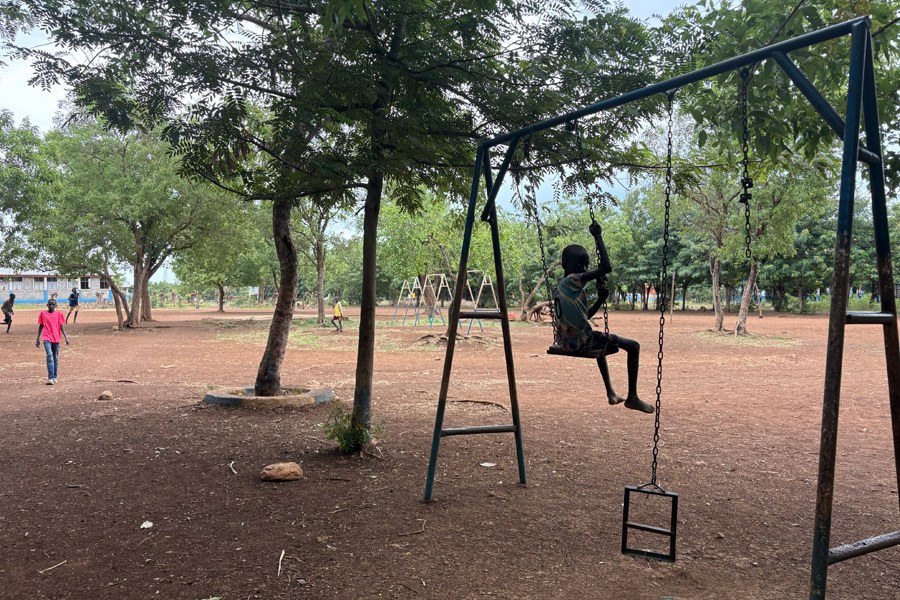
The researchers will conduct participatory research in three refugee camps located in Ethiopia, Bangladesh and Jordan. Project Manager Esko Nummenmaa points out that the camps are exceptionally large. Each accommodates at least 100,000 people, which is relatively uncommon.
“These camps exist as a result of ethnic and systematic violence, and it is virtually impossible for residents to return to their home countries,” says Nummenmaa.
The three camps differ greatly in terms of both culture and physical environment. The camp in Ethiopia is isolated and located deep within a forest, whereas the one in Jordan almost resembles a city. The vast camp complex in Bangladesh comprises dozens of closely connected sub-camps.
In November, the researchers will set out for Cox’s Bazar, Bangladesh, home to more than one million refugees.
“This camp accommodates predominantly Rohingya refugees who have fled Myanmar. The camp’s prevailing atmosphere is defined by the impossibility of returning home, as Rohingya people are denied formal citizenship in both Myanmar and Bangladesh. Opportunities, especially for young people, are extremely limited,” says Nummenmaa.
Learning to live with crises
War, genocide, shifting superpower politics, natural disasters and the climate crisis affect people’s lives all around the world, albeit in different ways and with varying intensity.
Kaukko is convinced that future generations will also face crises in their lifetimes. At the same time, crises are becoming increasingly complex.
“We have to learn to live with crises, and if we can also view them as opportunities for learning, so much the better,” she says.
Kaukko believes the ERC-funded project has the potential to strengthen a sense of agency among young refugees.
“Although we cannot end wars, famine or natural disasters through this project, we can help young people better understand their circumstances, set goals and work towards them,” says Kaukko.
She cites one example: A group of girls living in the Nguenyyiel refugee camp in Ethiopia launched a campaign against child marriage. They negotiated with adults and sought alternative ways for families to support themselves without marrying off their daughters.
“The ERC Starting Grant will enable us to follow these advocacy efforts first-hand, together with the young people involved,” says Kaukko.
In 2026, the European Research Council (ERC) awarded 421 Starting Grants to early-career researchers from all over Europe. The funding totalled €705 million. Read more in the ERC’s press release.


