Consumers want responsible choices to be easy – the packaging sector seeks solutions together

ResPa Project Manager Nina Kukkasniemi says that the importance of consumers has already emerged strongly in previous European projects mapping circular economy skills. However, one key question remains:
“The role of consumers has also been recognised as important in previous projects, but what should we do to enable consumers to take a more active role?”
Consumer engagement is an important theme connecting the ResPa and Biopak projects. ResPa examines the role of consumers in circular packaging and the future skills needs of the packaging sector. Biopak, in turn, develops more sustainable wood fibre-based packaging solutions while considering the objectives and requirements of the EU Packaging and Packaging Waste Regulation.
New solutions need to fit into everyday life
Both projects have already gathered information on what consumers expect from responsible packaging solutions. Their expectations are very practical.
“Consumers want solutions that are easy to use, and they expect new innovations to perform at least as well as existing solutions, if not better. Packaging should fit into everyday routines without requiring extra effort,” Kukkasniemi summarises.
In practice, this means, for example, clear sorting instructions, easily accessible collection and return systems, and solutions that can be incorporated into ordinary shopping trips without additional effort.
Responsibility cannot be placed on consumers alone
The workshop groups also challenged the idea that consumers should be the final bearers of responsibility for the circular economy. Consumer choices matter, but the design of products and packaging, as well as the systems surrounding them, are largely in the hands of other actors in the value chain.
Perhaps we are placing a little too much responsibility on consumers. The industry itself should think about how to improve the circularity of packaging.
Workshop participant
Consumers cannot choose a reusable solution if one is not available. The workshops therefore discussed how companies, retailers, logistics providers and other actors could make responsible options as natural and convenient as possible for consumers.
Practical trials are needed alongside surveys
Consumers have already been asked for their views on reusable packaging, but workshop participants felt that practical trials are also needed. If a new solution is available only for a short period or in a single location, it is difficult for consumers to assess how well it would work as part of their everyday lives.
Finland’s bottle deposit and return system was highlighted as an example of a circular economy solution that is familiar to consumers and provides a clear financial incentive. Participants considered whether the same principles could be applied more widely to other types of packaging and return systems.
Consumers also need to know why
Alongside convenience, communication repeatedly emerged as an important theme in the workshops. Consumers need to know what to do with packaging after use, but even simple instructions alone may not be enough to change behaviour.
One participant raised a key question:
We very often forget to explain the reason behind the instructions. Would it help if we also told consumers why they should do something in a certain way?
Workshop participant
In addition to clear labelling and consistent sorting instructions, participants called for long-term guidance and education. Discussions highlighted the importance of education from early childhood through to packaging sector professionals. Circular economy practices should gradually become a natural part of both everyday life and professional expertise.
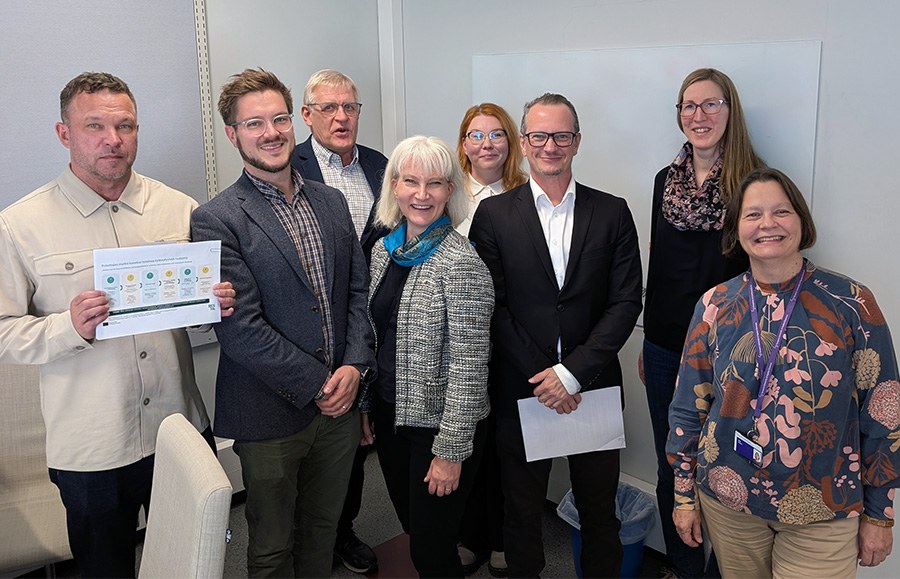
Solutions require collaboration across the entire value chain
The workshop discussions also highlighted the fundamental purpose of packaging: packaging protects the product, and reducing packaging should not, for example, lead to increased food waste. The goal, therefore, is not a world without packaging, but more resource-efficient packaging. The use of materials, recyclability, reuse, and practical functionality all need to be balanced.
Consumers’ ability to make responsible choices depends on the entire packaging value chain. In addition to packaging and product manufacturers, choices are shaped by retailers, logistics providers, waste management, public authorities, and education. The workshops also highlighted the need to improve the flow of information about regulation between different actors.
For smaller organisations in particular, networks and information sharing between companies can be important when regulatory changes are interpreted and put into practice. The need for collaboration therefore emerged as one of the key observations of the day.
Everyone benefits from this, and everyone needs to be involved. The important question is how we find the right forms of collaboration.
Eeva Heikkilä, Biopak Project Manager
The observations from the workshops will be used in the further development of both projects. In ResPa, they will support the identification of skills needs related to circular packaging and consumer engagement. In Biopak, the findings will contribute to the development of sustainable packaging solutions and collaboration across the value chain.
Further information
Nina Kukkasniemi
Project Manager
Senior Lecturer | Built Environment and Bioeconomy
Tampere University of Applied Sciences
nina.kukkasniemi [at] tuni.fi (nina[dot]kukkasniemi[at]tuni[dot]fi), +358 40 620 7909
Eeva Heikkilä
Project Manager
Project Office | Project Implementation
Tampere University of Applied Sciences
eeva.e.heikkila [at] tuni.fi (eeva[dot]e[dot]heikkila[at]tuni[dot]fi), +358 50 318 2139
Consumers' role in responsible packaging – Improving circular economy innovation capacities in packaging value chain (ResPa)
The international ResPa project examines the role of consumers in circular packaging and the related future skills needs of the packaging sector. The project is funded by the Erasmus+ Alliances for Innovation (2021–2027) programme. The project is coordinated by Tampere University of Applied Sciences (TAMK). The partners are Asociación Valenciana de Empresarios de Plásticos (AVEP), Brobygrafiska, Ecoembes, Hochschule München University of Applied Sciences (HM), Proplast, Tampereen seudun ammattiopisto (Tredu) and Università di Trento (UniTrento).
Learn more at project website.
Funded by the European Union. Views and opinions expressed are however those of the author(s) only and do not necessarily reflect those of the European Union or the European Education and Culture Executive Agency (EACEA). Neither the European Union nor EACEA can be held responsible for them.
Biokiertotalouden kestävät pakkausratkaisut – Biopak
Biopak is a Finnish development project co-funded by the European Union. The project develops more sustainable wood fibre-based packaging solutions while considering the objectives and requirements of the EU Packaging and Packaging Waste Regulation. The Biopak project is coordinated by Tampere University of Applied Sciences (TAMK), and the partners are South-Eastern Finland University of Applied Sciences (XAMK) and University of Oulu.
Read more at project website.
Author: Hanna Ylli


