New study challenges the myth of “the lonely translator”

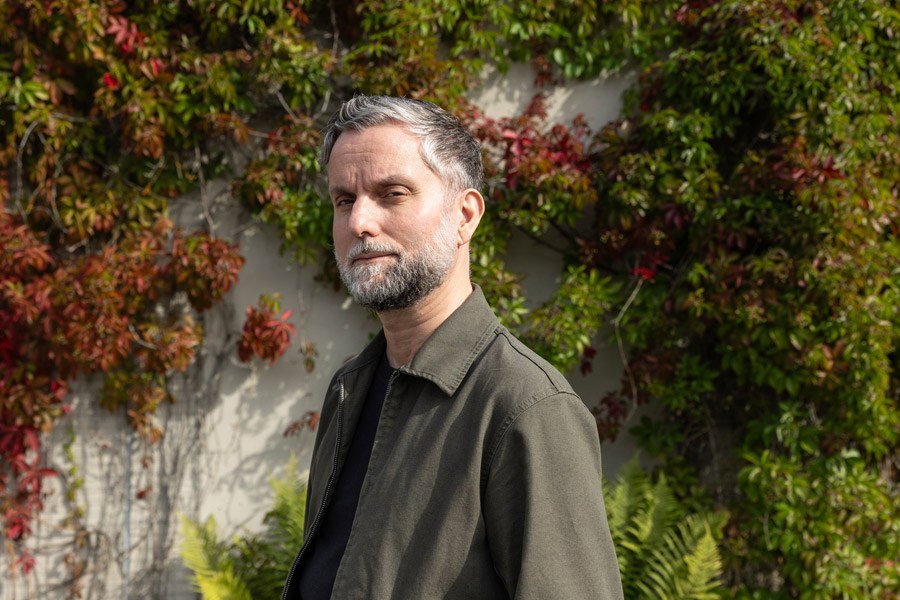
Throughout the spring of 2026, Marie Curie Research Fellow Raphael Sannholm travelled back and forth between Tampere and Luxembourg, spending a total of six weeks observing the work of translators at the European Parliament. His goal was to examine the interactions between translators and, more specifically, the role of collaboration in the translation process.
Sannholm has now collected the majority of his research data. The material includes tens of hours of video recordings that mostly document virtual interaction, as translators spend much of their working day on their computers. It also includes recordings of face-to-face encounters as well as documents that translators use to share information.
Interviews with translators are scheduled for this autumn.
“That will be the final stage of the data collection. Although I have invited the translators to continue sharing materials from their digital interactions, such as recordings of Teams conversations, the bulk of my research data has now been collected,” says Sannholm.
Translator teams as distributed cognitive systems
Sannholm’s study, titled Translating Institutional Systems (TRAILS), examines how institutional translators work collaboratively to solve problems, make decisions, document and share information, and develop shared practices that support their work.
The study will provide new insights into the collaborative processes through which translations are produced to meet societal needs.
What brings a distinctive perspective to Sannholm’s research is his strong interest in cognition.
“I am interested in exploring how groups of people work together as distributed cognitive systems. My research approach is socio-cognitive,” he says.
During the TRAILS study, Sannholm will develop new theoretical models that can inform future workplace studies. He also hopes the findings will have implications for translator education and training.
“We have a stereotype of translators as solitary professionals. But what if we viewed translation as a collaborative activity? What would collaboration mean for translation, and how might collaborative practices be incorporated into the training of future translators?” he asks.
From private to public
Sannholm’s interest in interactions among translators stems from his own professional background as a translator. Before starting his doctoral research, he worked as an English-language translator in the private sector. It was during this time that he began to reflect on the translation profession and its social context.
His doctoral dissertation at Stockholm University examined interactions among translators working in the private sector. One of his key findings was that many of these interactions centred on colleagues working proactively together to address potential issues before they arose.
For his Marie Curie fellowship, Sannholm wanted to shift his focus to the public sector. Methodologically, he moved from observational research to the analysis of interactional data.
“I thought the EU would be a fruitful institution to study. I was especially intrigued by what happens in the moment-to-moment interactions between translators,” Sannholm says.
“The research environment at Tampere University is excellent”
Sannholm is now halfway through his two-year Marie Curie Research Fellowship in the Faculty of Information Technology and Communication Sciences (ITC) at Tampere University.
Finland and Tampere have left a very positive impression on him.
“The research environment at Tampere University is excellent because there are so many colleagues working at the intersection of cognitive science, linguistics and translation studies. This is a great place to be,” he says.
Sannholm hopes to continue his current line of research beyond his postdoctoral fellowship, both methodologically and theoretically. He is especially interested in studying interactions in workplace settings.
Further research on translators working in the private sector is also an option.
“One timely area of research is the use of artificial intelligence in translation and the ways in which it is reshaping translation practices,” he says.
Read more about the Translating Institutional Systems (TRAILS) project.


